Why Businesses in Kuala Lumpur Need a Visitor Management System
Front desks across Kuala Lumpur still rely on paper logbooks to record who enters and exits their premises, a method that is slow, insecure, and difficult to audit. A visitor management system replaces this outdated process with a digital check-in experience that captures visitor details, issues badges, and notifies hosts automatically. For businesses operating in KL’s fast-growing commercial districts, adopting a visitor management system is quickly becoming a baseline expectation rather than a luxury upgrade.
Beyond convenience, a visitor management system in Kuala Lumpur strengthens building security and supports compliance with workplace safety standards. With accurate digital records of every visitor, businesses can respond quickly during emergencies, conduct audits with ease, and demonstrate due diligence to landlords, auditors, and regulators. As office buildings in the city increasingly require tenants to show robust access control, having a proper visitor management system in place has become an important part of doing business professionally in KL.
What Is a Visitor Management System?
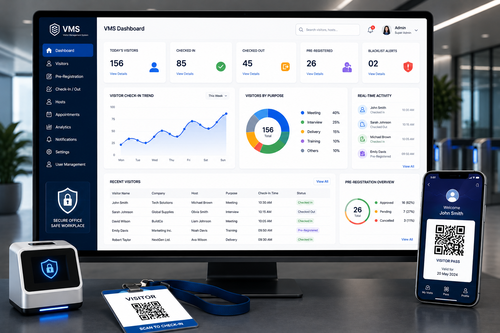
A visitor management system is a digital platform that manages the entire visitor journey, from pre-registration and check-in to badge printing and check-out. Instead of manually signing a logbook, guests check in via a self-service kiosk, tablet, or QR code, and the system instantly notifies the relevant host of their arrival.
Core Features of a Visitor Management System
| Feature | Why It Matters |
|---|---|
| Self-service check-in | Reduces front desk queues and speeds up the arrival process |
| Instant host notifications | Ensures hosts are alerted the moment their visitor arrives |
| Digital visitor badges | Provides clear, visible identification within the premises |
| Visitor history and reporting | Supports audits, compliance, and security investigations |
Common Visitor Management Challenges in Kuala Lumpur Offices
Many offices in Kuala Lumpur still struggle with visitor management issues that a digital system can resolve directly. Long queues at reception during peak hours frustrate both visitors and staff, particularly in busy commercial towers with multiple tenants sharing a single lobby. Illegible handwriting in paper logbooks makes it nearly impossible to retrieve accurate records during an audit or investigation, while manual host notifications, such as phone calls or walking to find a colleague, waste valuable time. A digital visitor management system addresses each of these pain points by automating check-in, standardising data capture, and delivering instant notifications directly to a host phone or desktop, regardless of how large or complex the building is.
Key Benefits of a Visitor Management System
1. Enhanced Security
Digital check-in ensures every visitor is identified, logged, and issued a visible badge, making it easy for staff to spot anyone who has not properly registered.
2. Professional First Impressions
A sleek digital check-in kiosk creates a polished, modern welcome experience that reflects well on your brand, especially important for client-facing offices in Kuala Lumpur’s business districts.
3. Faster Check-In Process
Visitors can pre-register online before arrival, allowing them to breeze through the check-in process with minimal waiting time at the front desk.
4. Accurate Compliance Records
Automated logging ensures accurate, tamper-proof records that support fire safety compliance, building audits, and incident investigations.
5. Reduced Front Desk Workload
Receptionists no longer need to manually record visitor details, freeing up time for other tasks while reducing the risk of illegible or incomplete logbook entries.
Best Practices for Implementing a Visitor Management System
Rolling out a new visitor management system smoothly requires attention to workflow design and staff training, not just hardware installation.
Step-by-Step Implementation Guide
Step 1: Map your current visitor flow, including entry points, reception areas, and host notification processes.
Step 2: Choose a system that supports your building’s specific needs, such as multi-tenant access or integration with existing security systems.
Step 3: Configure visitor categories, such as guests, contractors, and delivery personnel, each with appropriate check-in workflows.
Step 4: Train front desk staff and security personnel on how to manage exceptions, such as walk-in visitors without pre-registration.
Step 5: Monitor system usage during the first few weeks and adjust workflows based on staff and visitor feedback.
Choosing the Right Visitor Management System in Kuala Lumpur
Feature Comparison: What to Look For
| Consideration | Why It Matters |
|---|---|
| Ease of use | Ensures both visitors and staff can operate the system without confusion |
| Integration with access control | Allows automatic badge-based entry to restricted areas |
| Cloud-based reporting | Enables remote monitoring of visitor activity across locations |
| Customisable branding | Reinforces a professional, on-brand check-in experience |
Key Takeaways
When evaluating a visitor management system for your Kuala Lumpur office, prioritise ease of use, integration with existing security infrastructure, and reporting capabilities. The right system should reduce administrative burden while strengthening both security and the visitor experience.
Industries in Kuala Lumpur That Benefit Most
While any office can benefit from a visitor management system, certain sectors in Kuala Lumpur find it particularly valuable. Corporate offices in high-rise towers use it to manage high visitor volumes across shared lobbies and multiple tenant floors. Co-working spaces rely on it to track guests visiting different member companies within the same facility. Manufacturing and logistics facilities use visitor management systems to screen and log contractors, delivery personnel, and third-party vendors entering restricted areas. Healthcare facilities and clinics also benefit from digital check-in to manage patient and visitor flow while maintaining accurate records for compliance purposes. Across all these use cases, the underlying need is the same: fast, secure, and well-documented visitor access.
Conclusion
A visitor management system transforms how Kuala Lumpur businesses welcome guests, replacing outdated paper logbooks with a secure, professional, and efficient digital process. By improving security, creating strong first impressions, and simplifying compliance, a modern visitor management system delivers value across the entire organisation. As more commercial buildings in KL raise their security expectations, implementing a reliable visitor management system is a practical step toward a safer, more professional workplace.
Frequently Asked Questions
1. What is a visitor management system used for?
It is used to digitally register, track, and manage visitors entering a building, replacing manual logbooks with automated check-in and host notifications.
2. Is a visitor management system suitable for small offices?
Yes, cloud-based visitor management systems can be scaled to fit offices of any size, from small startups to large multi-tenant buildings.
3. Can a visitor management system integrate with access control?
Many modern systems integrate directly with access control hardware, allowing visitor badges to grant temporary access to specific areas.
4. How long does visitor check-in take with a digital system?
Most check-ins take under a minute, especially when visitors have pre-registered before arrival.
5. Does a visitor management system store visitor data securely?
Reputable providers store visitor data securely in compliance with relevant data protection regulations, with access restricted to authorised personnel.
Want to see how this fits your organization? Click here to request a free demo: https://www.smartouch.com.my/vms-visitor-management-system/.
Smart Touch technology pte ltd , www.smartouch.com.sg +65-63964767, sales@smartouch.com.sg , www.smartouch.com.my +607-3889903 sales@smartouch.com.my