Choosing the right HR system can make or break how efficiently a growing business runs. For mid-sized teams, the stakes are especially high. You have outgrown spreadsheets and manual paperwork, yet you may not need the complexity of an enterprise-grade platform built for thousands of employees. Finding a smart HR system that fits the specific needs of a mid-sized organisation means balancing functionality, ease of use, and cost. This guide breaks down what to look for, how different platforms compare, and how to choose an HR system that will support your business as it scales.
Why Mid-Sized Teams Need a Dedicated HR System
As a company grows past a handful of employees, HR processes become noticeably harder to manage manually. Payroll calculations, leave approvals, attendance tracking, and compliance reporting all multiply in complexity with every new hire. A dedicated HR system centralises these tasks, reducing errors and freeing up HR teams to focus on people rather than paperwork.
Common Pain Points Without Proper HR Software
Businesses that delay adopting an HR system often encounter recurring issues. These include duplicated or inconsistent employee data across spreadsheets, delayed payroll processing due to manual calculations, difficulty tracking leave balances and attendance accurately, and limited visibility into workforce trends for management decision-making. These pain points tend to grow worse as headcount increases, making early adoption of the right system a smart long-term investment.
Key Features to Look For in a Smart HR System
Not all HR systems are built the same way. When evaluating options, mid-sized teams should prioritise the following capabilities.
Employee Self-Service
A strong HR system allows employees to view payslips, apply for leave, update personal details, and check attendance records without needing to go through HR staff for every request. This reduces administrative workload significantly.
Payroll and Statutory Compliance Integration
For Malaysian businesses, payroll needs to align with statutory requirements such as EPF, SOCSO, EIS, and PCB tax deductions. A good HR platform automates these calculations and keeps up with regulatory changes, reducing the risk of costly compliance errors.
Attendance and Leave Management
Look for a system that integrates attendance tracking, whether through biometric devices, mobile check-ins, or web-based clock-ins, directly with leave management. This ensures accurate records and eliminates manual reconciliation between systems.
Reporting and Analytics
Modern HR systems should provide dashboards and reports covering headcount trends, turnover rates, attendance patterns, and payroll costs. These insights help management make informed workforce decisions.
Comparing HR System Options for Mid-Sized Teams
The table below outlines common categories of HR systems available to growing businesses.
| System Type | Best For | Key Consideration |
|---|---|---|
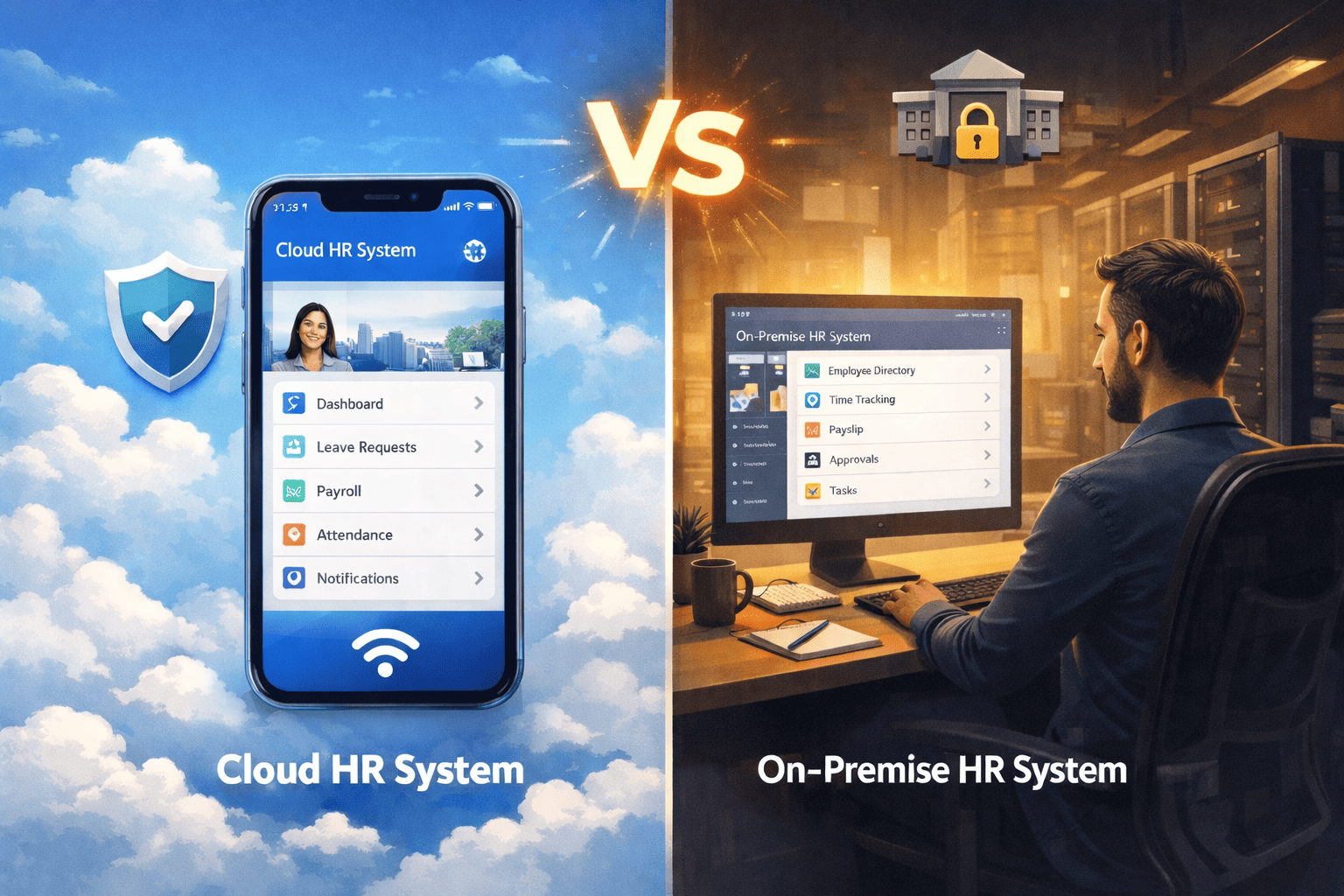
| Cloud-based HR platforms | Mid-sized teams needing flexibility and remote access | Requires stable internet connectivity |
| On-premise HR software | Businesses with strict data residency requirements | Higher upfront infrastructure cost |
| All-in-one HR and attendance suites | Teams wanting a single system for HR, payroll, and attendance | May include features you don’t yet need |
| Standalone payroll tools | Businesses only needing payroll automation | Limited scope beyond payroll |
For most mid-sized companies, a cloud-based, all-in-one HR and attendance suite offers the best balance of functionality, scalability, and cost-effectiveness.
How to Choose the Right HR Platform
Selecting an HR system is a decision that will affect daily operations for years, so it is worth following a structured evaluation process.
- Map out your current HR pain points and must-have features before comparing vendors.
- Shortlist providers with proven experience serving mid-sized businesses in your industry.
- Request a demo or trial to test the employee self-service experience firsthand.
- Confirm the system supports Malaysian statutory compliance requirements out of the box.
- Evaluate customer support responsiveness and available training resources.
- Check that the platform can scale with you as headcount grows.
Introducing SmartGogo: A Cloud HR Solution Built for Growing Teams
SmartGogo is designed specifically to address the needs outlined above. Built as a cloud-based HR platform, it brings together employee self-service, payroll processing, attendance tracking, and reporting into a single, easy-to-navigate system. For mid-sized teams that need a smart HR system without unnecessary complexity, SmartGogo offers a practical, scalable option that grows alongside your organisation.
Best Practices for a Smooth HR System Rollout
Implementing a new HR system successfully requires more than just choosing the right software. Consider these best practices to ensure a smooth transition.
- Communicate the change clearly to employees before rollout, explaining what will improve for them.
- Migrate historical data carefully, double-checking accuracy before going live.
- Provide short training sessions for both HR staff and general employees.
- Run the new system alongside existing processes briefly to catch discrepancies.
- Gather feedback in the first few weeks and adjust configurations as needed.
Key Takeaways
A smart HR system helps mid-sized teams reduce administrative burden, improve compliance accuracy, and gain better visibility into workforce data. The right platform should offer employee self-service, integrated payroll and compliance features, reliable attendance tracking, and meaningful reporting, all while remaining easy to scale as your business grows.
Conclusion
Finding the best HR system for a mid-sized team comes down to matching platform capabilities with your organisation’s actual needs, both today and as you grow. By prioritising employee self-service, payroll compliance, integrated attendance tracking, and clear reporting, businesses can significantly reduce administrative overhead while improving the employee experience. A well-chosen smart HR system pays for itself through time saved, fewer errors, and better workforce decisions.
Frequently Asked Questions
1. What makes an HR system “smart” rather than just basic software?
A smart HR system automates repetitive tasks such as payroll calculations and leave approvals, integrates multiple HR functions into one platform, and provides analytics that support better decision-making, rather than simply digitising paper forms.
2. Is a cloud-based HR system secure for mid-sized businesses?
Reputable cloud-based HR platforms use encryption, access controls, and regular security updates to protect employee data, often providing stronger security than in-house spreadsheets or legacy on-premise systems.
3. How long does it take to implement a new HR system?
Implementation timelines vary depending on company size and data complexity, but mid-sized businesses can typically expect a rollout period of a few weeks to a couple of months, including data migration and staff training.
4. Can an HR system handle Malaysian statutory compliance automatically?
Yes, quality HR platforms built for the Malaysian market are designed to calculate EPF, SOCSO, EIS, and PCB deductions automatically and stay updated with regulatory changes.
5. What is the biggest mistake mid-sized businesses make when choosing an HR system?
A common mistake is choosing a system based on price alone without evaluating whether it truly fits current workflows and can scale as the business grows, which often leads to costly system switches later on.
Interested in this product? Click here to learn more: https://www.smartouch.com.my/smartgogo/
Smart Touch technology pte ltd , www.smartouch.com.sg +65-63964767, sales@smartouch.com.sg , www.smartouch.com.my +607-3889903 sales@smartouch.com.my