How Geofencing Tech Inside A GPS Clock In App Respects Privacy And Adds Value
In today’s increasingly mobile workforce, organisations across Malaysia are seeking ways to manage employee location data responsibly while maintaining operational efficiency. Geofencing technology integrated into GPS clock-in applications has emerged as a solution that balances both concerns—enabling accurate time tracking whilst respecting employee privacy. This technology allows businesses to set virtual boundaries around work locations and automatically record clock-in and clock-out times when employees enter or leave these designated areas. Unlike invasive monitoring systems that track constant movement, geofencing focuses on specific work-related events, making it both practical and respectful of personal privacy. Understanding how this technology works and what benefits it provides is essential for Malaysian businesses considering digital time management solutions.
What Is Geofencing Technology In GPS Clock-In Apps?
Geofencing is a location-based service that uses GPS, Wi-Fi, or cellular data to create virtual boundaries around physical locations. When integrated into a GPS clock-in app, geofencing enables automatic time tracking based on employee presence within a defined work area.
Rather than requiring manual clock-in procedures or relying on manual entries, the technology automatically detects when an employee enters the geofenced work location and triggers a clock-in event. Similarly, when the employee leaves the geofenced area, an automatic clock-out is recorded. This streamlined approach eliminates human error, reduces administrative overhead, and provides accurate time records for payroll and compliance purposes.
The geofenced area can be customised to match the exact boundaries of an office, warehouse, retail store, or any other work location. Organisations can set multiple geofences for different work sites, allowing flexibility for businesses with multiple branches or remote work arrangements.
Privacy Considerations With Geofencing Technology
Privacy concerns are understandable when discussing location-based technology in the workplace. However, geofencing-based clock-in systems are designed differently from continuous tracking solutions, which is an important distinction.
Location Data Collection Is Limited And Purpose-Driven
Geofencing systems collect location data primarily to determine whether an employee is within the designated work area. The system does not track detailed movement patterns, routes taken, or activities outside the geofenced boundary. This means the technology serves a specific, work-related purpose without creating a constant surveillance record of employee whereabouts throughout the day.
Data Minimisation Principles
Effective geofencing implementations follow data minimisation principles, collecting only the information necessary to confirm presence within a work location and record the time of arrival and departure. Unnecessary data collection is avoided, which reduces privacy risks and demonstrates responsible data stewardship to employees.
Transparency And Consent
Professional organisations using geofencing technology should maintain clear communication with employees about how the system works, what data is collected, and how it will be used. Proper consent mechanisms and policy documentation help build trust and ensure compliance with personal data protection principles. When employees understand that geofencing simply records when they arrive at and leave work—rather than tracking their movements throughout the day—acceptance of the technology tends to increase significantly.
Business Benefits Of Geofencing-Based GPS Clock-In Apps
Beyond privacy considerations, geofencing technology delivers practical value to Malaysian organisations across various sectors.
Accurate Time Tracking And Payroll
Manual clock-in systems are prone to errors, buddy clocking, and administrative delays. Geofencing-based apps eliminate these issues by automatically recording precise clock-in and clock-out times based on GPS location data. This accuracy directly improves payroll processing, reduces disputes over working hours, and minimises compliance issues related to time records.
Reduced Administrative Burden
Automatic time recording removes the need for manual oversight of attendance processes. HR and management teams spend less time resolving attendance discrepancies, investigating missed clock-ins, or managing time-off requests that relate to unclear time records. This efficiency allows HR professionals to focus on more strategic responsibilities.
Enhanced Flexibility For Mobile And Multi-Site Workforces
For organisations with employees working across multiple locations—such as field service teams, delivery personnel, or logistics staff—geofencing provides a seamless way to track attendance regardless of physical location. Each work site can have its own geofence, and the system automatically recognises which location the employee has entered.
Real-Time Operational Insights
Geofencing data provides valuable information about workforce arrival patterns, on-time performance, and site occupancy. Managers can identify staffing trends, address chronic tardiness with specific employees, and optimise scheduling based on actual attendance data rather than assumptions.
Improved Compliance And Record-Keeping
Automatic, GPS-verified time records provide strong documentation for labour compliance purposes. In Malaysia, accurate time records support compliance with employment regulations and help organisations demonstrate responsible HR practices during audits or inspections.
Common Concerns And How Geofencing Addresses Them
Several concerns often arise when organisations first consider geofencing technology. Understanding these concerns and how modern systems address them can help with implementation decisions.
Signal Reliability And Technical Accuracy
GPS signals can occasionally be unreliable in urban environments, indoors, or areas with poor cellular coverage. Leading geofencing solutions account for this by using multiple technologies—GPS, Wi-Fi, and cellular data—to triangulate location and improve accuracy. The system can be configured to require confirmation from multiple technologies before triggering a clock event, reducing false positives.
Employee Concerns About Off-Hours Monitoring
When employees understand that geofencing only tracks presence at designated work locations and does not monitor activity outside those areas, concerns about off-hours surveillance typically diminish. Clear communication about the system’s limitations helps address this concern proactively.
Data Security And Protection
Location data is sensitive information and must be stored securely with appropriate access controls. Reputable geofencing solutions implement encryption, role-based access controls, and regular security audits to protect employee data. Organisations should verify that their chosen platform meets industry-standard security practices and relevant data protection requirements.
Implementing Geofencing Technology Responsibly
Successful implementation of geofencing-based clock-in systems requires more than simply deploying the technology. Several best practices support responsible and effective use.
- Communicate clearly with employees about how the system works, what data is collected, and how it will be used before implementation
- Document policies related to geofencing, time tracking, and data retention in employee handbooks and policies
- Obtain proper consent from employees as required by applicable personal data protection principles
- Set appropriate geofence boundaries that match actual work locations without unnecessarily capturing surrounding areas
- Monitor system performance to identify and resolve technical issues that may affect accuracy
- Limit data access to authorised personnel who have legitimate business reasons to view location-based time records
- Establish data retention policies that specify how long time records are stored and when they are securely deleted
How Smart Touch Technology Can Help
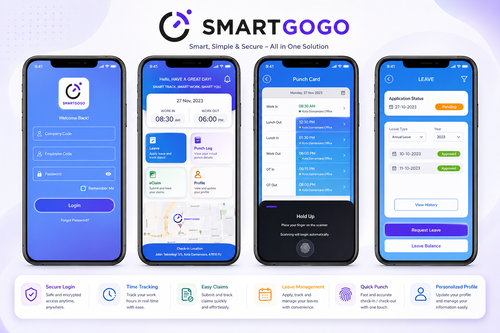
Smart Touch Technology’s smartgogo app offers a comprehensive solution for Malaysian organisations seeking reliable, privacy-respecting time management. The app integrates geofencing capabilities alongside other attendance management features, enabling businesses to implement automatic clock-in and clock-out based on employee location whilst maintaining clear boundaries around data collection and use.
By combining geofencing technology with a user-friendly mobile interface, smartgogo allows organisations to streamline their attendance processes, improve payroll accuracy, and provide employees with transparency about how their location data is being used. The platform supports the multi-site requirements common in Malaysian businesses whilst maintaining the security and privacy standards that modern organisations require.
Interested in this product? Click here to learn more: https://www.smartouch.com.my/smartgogo/
Conclusion
Geofencing technology in GPS clock-in apps represents a practical approach to modern workforce management that respects employee privacy whilst delivering real business value. By collecting location data only for the specific purpose of confirming work-site presence and recording time events, geofencing-based systems avoid the invasiveness of continuous tracking whilst still providing accurate attendance records.
For Malaysian organisations managing employees across single or multiple locations, geofencing offers a way to improve payroll accuracy, reduce administrative overhead, and gain meaningful operational insights—all whilst respecting employee privacy concerns. The key to successful implementation is transparent communication, clear policies, responsible data practices, and investment in reliable technology platforms that prioritise both functionality and security.
As workforce management continues to evolve, geofencing-based solutions will likely become increasingly common in Malaysian businesses. Understanding both the technology’s capabilities and its privacy implications helps organisations make informed decisions that benefit both business operations and employee trust.
Smart Touch Technology Pte Ltd
Singapore: www.smartouch.com.sg | +65-63964767 | sales@smartouch.com.sg
Malaysia: www.smartouch.com.my | +607-3889903 | sales@smartouch.com.my