Subcontractor Management System Malaysia: Better Control Of Contracts And Performance
Managing subcontractors effectively is one of the most critical challenges facing construction, engineering, and project-based businesses in Malaysia. Whether you’re overseeing a single project or multiple concurrent ventures, the ability to maintain clear visibility over subcontractor contracts, work quality, and timely delivery can make or break your bottom line.
Without proper systems in place, businesses often struggle with incomplete documentation, unclear payment terms, missed deadlines, and disputes that consume both time and resources. A robust subcontractor management system can transform how your organisation manages these relationships, ensuring compliance, reducing risk, and improving overall project performance.
This article explores why effective subcontractor management matters, the common challenges Malaysian businesses face, and how modern systems can help you gain better control of contracts and performance.
Why Subcontractor Management Matters In Malaysia
Malaysia’s construction and project-based industries rely heavily on subcontractors. From small renovation companies to large-scale infrastructure projects, most organisations work with multiple subcontractors at various stages of delivery.
Poor subcontractor management can lead to cascading problems. Project delays impact client satisfaction. Payment disputes damage relationships and affect cash flow. Incomplete work or quality issues require costly rework. Untracked performance metrics make it difficult to identify reliable partners for future projects.
A well-managed subcontractor system addresses these issues by creating transparency, accountability, and clear communication channels throughout the contract lifecycle.
Common Challenges In Subcontractor Management
Contract Documentation And Clarity
Many Malaysian businesses struggle to maintain organised, accessible contract documentation. Contracts may be stored in different locations, making it difficult to retrieve terms, conditions, and scope details quickly. This lack of centralisation often leads to misunderstandings and disputes.
Performance Tracking
Without systematic tracking, it’s challenging to monitor whether subcontractors are meeting agreed timelines, quality standards, and other performance metrics. This makes it difficult to hold parties accountable or identify performance trends over time.
Payment Management
Disputes over invoicing, payment terms, and milestone-based payments are common. When payment processes are manual and fragmented, errors occur, and payment delays frustrate subcontractors.
Compliance And Risk
Ensuring subcontractors maintain proper insurance, safety certifications, and compliance with local regulations requires consistent oversight. Failure to monitor these aspects exposes your business to legal and financial risk.
Communication Gaps
When information flows through emails, phone calls, and informal channels, critical updates get lost, and inconsistencies emerge. This creates confusion across teams and project sites.
How A Subcontractor Management System Improves Control
Centralised Contract Repository
A proper subcontractor management system stores all contracts and related documentation in one accessible location. Your team can quickly retrieve contract terms, scope of work, payment conditions, and performance requirements without searching through multiple systems or filing cabinets. This centralisation reduces confusion and ensures everyone operates from the same information.
Performance Monitoring And Reporting
Systematic tracking allows you to monitor key performance indicators such as on-time completion rates, quality metrics, safety compliance, and cost adherence. Automated reporting gives you real-time visibility into how each subcontractor is performing against agreed standards. This data helps identify top performers and address underperformance early.
Automated Payment Processing
A structured system automates invoice verification, milestone tracking, and payment processing. This reduces manual errors, accelerates payment cycles, and improves relationships with subcontractors. Clear payment workflows also help your business maintain better cash flow management.
Compliance And Risk Management
The system can track insurance expiries, safety certifications, and regulatory compliance status for each subcontractor. Automated alerts remind you when documents need renewal, reducing the risk of engaging subcontractors with lapsed certifications or insurance coverage.
Improved Communication
Centralised communication tools ensure that updates, changes, and important information reach all relevant parties. This reduces misunderstandings and keeps projects running more smoothly.
Key Features Of An Effective Subcontractor Management System
When evaluating a subcontractor management system for your Malaysian business, consider these essential features:
- Contract Management: Store, organise, and easily access all subcontractor contracts and related documents
- Performance Tracking: Monitor delivery timelines, quality metrics, safety compliance, and financial performance
- Payment Management: Automate invoice processing, milestone-based payments, and payment schedules
- Documentation Control: Maintain centralised records of insurance certificates, licenses, safety certifications, and compliance documents
- Reporting And Analytics: Generate performance reports and analytics to support decision-making
- Communication Tools: Facilitate clear, documented communication between your team and subcontractors
- Alert And Notification System: Receive reminders for key dates, compliance deadlines, and performance issues
How A Job Costing System Integrates With Subcontractor Management
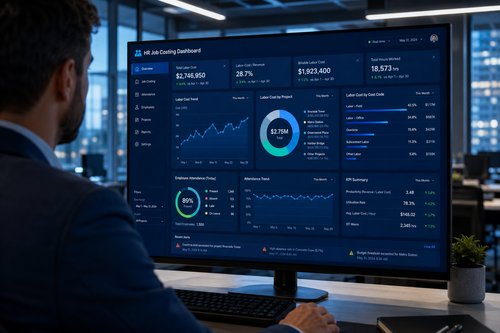
For project-based businesses, managing subcontractor costs accurately is essential to project profitability. A job costing system tracks expenses against budgets and identifies cost variances early. When integrated with subcontractor management, this provides complete visibility into labour costs, material expenses, and overhead allocation across projects and subcontractors.
This integration helps you:
- Compare actual subcontractor costs against budgeted amounts
- Identify which subcontractors deliver work within budget and which tend to overrun
- Analyse profitability by project, subcontractor, and cost category
- Make data-informed decisions about future subcontractor selection and budget allocation
- Improve project estimations based on historical cost data
Best Practices For Subcontractor Management In Malaysia
Clear Contracts And Documentation
Ensure all contracts clearly outline scope of work, timelines, payment terms, performance standards, insurance requirements, and dispute resolution processes. Have contracts reviewed to ensure compliance with Malaysian laws and industry standards.
Regular Performance Reviews
Conduct scheduled performance reviews with subcontractors. Discuss what’s working well, address any concerns, and align on expectations for future projects.
Maintain Updated Records
Keep insurance certificates, licenses, and certifications current and readily accessible. Establish a process to track expiry dates and prompt renewals.
Fair And Timely Payment
Pay subcontractors on schedule according to agreed terms. Prompt payment builds goodwill, reduces disputes, and encourages quality work.
Safety And Compliance Focus
Prioritise subcontractors who maintain strong safety records and comply with relevant regulations. Regular safety checks and compliance monitoring protect your business and workers.
Documented Communication
Keep records of important communications, decisions, and changes. This protects both parties and prevents misunderstandings.
How Smart Touch Technology Can Help
Smart Touch Technology provides a comprehensive job costing system designed specifically for project-based businesses operating in Malaysia. The system integrates contract management, performance tracking, and cost control into one unified platform.
With Smart Touch’s job costing system, you can streamline subcontractor management by centralising all contract documentation, automating payment processing based on milestones and deliverables, and generating detailed performance and cost reports. The system helps you track subcontractor performance against agreed metrics while maintaining clear visibility into project costs and profitability.
By integrating subcontractor management with comprehensive job costing, you gain the control and visibility needed to manage contracts effectively, reduce disputes, and improve overall project performance.
Explore the product here: http://www.smartouch.com.my/job-costing/
Conclusion
Effective subcontractor management is no longer optional for Malaysian businesses managing multiple projects or complex work streams. The challenges of coordinating contracts, monitoring performance, processing payments, and maintaining compliance demand systematic, organised approaches.
A well-implemented subcontractor management system—particularly one integrated with job costing capabilities—gives you the control and visibility needed to manage relationships effectively, reduce risk, and improve project outcomes. By centralising information, automating processes, and providing clear performance visibility, modern systems transform how you work with subcontractors.
If your business struggles with subcontractor coordination, documentation chaos, or cost control, now is the time to consider a structured management system that brings clarity and control to your operations.
Smart Touch Technology Pte Ltd
Singapore: www.smartouch.com.sg | +65-63964767 | sales@smartouch.com.sg
Malaysia: www.smartouch.com.my | +607-3889903 | sales@smartouch.com.my