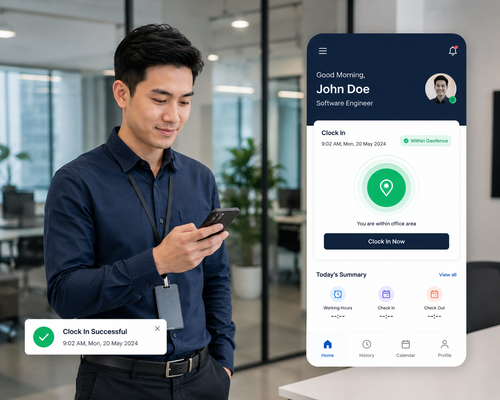
Time And Attendance System: Shift Attendance Monitoring For Accurate Real-Time Records
In today’s competitive business environment, organisations across Malaysia face mounting pressure to manage their workforce efficiently whilst maintaining accurate records of employee attendance. Whether you operate a manufacturing facility, retail outlet, hospitality venue, or corporate office, tracking shift attendance has become essential for payroll accuracy, compliance, and operational planning. A robust time and attendance system serves as the backbone of effective workforce management, enabling businesses to monitor real-time attendance records with precision and eliminate the inconsistencies that often plague manual tracking methods.
For many Malaysian employers, shift management remains a complex challenge. Employees work across different time zones, varying shift patterns, and multiple locations, making it difficult to maintain reliable attendance data. Without an automated solution, businesses risk costly errors in payroll processing, difficulty in scheduling, and compliance issues with employment regulations. This is where a modern time and attendance system becomes invaluable, transforming how organisations track, manage, and analyse their workforce presence.
Why Shift Attendance Monitoring Matters
Accurate shift attendance monitoring is far more than simply recording when employees arrive and leave. It forms the foundation of several critical business functions that directly impact profitability and operational success.
Precise attendance data ensures that payroll calculations are accurate and fair. When employees work hourly rates or shift-based compensation, even small discrepancies can accumulate into significant financial errors across your workforce. Manual timesheets and punch cards are prone to human error, buddy punching, and intentional time manipulation, all of which inflate labour costs and reduce your bottom line.
Beyond payroll, attendance monitoring enables better workforce planning. By understanding patterns of who is present, when absences occur, and how shifts are being covered, managers can make informed decisions about scheduling, resource allocation, and training requirements. Real-time visibility into attendance also helps identify potential issues early, such as chronic absenteeism or scheduling conflicts, before they escalate into operational problems.
For compliance purposes, maintaining accurate attendance records is a legal requirement. Malaysian employment standards require employers to keep proper records of working hours and rest days. A structured time and attendance system ensures you remain compliant with these obligations whilst protecting your organisation from disputes regarding wages, overtime, and entitlements.
Common Challenges With Manual Attendance Tracking
Many Malaysian organisations still rely on outdated methods for shift attendance monitoring, creating significant operational challenges.
The Buddy Punching Problem
One of the most common issues with manual time recording is buddy punching, where employees clock in or out for colleagues who are not present. This practice is difficult to detect without proper oversight and directly inflates attendance records whilst reducing actual work hours accountability. The cumulative effect across a large workforce can represent substantial unaccounted-for time.
Administrative Burden And Human Error
Manual attendance systems require significant administrative effort to collect, verify, and process timesheets. This process is time-consuming for HR teams and inherently prone to transcription errors, illegible handwriting, and inconsistent recording practices. When attendance data needs to be manually transferred between systems for payroll processing, opportunities for mistakes multiply.
Lack Of Real-Time Visibility
With paper-based or basic spreadsheet systems, managers often have no real-time visibility into who is currently on duty. This creates scheduling challenges, makes it difficult to respond quickly to unexpected absences, and prevents accurate tracking of shift coverage. Decision-making is delayed whilst waiting for attendance records to be compiled and analysed.
Difficulty With Complex Shift Patterns
Organisations with rotating shifts, part-time staff, multiple locations, or irregular working hours struggle significantly with manual tracking. Coordinating different shift patterns, managing shift swaps, and accurately recording hours across various schedule types becomes increasingly error-prone as complexity grows.
Benefits Of An Automated Time And Attendance System
Modern time and attendance systems eliminate many of the problems associated with manual tracking by automating the entire process from clock-in to data analysis.
- Accuracy and Compliance: Automated recording ensures precise capture of attendance data with minimal human error, whilst maintaining compliance with Malaysian employment regulations and record-keeping requirements.
- Real-Time Visibility: Managers gain immediate insight into current shift coverage, absences, and attendance patterns, enabling quick decision-making and responsive scheduling adjustments.
- Reduced Administrative Burden: Automation eliminates the need for manual data entry, verification, and reconciliation, freeing HR teams to focus on strategic initiatives rather than administrative tasks.
- Payroll Efficiency: Accurate attendance data integrates seamlessly with payroll systems, reducing calculation errors and accelerating the payment cycle.
- Enhanced Security: Biometric or digital verification methods eliminate buddy punching and ensure that only legitimate employees can record attendance.
- Data-Driven Insights: Comprehensive attendance analytics help identify trends, forecast staffing needs, and optimise scheduling based on historical patterns.
- Scalability: As your organisation grows or adds new locations, a digital system scales effortlessly without proportional increases in administrative complexity.
Key Features To Look For In A Time And Attendance System
When evaluating solutions for shift attendance monitoring, certain features prove essential for Malaysian businesses managing diverse workforces.
Multi-Location Support
If your organisation operates across multiple sites, the system must consolidate attendance data from all locations into a single, unified platform. This centralisation simplifies reporting and ensures consistent record-keeping across your entire operation.
Flexible Clock-In Methods
Modern systems should support multiple clock-in options, including biometric scanning, mobile applications, web-based portals, and traditional punch terminals. This flexibility accommodates different working environments and employee preferences whilst maintaining security.
Real-Time Reporting And Analytics
Dashboards and reporting tools that provide immediate visibility into attendance metrics enable managers to identify issues promptly and make data-informed decisions about scheduling and resource allocation.
Integration Capabilities
The system should integrate smoothly with your existing payroll, HR, and scheduling software to create a seamless workflow and eliminate manual data transfers between platforms.
Mobile Accessibility
For organisations with mobile or remote workforce elements, mobile app functionality ensures employees can record attendance from any location, whilst managers can monitor records on the go.
Automated Alerts And Notifications
Proactive alerts for late arrivals, early departures, missed clock-outs, or unusual patterns help managers respond quickly to potential issues.
Implementation Considerations For Malaysian Businesses
Implementing a time and attendance system requires careful planning to ensure successful adoption across your organisation.
Understand Local Requirements: Familiarise yourself with Malaysian employment laws regarding working hours, overtime, rest days, and record-keeping obligations. Your chosen system should support compliance with these requirements. For the most current information on specific regulations, it is advisable to consult the latest guidelines from the Ministry of Human Resources or relevant labour department.
Employee Communication: Transparent communication with staff about why the system is being implemented and how it works encourages buy-in and reduces resistance. Emphasise how accurate records protect employees by ensuring they are paid correctly for all hours worked.
Adequate Training: Ensure all employees receive proper training on using the new system, whether it involves biometric scanning, mobile apps, or web-based interfaces. Well-trained users generate more reliable data and experience fewer technical issues.
Phased Rollout: Consider implementing the system in phases, starting with one department or location to work out any issues before full organisation-wide deployment.
Data Security: Choose a system with robust security measures to protect sensitive attendance and personal data in compliance with Malaysian data protection standards.
How Smart Touch Technology Can Help
Smart Touch Technology offers comprehensive time and attendance solutions specifically designed to meet the needs of Malaysian and Singapore-based organisations. The time management system provides automated shift attendance monitoring with real-time record capture, eliminating the inconsistencies and administrative burden of manual tracking.
With Smart Touch Technology’s platform, organisations gain accurate, tamper-proof attendance records that integrate seamlessly with payroll and HR functions. Managers benefit from real-time visibility into shift coverage and attendance patterns, enabling responsive scheduling and immediate identification of issues. The system supports flexible clock-in methods suitable for different working environments and scales efficiently as your organisation grows or expands to new locations.
To learn more about how Smart Touch Technology’s time and attendance solutions can streamline your shift monitoring processes and improve workforce management accuracy, read the product overview here: http://www.smartouch.com.my/tms-time-management-system-singapore-malaysia/
Conclusion
Shift attendance monitoring forms a critical component of effective workforce management in Malaysian organisations. The transition from manual tracking to an automated time and attendance system delivers substantial benefits including improved accuracy, enhanced compliance, reduced administrative overhead, and real-time operational visibility. By implementing a modern solution, businesses eliminate the errors and inefficiencies inherent in manual processes whilst creating a more secure, fair, and transparent system for both employees and employers.
Whether you manage a small team with rotating shifts or a large workforce across multiple locations, investing in a robust time and attendance system represents a practical decision that strengthens payroll accuracy, improves scheduling efficiency, and supports sustainable business growth. The sooner your organisation makes this transition, the sooner you will experience the operational and financial benefits of automated shift attendance monitoring.
Smart Touch Technology Pte Ltd
Singapore: www.smartouch.com.sg | +65-63964767 | sales@smartouch.com.sg
Malaysia: www.smartouch.com.my | +607-3889903 | sales@smartouch.com.my