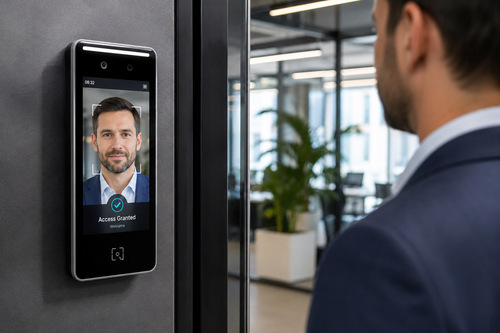
Door Access System: Worker Dormitory Door Security For Secure Digital Operations
Worker dormitories are common accommodation solutions across Malaysia, providing safe and affordable housing for employees in various industries. However, managing security and access control in these facilities presents unique challenges that extend beyond traditional lock-and-key systems. A modern door access system offers a comprehensive solution that protects residents, streamlines operations, and ensures compliance with safety standards.
For dormitory managers, employers, and facility operators, implementing an effective door access system is no longer a luxury—it’s a necessity. This article explores how door access technology can enhance security, improve operational efficiency, and create a safer environment for workers.
Why Worker Dormitory Security Matters
Worker dormitories house multiple residents sharing communal spaces and individual units. Unlike traditional residential properties, dormitories face distinct security pressures that require tailored solutions:
- High occupancy rates increase the number of people entering and exiting the premises daily
- Shared access points create vulnerabilities if not properly monitored
- Staff turnover means regular changes to who has legitimate access
- Theft, unauthorised entry, and safety incidents can disrupt operations and harm residents
- Regulatory compliance requires documented access records and accountability
Traditional methods like physical keys are unreliable for large facilities. Keys can be lost, duplicated without authorisation, or forgotten entirely. This creates security gaps and administrative headaches for management teams.
Understanding Door Access Systems
A door access system is a digital security solution that controls who can enter specific areas and when. Instead of relying on physical keys, access is granted through credentials such as keycards, mobile credentials, PIN codes, or biometric identification.
How Door Access Systems Work
Modern door access systems operate on a straightforward principle: access permissions are programmed centrally and enforced at each entry point. When a resident or authorised person attempts to enter, their credential is verified against the system’s database. If their access is valid, the door unlocks; if not, entry is denied.
This digital approach creates an audit trail of every access attempt, including who entered, when they entered, and whether the attempt was successful. This information is invaluable for security investigations and operational insights.
Key Components of a Door Access System
A complete door access solution typically includes:
- Access control readers (card readers, keypad, biometric scanners)
- Electronic locks fitted to doors
- Central management software for programming and monitoring
- Credential management tools for issuing and revoking access
- Backup power systems for emergency situations
- Integration capabilities with other security systems
Benefits of Door Access Systems for Worker Dormitories
Enhanced Security and Safety
The primary advantage of a door access system is improved security. By controlling who can access specific areas—whether individual rooms, common areas, or sensitive storage—you prevent unauthorised entry and reduce the risk of theft or harm to residents. The system can be configured so residents only access their own rooms or designated communal spaces.
In emergencies, authorised personnel can unlock multiple doors simultaneously, ensuring safe evacuation routes and preventing trapped residents.
Operational Efficiency
Managing access manually is time-consuming and error-prone. A door access system automates permission updates, eliminating the need to physically redistribute keys when residents move in or out. New residents can be added to the system in minutes, and departing residents can be removed immediately.
Staff members no longer need to maintain multiple key sets or respond to lock-out situations as frequently. This reduces administrative burden and allows your team to focus on other operational priorities.
Accountability and Compliance
Access logs create a permanent record of who entered which areas and at what times. This accountability deters misconduct and provides evidence if disputes arise. For employers and facility managers, this documentation demonstrates compliance with safety regulations and duty of care obligations.
Should an incident occur—theft, vandalism, or injury—access records help investigators identify who was present and reconstruct events accurately.
Cost Savings
While initial investment in a door access system requires capital expenditure, long-term savings are substantial. You eliminate ongoing costs of key replacement, lock re-keying, and emergency locksmith callouts. Reduced theft and security incidents also protect your asset base and insurance premiums.
Common Challenges in Dormitory Access Control
Managing Multiple Users and Permissions
Dormitories with dozens or hundreds of residents require flexible permission structures. Different residents need access to different areas at different times. Without proper systems, managing these permissions becomes chaotic. A well-designed door access solution allows granular control, ensuring each resident has exactly the access they need—no more, no less.
Credential Loss and Replacement
Residents lose keycards and forget PIN codes. A robust system must handle credential replacement efficiently without compromising security. Digital systems make reissuing credentials simple, whereas physical keys require new locks or re-keying services.
Emergency Access Requirements
During emergencies—fires, medical situations, or security threats—authorised personnel must be able to access all areas immediately. Door access systems should include emergency override capabilities and fail-safe mechanisms that allow doors to unlock during power outages or system failures.
Integration with Existing Systems
Many dormitories already use CCTV, alarm systems, or visitor management platforms. A modern door access system should integrate seamlessly with these existing tools, creating a unified security ecosystem rather than isolated point solutions.
Practical Considerations for Implementation
Planning Your Door Access System
Before implementing a door access system, conduct a thorough security audit of your dormitory. Identify all access points that require control—main entrances, individual room doors, staff areas, maintenance rooms, and common facilities. Assess current security gaps and define which areas need different permission levels.
Consider your resident demographics, operational workflows, and future growth. A system chosen for 50 residents should remain scalable if your dormitory expands to 200 residents.
Choosing the Right Technology
Several technologies can serve as access credentials, each with advantages and trade-offs:
- Keycards or fobs: Easy to distribute and replace, but can be lost or forgotten
- PIN codes: No physical credential to lose, but residents may share codes or forget them
- Mobile credentials: Convenient for residents who carry smartphones, but requires ongoing mobile infrastructure
- Biometric systems: Highly secure and cannot be lost, but may raise privacy concerns and require careful implementation
Many modern systems combine multiple technologies, allowing residents to choose their preferred method or providing backup options if primary credentials fail.
Installation and Maintenance
Professional installation is critical for system reliability. Doors must be equipped with compatible electronic locks, readers must be positioned for easy use, and backup power systems must be properly configured. After installation, regular maintenance ensures components function correctly and the system remains secure against evolving threats.
How Smart Touch Technology Can Help
Smart Touch Technology offers a comprehensive door access system designed to meet the security and operational needs of worker dormitories across Malaysia. Their solution provides reliable access control with intuitive management tools that simplify operations for facility managers.
Whether you’re implementing access control for the first time or upgrading an existing system, Smart Touch Technology can deliver a solution tailored to your dormitory’s specific requirements. Their door access system combines security, ease of use, and operational efficiency—essential elements for modern worker accommodation facilities.
Want to know more about the product? Check it out here: https://www.smartouch.com.my/door-access-system/
Conclusion
A door access system is a vital investment for any worker dormitory seeking to enhance security, improve operations, and protect residents. By moving beyond traditional keys to digital access control, facility managers gain better oversight, faster response capabilities, and comprehensive audit trails.
The technology is proven, reliable, and increasingly affordable. As dormitory operators in Malaysia face rising security challenges and regulatory requirements, door access systems provide a practical solution that addresses real operational needs.
If you’re responsible for dormitory security or facility management, now is the time to evaluate whether your current access control methods are adequate. A modern door access system can transform how you manage security, streamline operations, and provide peace of mind to both management and residents.
Smart Touch Technology Pte Ltd
Singapore: www.smartouch.com.sg | +65-63964767 | sales@smartouch.com.sg
Malaysia: www.smartouch.com.my | +607-3889903 | sales@smartouch.com.my