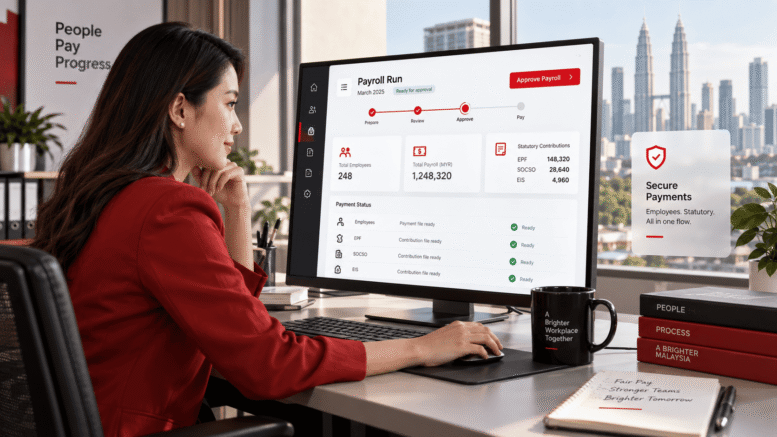
SmartPay: Cloud Payroll For Malaysian SMEs For Factories And Offices
Managing payroll efficiently is one of the most critical operational challenges faced by Malaysian small and medium-sized enterprises (SMEs). Whether you operate a manufacturing facility, a bustling office environment, or a combination of both, payroll administration demands accuracy, compliance, and timeliness. For many business owners and HR managers, manual payroll processing consumes valuable time, introduces the risk of errors, and creates compliance headaches.
The good news is that modern cloud-based payroll solutions are transforming how Malaysian businesses handle their most essential HR function. Cloud payroll systems offer a practical way to streamline salary calculations, ensure regulatory compliance, reduce administrative burden, and provide employees with transparent, timely compensation.
This article explores how cloud payroll solutions benefit Malaysian SMEs across both factory and office environments, the challenges they address, and how businesses can implement them effectively.
Understanding Cloud Payroll and Its Relevance to Malaysian SMEs
Cloud payroll refers to payroll management software hosted on secure internet servers, accessible from anywhere with an internet connection. Unlike traditional on-premise payroll systems or manual spreadsheet-based processes, cloud payroll solutions centralise all payroll data, calculations, and reporting in one accessible platform.
For Malaysian SMEs, this approach offers particular advantages. Many growing businesses operate across multiple locations—factories in industrial areas and administrative offices in city centres. A cloud-based system eliminates the need to manage separate payroll processes at each location and reduces dependency on specific employees who may be the sole keepers of payroll knowledge.
Cloud payroll is especially relevant for Malaysian businesses because it can be configured to accommodate local employment regulations, tax calculations, and statutory deduction requirements specific to Malaysia.
Key Challenges Malaysian SMEs Face With Payroll Management
Before exploring solutions, it’s important to understand the genuine challenges that drive businesses to seek better payroll systems.
Time and Resource Constraints
Many SMEs still process payroll manually or using basic spreadsheet tools. This approach requires significant time investment each pay cycle. HR personnel must manually input data, perform calculations, verify deductions, and prepare reports. The more employees a business has, the more susceptible manual processes become to errors and delays.
Compliance and Regulatory Complexity
Malaysian employment and tax regulations are detailed and subject to updates. Businesses must ensure accurate calculation of statutory contributions such as the Employees Provident Fund (EPF), Social Security Organisation (SOCSO) contributions, and income tax deductions. Non-compliance can result in penalties, legal complications, and damage to business reputation. For businesses operating factories and offices simultaneously, managing different wage structures and compliance requirements across locations adds complexity.
Data Security and Accuracy
Payroll data is highly sensitive and confidential. Manual processes and unsecured spreadsheets present significant security risks. Additionally, human error in manual calculations can lead to incorrect salary payments, requiring time-consuming corrections and potentially affecting employee trust and satisfaction.
Scalability Issues
As SMEs grow and hire more staff, manual payroll processes become increasingly unsustainable. Scaling payroll operations without proper systems leads to exponential increases in administrative work and error risk.
Benefits of Cloud Payroll for Malaysian Factories and Offices
Cloud payroll solutions address these challenges directly and offer numerous operational benefits.
Improved Accuracy and Reduced Errors
Automated calculations dramatically reduce the likelihood of payroll errors. The system consistently applies the same rules, calculations, and deductions across all employees, eliminating manual calculation mistakes. This accuracy protects both the business and employees, reducing disputes and corrections.
Compliance Management
Modern cloud payroll systems designed for the Malaysian market can be configured to reflect current statutory requirements. This helps ensure that EPF, SOCSO, income tax, and other mandatory deductions are calculated correctly and on time. Many systems include automatic updates when regulations change, helping businesses maintain compliance without manual intervention.
Time Efficiency
Automating payroll processing frees HR and finance teams from repetitive manual tasks. Employees can focus on strategic HR activities such as talent development, employee engagement, and workforce planning. What once took hours or days can be completed in minutes, allowing more frequent payroll runs if needed.
Enhanced Data Security
Cloud-based systems employ enterprise-grade security measures including encryption, secure access controls, and regular backups. Sensitive payroll data is protected far better than in spreadsheets or unsecured local computers. Authorised personnel can access the system securely from anywhere, supporting the needs of businesses with multiple locations.
Transparent Employee Communication
Cloud payroll systems often include employee self-service portals where staff can view their salary slips, deductions, and contribution records. This transparency builds trust, reduces HR enquiries, and improves employee satisfaction. Employees understand exactly how their compensation is calculated.
Scalability
Cloud systems scale effortlessly as businesses grow. Adding new employees or opening additional locations doesn’t require significant additional software investment or infrastructure changes. The system simply accommodates more users and data.
Detailed Reporting and Analytics
Cloud payroll platforms generate comprehensive reports for management, finance, and compliance purposes. Businesses can analyse labour costs, track benefits, monitor deductions, and generate government submissions more easily. These insights support better business decision-making.
Special Considerations for Factories and Offices
Malaysian businesses that operate both factory and office environments face unique payroll challenges. Workers in these environments often have different wage structures, allowances, overtime arrangements, and shift patterns.
Factories typically process overtime, shift differentials, and production bonuses. Offices may have different allowance structures and bonus arrangements. A flexible cloud payroll system can accommodate these variations, applying different wage rules to different groups of employees while maintaining central management and oversight.
Additionally, factories and offices may operate different pay schedules or require different levels of detail in payroll records. A robust cloud system supports these operational differences without requiring separate, disconnected processes.
Implementation Considerations for Malaysian SMEs
When considering a cloud payroll solution, Malaysian businesses should evaluate several key factors:
- Local Compliance Features: Ensure the system is configured for Malaysian statutory requirements including EPF, SOCSO, and tax calculations. Verify that it updates automatically when regulations change.
- Ease of Use: The system should be intuitive for HR staff with varying technical expertise. Quality user interfaces reduce training time and implementation challenges.
- Integration Capabilities: Consider whether the payroll system integrates with existing business software such as accounting, HR information systems, or time and attendance tracking tools.
- Support and Training: Reliable local support is valuable, particularly during implementation and when questions arise about Malaysian-specific compliance matters.
- Data Migration: Assess how historical payroll data will be imported into the new system and whether the provider offers support during this transition.
- Security and Data Protection: Verify that the system meets appropriate security standards and that data backups and disaster recovery measures are in place.
How SmartPay Can Help
SmartPay is a cloud payroll solution specifically designed to address the needs of Malaysian SMEs operating in diverse environments such as factories and offices. By centralising payroll management in a secure, cloud-based platform, SmartPay helps businesses eliminate manual processes, ensure compliance with Malaysian employment regulations, and reduce administrative burden.
Whether you manage a single factory location or operate across multiple factory and office sites, SmartPay provides the flexibility and automation needed to process payroll accurately and efficiently. The system is configured to support Malaysian statutory requirements, helping businesses stay compliant with EPF, SOCSO, and tax obligations.
For businesses ready to move beyond spreadsheets and manual processes, SmartPay offers a practical, secure alternative that scales with your business growth. By automating payroll, you protect data security, improve accuracy, and free your team to focus on more strategic HR activities.
Conclusion
Cloud payroll solutions represent a significant opportunity for Malaysian SMEs to modernise their payroll operations, improve accuracy, ensure compliance, and reduce administrative strain. Whether your business operates factories, offices, or both, the benefits of cloud-based payroll management are substantial and increasingly essential for competitive, compliant operations.
Manual payroll processes are time-consuming, error-prone, and difficult to scale. Cloud payroll systems address these challenges directly, offering automation, security, and flexibility tailored to Malaysian business requirements.
If your SME is still managing payroll manually or struggling with compliance across multiple locations, it’s worth exploring how modern cloud payroll solutions can transform this critical business function. The time, accuracy, and compliance benefits often justify the transition within the first few months of implementation.
Ready to streamline your payroll operations? Contact Smart Touch Technology to learn how SmartPay can help your Malaysian business simplify payroll management, improve compliance, and support growth across your factory and office locations.
Smart Touch Technology Pte Ltd
Singapore: www.smartouch.com.sg | +65-63964767 | sales@smartouch.com.sg
Malaysia: www.smartouch.com.my | +607-3889903 | sales@smartouch.com.my