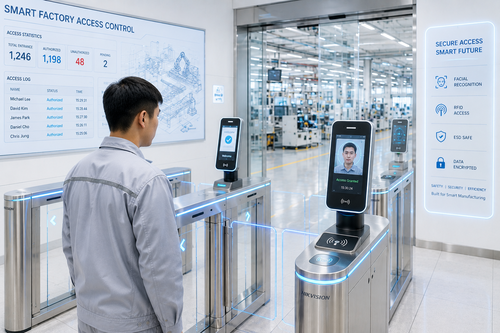
Electrostatic discharge (ESD) remains one of the most significant threats to sensitive electronic components in manufacturing environments. A single uncontrolled electrical discharge can damage or destroy components worth thousands of ringgit, leading to costly production delays and quality issues. For electronics manufacturing plants in Malaysia, implementing effective ESD control measures is not just a best practice—it is essential for maintaining product quality and protecting your bottom line.
One of the most effective yet often overlooked solutions is the strategic placement of ESD tripod gates at critical entry points throughout your facility. These specialized barriers serve as both a physical checkpoint and a visible reminder of ESD protocols, helping to ensure that personnel, equipment, and materials entering sensitive manufacturing areas are properly grounded and prepared.
In this article, we explore what ESD tripod gates are, why they matter for electronics manufacturing, and how they can be integrated into a comprehensive ESD control strategy for your plant.
Understanding ESD and Its Impact on Electronics Manufacturing
Electrostatic discharge is the sudden flow of electricity between two electrically charged surfaces. In manufacturing environments, this discharge can occur when a person walks across a floor, touches a component, or even moves near sensitive equipment. For many electronic devices—particularly semiconductors, integrated circuits, and microprocessors—exposure to even small voltage discharges can cause permanent damage.
The challenge is that ESD damage is often invisible and cumulative. A component that survives a small discharge may experience latent defects that cause it to fail during testing or, worse, in the field after it reaches the customer. This phenomenon, known as latent defect failure, can be extremely costly in terms of warranty claims, reputation damage, and customer satisfaction.
In Malaysia’s competitive electronics manufacturing sector, controlling ESD is crucial for maintaining international quality standards and protecting your market position. Implementing physical controls like ESD tripod gates demonstrates a commitment to quality and can significantly reduce product failures attributable to static discharge.
What Are ESD Tripod Gates?
ESD tripod gates are specialized access control barriers designed specifically for environments where electrostatic discharge is a concern. These gates feature three legs (hence “tripod”) and are typically constructed from materials that do not accumulate static charge or are designed to safely dissipate any electrical charge.
The primary function of an ESD tripod gate is to serve as a controlled entry point that:
- Prevents unauthorised access to ESD-sensitive areas
- Provides a physical transition zone where personnel can be reminded of proper ESD procedures
- Allows for easy passage of authorised personnel while maintaining security
- Acts as a visual barrier reinforcing the importance of ESD control protocols
- Can be equipped with additional features such as time clock integration or access control systems
Unlike traditional security gates, ESD tripod gates are engineered with materials and designs that either prevent the generation of static charge or allow it to safely dissipate to ground. This ensures that the gate itself does not become a source of ESD risk.
Why Electronics Manufacturing Plants Need ESD Tripod Gates
Creating Clear Access Control Zones
Electronics manufacturing plants typically divide their facilities into different ESD protection zones based on the sensitivity of the work being performed. ESD tripod gates provide a clear, unmistakable boundary between zones, helping to ensure that only authorised personnel enter areas where sensitive components are being handled or manufactured.
Without such clear demarcation, it is easy for personnel to bypass ESD protocols or become confused about where ESD precautions are required. A physical gate eliminates this ambiguity.
Enforcing ESD Awareness and Compliance
Every time a person passes through an ESD tripod gate, they are reminded of their responsibility to maintain ESD control measures. This consistent reinforcement is invaluable for building a strong ESD culture within your organisation. When employees understand that there is a specific gate designed to control access to sensitive areas, they are more likely to remember to wear wrist straps, avoid walking on non-conductive surfaces, and follow other ESD protocols.
Preventing Accidental Entry by Unprotected Personnel
In a busy manufacturing environment, it is all too easy for someone to wander into an ESD-sensitive area without proper grounding or protective equipment. An ESD tripod gate physically prevents this from happening. Visitors, contractors, or even employees from other departments cannot casually walk through without acknowledgment of the gate’s presence.
Supporting Compliance and Auditing
Many electronics manufacturers in Malaysia must comply with international standards such as IEC 61340-5-1 or industry-specific ESD standards. Implementing visible ESD controls like tripod gates demonstrates your commitment to compliance and provides clear evidence of your ESD protection programme during audits and inspections.
Key Features to Look For in ESD Tripod Gates
When selecting ESD tripod gates for your electronics manufacturing plant, consider the following features:
- Static-Dissipative Materials: The gate should be constructed from materials that do not accumulate static charge or are designed to safely dissipate any charge that does accumulate.
- Durability: Manufacturing environments can be demanding. Your ESD tripod gate must be sturdy and able to withstand frequent use, cleaning, and exposure to typical manufacturing conditions.
- Easy Operation: The gate should be easy for authorised personnel to open and close without excessive force or complicated procedures.
- Integration Capability: Look for gates that can be integrated with time clock systems, access control readers, or other management systems to track personnel movement and ensure accountability.
- Clear Visibility: The gate should be visible and obviously present so that personnel cannot miss or forget about it.
- Maintenance Accessibility: The gate should be designed for easy cleaning and maintenance to prevent the accumulation of dust or contaminants that could affect its performance.
Implementing ESD Tripod Gates as Part of a Comprehensive ESD Strategy
ESD tripod gates are most effective when they are part of a broader, integrated ESD control programme. An effective programme typically includes:
- Proper grounding and electrical bonding of equipment and work surfaces
- Anti-static flooring or footwear for personnel working in sensitive areas
- ESD wrist straps and other personal protective equipment
- Regular training and awareness programmes for all personnel
- Environmental monitoring to maintain appropriate humidity levels
- Regular auditing and testing to verify compliance
- Controlled access points such as ESD tripod gates
The tripod gate serves as both a physical control and a visual reminder that reinforces all the other elements of your ESD programme. When personnel pass through the gate, they are prompted to check their wrist strap, remember their training, and mentally prepare to work in an ESD-sensitive environment.
Common Challenges and Best Practices
Maintaining Compliance in High-Traffic Areas
One challenge with ESD tripod gates in busy manufacturing plants is ensuring that personnel actually comply with the gating system rather than finding workarounds. This is best addressed through a combination of:
- Regular training and reinforcement of ESD policies
- Visible signage and clear communication about why the gates are important
- Periodic audits to ensure gates are being used properly
- Integration with access control systems to create accountability
Choosing the Right Location for ESD Tripod Gates
The most effective placement for ESD tripod gates is at the boundary between non-controlled areas and areas where ESD-sensitive work is performed. In many electronics manufacturing plants, this might be:
- The entrance to assembly areas where sensitive components are being handled
- Access points to cleanroom or controlled environments
- Transitions from general manufacturing areas to component storage areas
- Visitor entry points to sensitive manufacturing zones
Maintaining Awareness Over Time
One challenge with any physical control is that familiarity can breed complacency. Personnel may become so accustomed to passing through the gate that they stop thinking consciously about ESD. Combat this through:
- Regular refresher training on ESD risks and proper procedures
- Periodic signage updates and awareness campaigns
- Regular maintenance and visible upkeep of the gates themselves
- Including ESD gate compliance in performance evaluations or safety metrics
How Smart Touch Technology Can Help
Smart Touch Technology provides barrier solutions designed for controlled access in manufacturing and industrial environments. These solutions can be integrated with time clock systems and other access control mechanisms to create a comprehensive security and accountability system for your manufacturing facility.
By implementing Smart Touch Technology’s barrier solutions at strategic access points, you can combine ESD gate functionality with time tracking, visitor management, and access control in a single integrated system. This not only supports your ESD control programme but also provides valuable data on personnel movement, shift compliance, and facility security.
For more information about the product, please click here: https://www.smartouch.com.my/category/time-clock/barrier/
Conclusion
ESD tripod gates are a practical, cost-effective component of any comprehensive electrostatic discharge control programme in electronics manufacturing. By providing clear access control, reinforcing ESD awareness, and preventing unprotected personnel from entering sensitive areas, these gates help to reduce costly product failures and maintain the quality standards that your customers expect.
For Malaysian electronics manufacturers, implementing ESD tripod gates demonstrates a professional commitment to quality control and compliance with international manufacturing standards. When combined with proper grounding, training, and regular auditing, ESD tripod gates significantly reduce the risk of static discharge damage and protect your manufacturing operations.
The key to success is selecting gates that are durable, easy to use, and integrate well with your existing manufacturing systems. Consider your facility’s specific layout, traffic patterns, and ESD risk zones when determining where to install these barriers, and ensure that all personnel understand the purpose and proper use of the gates.
Smart Touch Technology Pte Ltd
Singapore: www.smartouch.com.sg | +65-63964767 | sales@smartouch.com.sg
Malaysia: www.smartouch.com.my | +607-3889903 | sales@smartouch.com.my