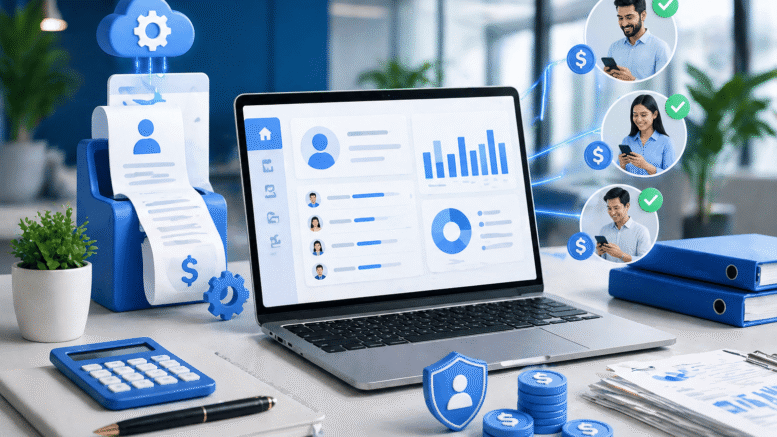
Managing payroll manually or through outdated desktop software creates unnecessary risk for Malaysian businesses. Calculation errors, missed statutory deadlines, and time-consuming manual processes all add up, especially as a company grows. A cloud payroll system addresses these challenges directly, giving HR teams a centralized, accurate, and accessible way to manage employee compensation.
For companies operating in Malaysia, a cloud-based approach also simplifies compliance with EPF, SOCSO, EIS, and income tax requirements, since calculations and reporting update automatically as regulations change.
Why Traditional Payroll Processes Fall Short
Manual payroll processing, whether on paper or spreadsheets, is prone to human error. A single miscalculation in EPF or SOCSO contributions can trigger penalties or employee dissatisfaction, and correcting these errors after the fact consumes valuable HR time.
Desktop payroll software also creates challenges around access and updates. When statutory rates change, IT teams must manually push updates to every installation, and remote or multi-branch access becomes difficult without a centralized, cloud-based system.
How a Cloud Payroll System Works
Centralized Employee Data
All employee salary details, allowances, deductions, and statutory information are stored securely in one online platform, accessible to authorized HR staff from anywhere with an internet connection.
Automated Statutory Calculations
The system automatically calculates EPF, SOCSO, EIS, and PCB deductions based on current government rates, reducing the risk of manual calculation errors and ensuring consistent compliance.
Real-Time Reporting and Payslips
Payslips, CP39 forms, and statutory reports generate automatically each pay cycle, giving both HR teams and employees instant access to accurate, up-to-date records.
Key Benefits of a Cloud Payroll System
- Accuracy: Automated calculations reduce human error in statutory deductions.
- Time savings: Automatic calculations and payslip generation free up HR hours for other tasks.
- Remote accessibility: Authorized staff can manage payroll from any location with internet access.
- Regulatory compliance: Statutory rate updates are applied automatically as regulations change.
- Scalability: The system grows with the business, from a handful of employees to hundreds.
Best Practices for Switching to a Cloud Payroll System
- Migrate historical payroll data carefully to preserve accurate year-to-date records.
- Run the new system in parallel with the old process for at least one pay cycle to verify accuracy.
- Train HR staff thoroughly on the new interface before fully transitioning.
- Set up role-based access controls to protect sensitive salary information.
- Schedule regular data backups even though the system is cloud-hosted.
Step-by-Step: How a Monthly Payroll Run Works
- HR reviews and confirms employee attendance and leave records for the month.
- The system calculates gross salary including any overtime or allowances.
- Statutory deductions such as EPF, SOCSO, EIS, and PCB are calculated automatically.
- Net pay is finalized and payslips are generated for each employee.
- Payments are processed and statutory reports are submitted or prepared for submission.
Key Takeaways
- A cloud payroll system reduces errors and keeps statutory compliance up to date automatically.
- Remote access allows HR teams to manage payroll from any location.
- Automated payslip and report generation saves significant administrative time each month.
- A phased rollout with parallel testing reduces risk during the transition.
- Role-based access keeps sensitive salary data secure.
Frequently Asked Questions
Is a cloud payroll system compliant with Malaysian labor law?
Yes, reputable cloud payroll systems are built to stay current with EPF, SOCSO, EIS, and income tax regulations, automatically applying updated rates and reporting formats as they change.
How secure is employee data on a cloud payroll platform?
Established providers use encryption, secure data centers, and role-based access controls to protect sensitive salary and personal information, often exceeding the security of a typical office computer.
Can a cloud payroll system integrate with our existing HR or attendance software?
Most cloud payroll platforms offer integrations or APIs that connect with attendance systems, HR software, and accounting platforms, allowing data to flow between systems without manual re-entry.
What happens if there is no internet connection during payroll processing?
Most systems allow work to be prepared offline and synced once connectivity is restored, though a stable internet connection is recommended for real-time processing and reporting.
How long does it take to migrate from an existing payroll system?
Migration timelines vary by company size and data complexity, but most small to mid-sized businesses can complete a full transition within a few weeks, including a parallel testing period.
Cloud Payroll vs. Traditional Desktop Software
Desktop payroll software typically requires installation on individual office computers, meaning updates, backups, and statutory rate changes all depend on manual IT intervention. If a computer fails or a laptop is lost, payroll records stored locally can be difficult or impossible to recover.
A cloud payroll system removes this single point of failure. Data is stored on secure remote servers with automatic backups, and updates to statutory rates or tax tables are pushed to all users simultaneously without any local installation required.
Cost structures also differ. Desktop software is often purchased as a one-time license with separate paid upgrades, while cloud payroll systems typically use a subscription model that includes ongoing updates, support, and security patches as part of the monthly or annual fee.
For many growing businesses, the predictable monthly subscription cost of a cloud system is easier to budget for than the unpredictable expense of periodic desktop software upgrades, IT maintenance, and server hardware replacement.
This predictability makes long-term financial planning simpler for finance teams managing annual budgets.
Most vendors offer a free trial or demo period, giving finance and HR leaders a low-risk way to evaluate fit before committing to a full rollout.
Taking advantage of this trial period is a practical way to confirm the platform handles company-specific pay structures correctly.
Conclusion
A cloud payroll system gives Malaysian businesses a reliable, compliant, and efficient way to manage employee compensation without the risks of manual processing or outdated desktop software. From automated statutory calculations to remote accessibility, the benefits extend well beyond simple convenience. For companies ready to modernize payroll management, moving to a cloud-based system is a practical, low-risk upgrade with clear long-term returns.
Need more information about the product? Click here: http://www.smartouch.com.my/payroll-malaysia/
Smart Touch technology pte ltd , www.smartouch.com.sg +65-63964767, sales@smartouch.com.sg , www.smartouch.com.my +607-3889903 sales@smartouch.com.my