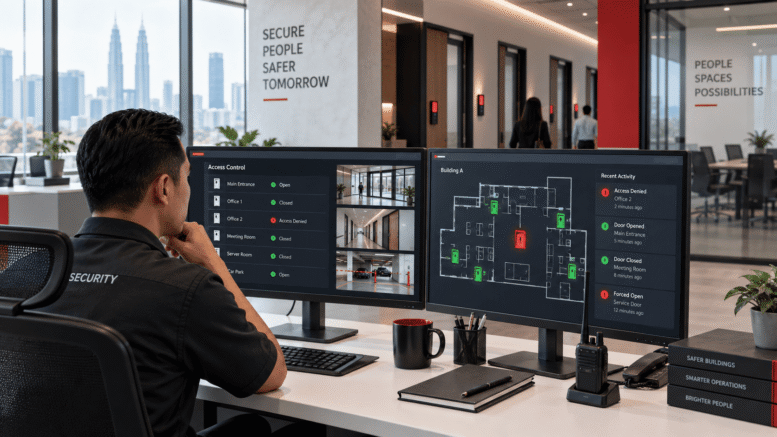
Door Access System: RFID Door Access Malaysia For Faster Daily Operations
In today’s fast-paced business environment, organisations across Malaysia are constantly seeking ways to streamline operations, enhance security, and improve employee productivity. One often-overlooked area that can significantly impact daily efficiency is how access to physical spaces is managed. Traditional door lock systems and manual access control methods create bottlenecks, security vulnerabilities, and administrative overhead that can slow down business operations.
A modern door access system, particularly one based on RFID technology, offers a practical solution to these challenges. By automating and securing how employees and authorised personnel enter different areas of your facility, you can eliminate delays, reduce security risks, and create a more organised workplace. This article explores how RFID door access systems work, their benefits, and why they matter for Malaysian businesses looking to operate more efficiently.
What Is A Door Access System?
A door access system is an electronic solution that controls and monitors who can enter specific areas within a building or facility. Rather than relying on traditional keys or manual security personnel, a door access system uses technology to grant or deny entry based on predefined permissions.
The system typically consists of several key components:
- Electronic locks installed on doors
- Card readers, keypads, or biometric sensors
- Access control software to manage permissions
- A central database storing user credentials and access rights
- Audit logs that record all access events
RFID door access technology specifically uses radio-frequency identification cards or tags that employees carry with them. When presented to an RFID reader, these cards instantly communicate with the access control system to unlock authorised doors.
How RFID Door Access Works
RFID technology operates through a simple but effective process. When an employee with an RFID card approaches a reader installed at a door, the reader emits a radio signal that activates the card’s chip. The card responds by transmitting its unique identification code back to the reader, which then communicates with the central access control system.
The system checks the database to verify whether the person holding that card has permission to access that particular area. If authorised, the electronic lock releases, allowing entry. If not authorised, the door remains locked and may trigger an alert.
This entire process happens in seconds, creating a seamless experience for employees while maintaining robust security controls. Unlike traditional keys that can be lost, stolen, or duplicated without authorisation, RFID cards provide a secure, auditable method of access control.
Benefits Of RFID Door Access Systems For Malaysian Businesses
Enhanced Security
One of the primary advantages of implementing a door access system is significantly improved security. With RFID door access, you have complete visibility into who enters which areas and when. Every access event is logged, creating an auditable trail that can be reviewed if security concerns arise.
Unlike traditional locks where multiple people may have identical keys, RFID cards are unique to each individual. If a card is lost or an employee leaves the organisation, that card can be immediately deactivated without the need to change physical locks. This level of control is particularly important for businesses handling sensitive information, valuable assets, or restricted areas.
Improved Operational Efficiency
Manual access control methods—such as having security personnel manually check identification or employees fumbling with keys—create unnecessary delays. With RFID door access, employees can move through your facility quickly and seamlessly. This is especially valuable in high-traffic areas or during peak hours when many staff members need to access different zones simultaneously.
The time savings may seem small per transaction, but when multiplied across an entire workforce throughout a working day, the cumulative benefit to productivity becomes substantial.
Simplified Administration
Managing access permissions with a door access system is far more efficient than managing physical keys. When an employee is hired, promoted, or transferred to a different department, access rights can be updated instantly through the software. There is no need to issue new keys, collect old ones, or arrange for locks to be rekeyed.
Similarly, when an employee leaves the organisation, their access can be revoked immediately, reducing the risk of unauthorised entry by former staff members.
Cost Savings Over Time
While the initial investment in a door access system requires capital expenditure, the long-term savings can be significant. You eliminate the costs associated with regularly rekeying locks, manufacturing and distributing keys, and replacing lost or stolen keys. Additionally, the improved security may reduce insurance premiums for certain types of businesses.
Compliance And Auditability
Many industries in Malaysia are subject to regulatory requirements regarding access control and facility security. A door access system provides comprehensive documentation of who accessed which areas and at what time. This information is invaluable for compliance audits, investigations, and demonstrating that your organisation takes security seriously.
Common Challenges With Traditional Access Methods
Before implementing a door access system, it’s worth understanding the limitations of traditional approaches:
- Key Management Complexity: Tracking physical keys across an organisation becomes increasingly difficult as the business grows, leading to loss, unauthorised duplication, and security gaps.
- Security Vulnerabilities: Keys can be stolen, lost, or left unattended, providing no audit trail of who entered which areas.
- Slow Access Procedures: Manual verification processes delay employee movement and create bottlenecks during peak hours.
- Administrative Burden: Rekeying locks when staff changes are frequent is time-consuming and expensive.
- Limited Flexibility: Changing access permissions with physical locks requires physical rekeying rather than simple software updates.
These challenges highlight why businesses across Malaysia are increasingly turning to modern door access systems as a more practical solution.
Considerations When Choosing A Door Access System
If your organisation is considering implementing an RFID door access system, several factors should guide your decision:
Integration With Existing Infrastructure
Evaluate how the door access system will integrate with your current building infrastructure, IT systems, and security measures. A well-designed solution should work seamlessly with your existing setup rather than requiring costly retrofitting.
Scalability
Consider your organisation’s growth trajectory. Can the system easily accommodate additional doors, readers, and users as your business expands? A scalable solution provides better long-term value.
User Experience
The system should be intuitive for employees to use. If the access process is complicated or unreliable, staff may become frustrated and productivity gains will be negated. The system should work quickly and consistently.
Support And Maintenance
Ensure that the provider offers reliable technical support and maintenance services. In Malaysia’s climate, environmental factors can affect electronic equipment, so regular maintenance and responsive support are important.
Data Security
The access control system stores sensitive information about employee movements and permissions. Verify that the system employs robust data security measures to protect this information from unauthorised access or misuse.
How Smart Touch Technology Can Help
Smart Touch Technology offers a comprehensive door access system designed specifically to support Malaysian businesses. Their solution provides organisations with a reliable, user-friendly platform for managing access control efficiently.
The Smart Touch door access system combines modern RFID technology with intuitive management software, allowing businesses to streamline their operations while maintaining strong security controls. Whether your organisation is implementing access control for the first time or upgrading from an older system, Smart Touch Technology provides the tools and support needed to transition smoothly.
Want to know more about the product? Check it out here: https://www.smartouch.com.my/door-access-system/
Conclusion
Implementing a door access system based on RFID technology is a practical investment for Malaysian organisations looking to improve operational efficiency, enhance security, and reduce administrative overhead. By automating access control, you eliminate delays caused by manual processes, create an auditable record of facility access, and simplify the management of access permissions as your workforce changes.
The benefits of RFID door access extend across multiple areas of business operations—from security and compliance to employee productivity and cost management. As businesses across Malaysia continue to modernise their operations, door access systems are becoming an essential component of professional facility management.
If you’re considering whether a door access system is right for your organisation, the answer for most businesses is yes. The efficiency gains and security improvements typically justify the investment within a reasonable timeframe, making it a sound decision for long-term operational success.
Smart Touch Technology Pte Ltd
Singapore: www.smartouch.com.sg | +65-63964767 | sales@smartouch.com.sg
Malaysia: www.smartouch.com.my | +607-3889903 | sales@smartouch.com.my