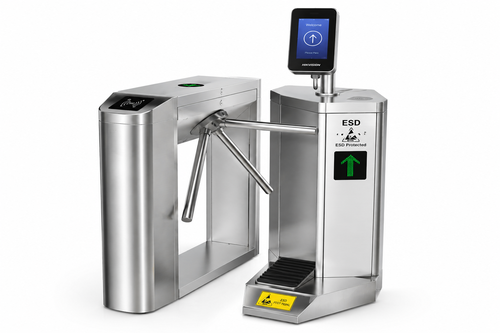
Semiconductor manufacturing facilities operate in some of the most controlled environments on earth. Within cleanrooms, precision is paramount—not just in the manufacturing processes themselves, but in every aspect of facility management. One critical component that often goes unnoticed by those outside the industry is the ESD (electrostatic discharge) tripod gate system used to control personnel access while maintaining cleanroom integrity.
In Malaysia’s growing semiconductor sector, cleanroom access control has become increasingly important as manufacturers strive to meet international quality standards and protect sensitive manufacturing processes from contamination and electrostatic damage. ESD tripod gates represent a practical solution that combines security, cleanliness standards, and personnel safety in a single installation.
This article explores how ESD tripod gates work, why they matter for semiconductor cleanrooms, and what facility managers should consider when implementing these systems.
Understanding ESD Tripod Gates in Cleanroom Environments
An ESD tripod gate is a physical access control barrier specifically designed for cleanroom and controlled environment applications. Unlike standard turnstiles or access gates, ESD tripod gates incorporate electrostatic discharge protection into their design, ensuring that personnel passing through the gate do not introduce dangerous static charges into the cleanroom environment.
The term “tripod” refers to the three-arm barrier mechanism that rotates to allow one person through at a time. This mechanical design ensures controlled, single-person entry and exit, which is essential for maintaining cleanroom protocols and preventing unauthorised access.
How ESD Protection Works in Tripod Gates
ESD tripod gates typically incorporate conductive materials and grounding pathways that allow static charges to dissipate safely before personnel enter the cleanroom. This is critical because electrostatic discharge can damage sensitive semiconductor components, compromise manufacturing yields, and create significant financial losses.
The gate structure itself may include conductive surfaces and proper grounding connections that integrate with the cleanroom’s overall ESD management system. When personnel pass through the tripod gate, they make contact with these conductive surfaces, allowing any accumulated static charge to be safely dispersed to ground.
Why Semiconductor Cleanrooms Require ESD Tripod Gates
Protecting Sensitive Manufacturing Processes
Semiconductor manufacturing involves producing microchips and electronic components that are extremely sensitive to electrostatic discharge. Even small static charges—sometimes imperceptible to humans—can cause permanent damage to these components or create manufacturing defects that only become apparent during testing or after the product reaches the customer.
ESD tripod gates serve as a critical control point in the cleanroom’s multi-layered ESD protection strategy. By ensuring that personnel are properly grounded or have discharged accumulated static before entering the manufacturing area, these gates help prevent costly product failures and maintain manufacturing quality.
Maintaining Cleanroom Standards
Cleanrooms are classified according to the number of particles permitted per cubic meter of air. Semiconductor manufacturing often requires Class 1, Class 2, or Class 3 cleanrooms, where contamination control is extraordinarily strict. The tripod gate mechanism ensures that entry and exit occur in an orderly, controlled manner, minimising the disruption to air flow patterns and reducing the introduction of contamination.
The physical barrier created by a tripod gate also helps maintain the psychological discipline required in cleanroom environments. Personnel passing through the gate are reminded that they are entering a controlled space where normal procedures do not apply.
Controlling Personnel Access
Beyond ESD protection and cleanroom maintenance, ESD tripod gates provide essential access control functionality. They can be integrated with security systems to ensure that only authorised personnel enter restricted areas. This protects intellectual property, prevents unauthorised access to sensitive manufacturing equipment, and helps maintain the integrity of production processes.
Key Features and Considerations for ESD Tripod Gates
Integration with Access Control Systems
Modern ESD tripod gates can be integrated with electronic access control systems, allowing facilities to track who enters and exits the cleanroom, and at what time. This integration supports security protocols, helps with incident investigation, and provides data useful for facility management and compliance purposes.
Material Composition and Durability
ESD tripod gates must be constructed from materials that are both cleanroom-compatible and durable. They should not shed particles or off-gas contaminants that might compromise the cleanroom environment. Materials must also withstand regular use in the demanding semiconductor manufacturing environment.
Ergonomics and User Experience
Although security and cleanliness are paramount, the gate must also function smoothly and not create unnecessary friction in personnel workflows. A poorly designed gate that is difficult to use may frustrate staff and inadvertently encourage shortcuts that compromise cleanroom integrity.
Maintenance Requirements
Like all mechanical systems in cleanrooms, ESD tripod gates require regular maintenance and inspection. Grounding connections must be verified periodically to ensure continued ESD protection. Moving parts should be checked for wear, and the system should be cleaned according to cleanroom protocols.
ESD Tripod Gates in the Malaysian Semiconductor Industry
Malaysia has established itself as a significant player in the global semiconductor manufacturing landscape. The country hosts numerous fabrication plants and assembly facilities that serve international markets. For these facilities, maintaining world-class cleanroom standards is not optional—it is essential for competitiveness and customer satisfaction.
As Malaysian semiconductor manufacturers expand their operations and upgrade their facilities, the implementation of proper cleanroom access control systems, including ESD tripod gates, becomes increasingly important. These systems support the facility’s ability to achieve and maintain ISO 14644 cleanroom classification standards, which are often required by international customers and partners.
How Smart Touch Technology Supports Cleanroom Access Control
At Smart Touch Technology, we understand the critical requirements of semiconductor cleanroom environments. Our ESD tripod gate solutions are designed specifically for facilities that demand both reliable access control and unwavering ESD protection.
Our approach focuses on providing equipment that integrates seamlessly into existing cleanroom protocols whilst maintaining the highest standards of functionality and safety. We recognise that each facility has unique requirements, and we work with facility managers to ensure that our solutions support their specific operational needs.
By partnering with Smart Touch Technology, semiconductor facilities can implement professional-grade access control solutions that protect both the manufacturing process and the facility’s assets.
Implementation Best Practices
Site Assessment and Planning
Before installing ESD tripod gates, conduct a thorough assessment of your cleanroom layout, traffic patterns, and existing access control infrastructure. Understand the flow of personnel and materials, and identify optimal locations for gate installation.
Integration with Existing Systems
Ensure that new ESD tripod gates integrate properly with your existing access control, security, and ESD management systems. Compatibility with your current infrastructure minimises installation complications and ensures seamless operation.
Staff Training and Protocols
Implement clear procedures for using the ESD tripod gates and train all personnel who will interact with the systems. Ensure that staff understand the importance of proper gate usage for both security and ESD protection purposes.
Regular Maintenance and Testing
Establish a maintenance schedule that includes regular inspection of mechanical components, verification of grounding connections, and cleaning according to cleanroom protocols. Regular testing ensures that the ESD protection function remains effective.
Common Challenges and Solutions
One challenge that facilities sometimes encounter is the tension between access control security and operational convenience. A gate that is too restrictive may impede workflow; a gate that is too permissive may allow unauthorised access. The solution is to carefully design access control policies that reflect actual operational needs whilst maintaining necessary security standards.
Another consideration is ensuring that ESD protection remains effective over time. Grounding pathways can degrade, conductive surfaces can become contaminated, and mechanical wear can affect performance. Regular maintenance and periodic testing are essential to verify that the system continues to provide adequate ESD protection.
Looking Forward: Cleanroom Access Control in Malaysia
As Malaysia’s semiconductor industry continues to evolve, cleanroom technology and access control systems will become increasingly sophisticated. Facility managers must stay informed about best practices, regulatory requirements, and available solutions to ensure that their facilities remain competitive and compliant.
ESD tripod gates represent a proven, practical component of comprehensive cleanroom management. By investing in quality access control solutions that prioritise both security and ESD protection, Malaysian semiconductor manufacturers can safeguard their operations and maintain the high standards that their customers expect.
Conclusion
ESD tripod gates for semiconductor cleanroom access control are far more than simple barriers. They are essential infrastructure components that protect sensitive manufacturing processes, maintain cleanroom integrity, and support facility security objectives. In Malaysia’s dynamic semiconductor sector, these systems play an important role in enabling manufacturers to meet international standards and deliver quality products to global customers.
If your semiconductor facility is considering cleanroom access control solutions or looking to upgrade existing systems, the time to assess your requirements is now. Proper planning and implementation of ESD tripod gates can yield significant benefits in terms of product quality, facility security, and operational efficiency.
Ready to enhance your cleanroom access control? Contact Smart Touch Technology today to discuss how our ESD tripod gate solutions can support your facility’s specific needs and help you maintain the highest standards of semiconductor manufacturing excellence.