Co-working spaces have transformed the way professionals work in Malaysia. These flexible environments bring together entrepreneurs, freelancers, and corporate teams under one roof, fostering collaboration and innovation. However, managing access to these shared spaces presents unique challenges—balancing security with convenience, protecting valuable equipment, and maintaining professional standards.
Traditional access control methods like key cards and PIN codes often fall short. Cards get lost, PINs are shared, and manual check-ins create bottlenecks. Co-working space operators need a solution that is secure, scalable, and seamless. This is where face recognition door access technology comes into play.
Face recognition technology offers a modern, contactless way to control who enters your co-working space. It works quickly, requires no physical keys or cards, and provides detailed records of who accessed which areas and when. For co-working spaces across Malaysia, this technology represents a significant upgrade in operational efficiency and security.
Why Co-Working Spaces Need Better Access Control
Co-working spaces operate differently from traditional offices. Members come and go throughout the day, often working irregular hours. Some use the space daily, while others drop in occasionally. This constant flow of people creates genuine security concerns.
Current Challenges With Traditional Methods
Access cards and fobs are the industry standard, but they introduce problems:
- Lost or stolen cards create security gaps and replacement costs
- Shared credentials make it difficult to track who actually accessed the space
- Onboarding new members involves physically issuing and programming new cards
- Offboarding requires collecting cards, which members often forget or misplace
- Duplicate keys circulate, and unauthorised access becomes harder to prevent
PIN codes and digital locks help somewhat, but they still require members to remember combinations or use their phones for every entry. This friction reduces user satisfaction and creates administrative overhead.
The Security and Operational Impact
When access control is weak or cumbersome, several problems emerge. Unauthorised individuals may enter by tailgating behind legitimate members. Equipment goes missing because accountability is unclear. Member disputes arise about who accessed shared resources. Compliance and audit trails become incomplete, making it difficult to investigate incidents.
Co-working space operators need a system that maintains strong security without creating friction for legitimate users.
How Face Recognition Door Access Works
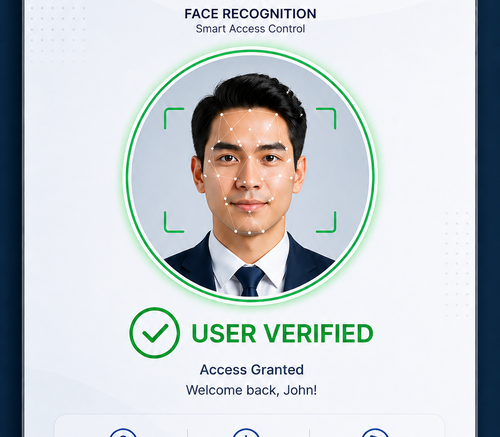
Face recognition technology uses advanced algorithms to capture, analyse, and verify facial features in real-time. When a member approaches a door, the system identifies them in milliseconds and grants access if they are authorised.
The Technology Behind The System
Modern face recognition systems capture detailed facial data—the distance between eyes, nose shape, cheekbone structure, and other biometric markers. This data is encrypted and stored securely. When verification is needed, the system compares live facial data against its database, confirming identity without any physical contact or manual intervention.
The process happens in seconds, making it far faster than fumbling for a card or remembering a PIN. Multiple access points can be connected to a single system, allowing seamless movement throughout your co-working space.
Integration With Co-Working Space Operations
Face recognition door access integrates naturally with modern co-working management. When a new member joins, their photograph and biometric data are registered into the system—typically during the onboarding process. This can be done in minutes, often through a simple app or in-person registration at the reception desk.
When a member’s access period expires or they leave, their access is deactivated instantly with a single update. There are no cards to chase down or physical changes required at the doors themselves.
Key Benefits Of Face Recognition For Co-Working Spaces
Enhanced Security
Face recognition provides genuine verification that the person entering is who they claim to be. Faces cannot be shared, lost, or stolen like cards. Tailgating becomes far more difficult, since each person must pass verification individually. The system creates an immutable audit trail showing exactly who accessed the space and when.
Improved Member Experience
Members appreciate not having to carry access cards or remember codes. The technology feels modern and professional, reflecting well on your co-working brand. Entry is seamless—approach the door, recognition happens instantly, and access is granted. This smooth experience increases satisfaction and retention.
Operational Efficiency
Onboarding new members becomes faster and cheaper. There are no cards to order, program, or distribute. Access changes happen in seconds—no technician visit required. Space operators save time on lost card replacements and can scale up without logistical complexity.
Detailed Reporting And Insights
The system records every entry with timestamp and member identity. Operators can generate reports on space utilisation, peak hours, and member access patterns. This data helps optimise operations, plan for facility needs, and maintain security standards.
Contactless And Hygienic
Particularly relevant in today’s environment, face recognition requires no physical contact. Members do not need to touch doors, keypads, or card readers. This reduces the spread of germs and aligns with modern health and safety expectations.
Considerations For Implementing Face Recognition In Malaysia
Member Privacy And Consent
Collecting and storing biometric data is a serious responsibility. Co-working space operators must be transparent with members about how their facial data will be used, stored, and protected. Clear consent should be obtained during onboarding, and members should understand their rights regarding this data.
It is advisable to review current Malaysian data protection standards and consult with legal advisors to ensure your implementation complies with relevant regulations. The Personal Data Protection Act (PDPA) and other applicable laws should guide your approach.
Accuracy And Fairness
Face recognition systems perform differently across different demographics and lighting conditions. A quality system should be tested to ensure reliable performance for all members, regardless of ethnicity, gender, or age. Operators should select systems with strong accuracy records and clear performance benchmarks.
System Reliability And Backup
Access control is critical infrastructure. What happens if the system fails? A robust implementation includes backup access methods and redundant systems. Members should always be able to enter during technical issues, and the system should log events reliably even if connectivity is interrupted.
Data Security And Storage
Biometric data must be encrypted both in transit and at rest. Access logs should be protected with similar care. Regular security audits and updates are essential. The system provider should have clear data security policies and demonstrate compliance with industry best practices.
How Smart Touch Technology Can Help
Smart Touch Technology specialises in access control solutions that bring modern security to Malaysian businesses. Our face recognition door access systems are designed specifically for flexible workspace environments like co-working spaces.
Our solution provides the reliability and performance that modern co-working operators need. The system is straightforward to deploy and integrate with your existing space management processes. Member onboarding is streamlined, access management is centralised, and reporting is comprehensive.
We understand the Malaysian market and the specific needs of co-working spaces across Kuala Lumpur, Penang, and other major centres. Our systems are built to perform reliably in local conditions and can scale as your operation grows.
Implementation Best Practices
Planning Your Rollout
Start by identifying which access points matter most. Main entrances typically benefit first from face recognition, followed by private meeting rooms and secure storage areas. Plan the installation with minimal disruption to your members’ work.
Member Communication
Introduce the system clearly to your community. Explain the benefits—faster entry, better security, and no lost cards. Address privacy concerns directly and honestly. Provide clear instructions for registration and use. Most members will appreciate the upgrade once they experience the convenience.
Training And Support
Ensure your staff can help members register and troubleshoot issues. Provide easy-to-follow guides and responsive support. A smooth launch builds confidence and adoption.
Monitoring And Optimization
After launch, monitor system performance and member feedback. Most systems improve with use as they become familiar with your members’ faces and your environment. Be prepared to fine-tune settings and respond to any issues quickly.
Conclusion
Face recognition door access represents a significant upgrade for co-working spaces in Malaysia. It delivers superior security, a better member experience, and genuine operational benefits. For space operators looking to modernise their facilities and stay competitive, this technology is increasingly becoming the standard.
The implementation does require thoughtful planning—particularly around member communication, privacy, and data security. However, the benefits justify the investment. Members enjoy seamless, secure access. Operators gain valuable insights and reduce administrative burden. The space presents a professional, modern image to prospective members.
If you manage or are building a co-working space in Malaysia and want to explore how face recognition door access can work for you, Smart Touch Technology is here to help. We can discuss your specific needs, demonstrate the technology, and design a solution that fits your space and budget.
Contact Smart Touch Technology today to learn how face recognition door access can elevate your co-working space.