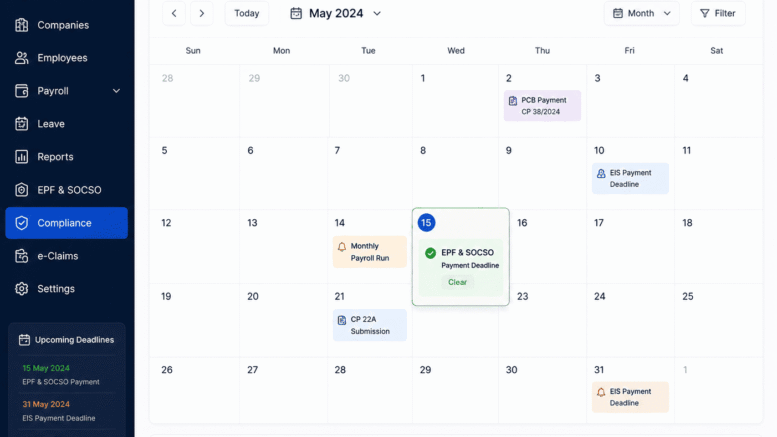
Managing payroll is one of the most critical responsibilities for any Malaysian business, regardless of size. Whether you operate a small family business or a large corporation, calculating paycheck runs accurately and on time directly impacts employee satisfaction, legal compliance, and your organisation’s reputation.
Traditional methods of calculating paycheck runs—spreadsheets, manual calculations, and paper-based records—are time-consuming, error-prone, and increasingly impractical in today’s fast-paced business environment. Modern businesses are discovering that investing in streamlined payroll solutions can transform how they manage employee compensation, reduce administrative burden, and ensure full compliance with Malaysian employment regulations.
In this article, we explore why modern payroll calculation methods matter, the challenges businesses face with outdated systems, and how contemporary payroll solutions can help you fast-track your business operations.
Why Payroll Calculation Matters More Than Ever
Payroll is far more than just distributing salaries. It encompasses calculating gross pay, deducting statutory contributions, managing overtime, handling allowances and bonuses, processing tax withholdings, and maintaining accurate records for compliance purposes.
In Malaysia, employers must comply with various regulations including the Employment Act, the Employees Provident Fund (EPF) Act, the Social Security Organisation (SOCSO) Act, and income tax requirements set by the Inland Revenue Board (IRB). Non-compliance can result in penalties, legal disputes, and damage to your employer brand.
Efficient paycheck run calculations ensure:
- Employees receive correct compensation on time
- All statutory deductions are calculated accurately
- Records are maintained for audit and compliance purposes
- Payroll data is secure and confidential
- Administrative teams can focus on strategic tasks
Common Challenges With Traditional Payroll Methods
Many Malaysian businesses still rely on legacy systems or manual processes to manage paycheck runs. While these methods may have worked in the past, they create significant operational challenges in the modern workplace.
Time-Consuming Manual Calculations
Calculating paycheck runs manually—using spreadsheets or paper records—consumes valuable hours each pay cycle. Staff must enter data, perform calculations, verify results, and reconcile discrepancies. For businesses with dozens or hundreds of employees, this process can consume days of administrative work.
Human Error and Accuracy Issues
Manual calculations are inherently prone to error. A single mistake in a formula, decimal point, or data entry can lead to incorrect salary payments, affecting employee trust and creating additional work during payroll corrections. Over time, these errors compound, creating compliance risks.
Compliance and Regulatory Risks
Malaysian employment and tax regulations change periodically. Manually updating calculations for new tax rates, EPF contribution percentages, or SOCSO adjustments requires constant vigilance. Missing an update or applying outdated rates creates compliance violations.
Poor Data Security and Accessibility
Spreadsheets and paper records offer limited security controls. Sensitive employee financial data may be at risk of unauthorised access, loss, or damage. Additionally, team members cannot easily access payroll information when working remotely or from different locations.
Difficulty Generating Reports and Audits
When payroll data is scattered across spreadsheets or paper files, generating comprehensive reports for management, audits, or government submissions becomes labour-intensive and prone to inconsistencies.
The Modern Approach to Calculating Paycheck Runs
Contemporary payroll systems automate the calculation process, reducing manual work, minimising errors, and ensuring compliance with current regulations. A modern payroll solution operates on principles designed specifically for today’s business environment.
Automated Calculation Engine
Modern payroll systems include sophisticated calculation engines that automatically compute gross pay, deductions, and net pay based on employee data, company policies, and regulatory requirements. Once you input employee information and configuration settings, the system handles calculations automatically for each pay cycle.
Real-Time Updates and Compliance
Professional payroll solutions are updated regularly to reflect changes in Malaysian tax rates, EPF percentages, SOCSO regulations, and other compliance requirements. This ensures your paycheck run calculations always comply with current laws without requiring manual updates from your team.
Centralised Employee Data Management
Modern systems store all employee information—personal details, salary structures, tax information, benefits, and historical records—in a secure, centralised database. This eliminates data duplication, reduces inconsistencies, and ensures information is accessible to authorised personnel whenever needed.
Enhanced Security and Data Protection
Professional payroll platforms include robust security features such as user access controls, encryption, audit trails, and backup systems. Sensitive payroll data is protected against unauthorised access and loss.
Comprehensive Reporting and Analytics
Modern payroll systems generate detailed reports instantly—salary registers, tax summaries, statutory contribution reports, payroll analytics, and compliance documentation. These reports support decision-making and simplify audit preparation.
Key Features of Modern Payroll Systems
When evaluating a modern payroll solution, look for features that specifically address your business needs and Malaysian compliance requirements.
- Flexible Pay Structures: Support for various salary components including basic pay, allowances, bonuses, overtime, and deductions
- Multi-Currency and Multi-Company Support: Capability to manage payroll across different entities or currencies if required
- Statutory Compliance: Built-in calculations for EPF, SOCSO, EIS, and income tax withholding
- Leave and Attendance Integration: Automatic calculation of leave entitlements and impact on salary
- Mobile Accessibility: Ability for employees to access payslips and update personal information via mobile app
- Integration Capabilities: Connection with accounting software, HR systems, and banking platforms for seamless data flow
- Batch Processing: Ability to process multiple paycheck runs efficiently for large employee bases
- Payroll History and Audit Trail: Complete record of all payroll transactions for compliance and dispute resolution
Best Practices for Implementing Modern Payroll Calculations
Transitioning from traditional to modern payroll calculation methods requires careful planning and execution.
Plan Your Implementation Carefully
Assess your current payroll process, identify pain points, and define clear objectives for the new system. Involve key stakeholders from finance, HR, and operations in the planning process.
Clean and Validate Your Data
Before migrating to a new system, audit existing employee data for accuracy and completeness. Correct any inconsistencies or outdated information to ensure a smooth transition.
Configure the System Properly
Work with your system provider to configure payroll settings, salary structures, and compliance parameters to match your business requirements and Malaysian regulatory obligations.
Test Thoroughly Before Going Live
Run parallel processing with both old and new systems for at least one pay cycle to identify and resolve any discrepancies before full implementation.
Train Your Team
Ensure payroll staff, HR personnel, and other relevant team members receive comprehensive training on using the new system. Provide ongoing support and documentation.
Establish Clear Processes
Document standard operating procedures for payroll processing, approval workflows, and exception handling to maintain consistency and accountability.
How Smart Touch Technology Can Help
Smart Touch Technology provides a modern payroll system designed specifically to meet the needs of Malaysian businesses. By automating paycheck run calculations, the Smart Touch Payroll System helps organisations streamline operations, ensure compliance, and focus resources on strategic business priorities.
With automated calculation features, centralised employee data management, and built-in Malaysian compliance requirements, Smart Touch Technology enables your business to fast-track payroll processing while reducing administrative overhead and minimising errors.
If you’re ready to modernise your payroll operations and experience the efficiency of streamlined paycheck run calculations, Smart Touch Technology is here to help. Contact us today to discuss how our payroll solution can transform your business.
Conclusion
The modern way of calculating paycheck runs goes far beyond simple salary distribution. Today’s businesses expect payroll systems that are accurate, compliant, secure, and efficient. By transitioning from manual methods to automated payroll solutions, Malaysian organisations can reduce administrative burden, minimise errors, ensure regulatory compliance, and create a better experience for both HR teams and employees.
Whether you operate a growing startup or an established corporation, investing in a modern payroll system is an investment in your business’s operational excellence. The time saved, errors prevented, and compliance risks mitigated quickly justify the decision to fast-track your payroll operations into the modern era.
Smart Touch Technology Pte Ltd
Singapore: www.smartouch.com.sg | +65-63964767 | sales@smartouch.com.sg
Malaysia: www.smartouch.com.my | +607-3889903 | sales@smartouch.com.my