Foreign Worker Management System Malaysia: Connecting Workforce And Housing Data
Managing a large workforce comes with significant operational challenges, particularly when workers are housed in dormitories or hostels. For employers across Malaysia’s construction, manufacturing, hospitality, and service sectors, coordinating worker information with accommodation management has traditionally been a fragmented process involving multiple systems, spreadsheets, and manual record-keeping.
A foreign worker management system that integrates workforce data with housing information offers a practical solution to these challenges. By connecting personnel records, attendance, performance data, and accommodation details in one unified platform, organisations can streamline operations, improve compliance, enhance worker welfare, and make better informed decisions.
This article explores how an integrated foreign worker management system works, why it matters for Malaysian employers, and how the right technology can transform the way organisations manage both their people and their accommodation facilities.
Understanding The Challenge Of Managing Foreign Workers And Housing
Malaysia hosts a significant foreign workforce, with workers employed across various industries. Many of these workers are accommodated in dormitories or hostels provided by their employers, creating a dual management responsibility: managing the employees themselves and managing the facilities where they live.
Without an integrated system, organisations typically face several operational difficulties:
- Worker information is stored separately from accommodation records, making it difficult to get a complete picture of each individual
- Room assignments, occupancy rates, and facility maintenance are tracked manually or in separate systems
- Attendance and work schedules are not linked to housing availability or dormitory capacity planning
- Communication between HR, facility management, and operations teams is inefficient
- Compliance tracking for worker welfare, safety, and regulatory requirements becomes time-consuming
- Emergency response and worker location information is not readily accessible
These disconnected processes lead to inefficiencies, increased administrative costs, potential compliance gaps, and difficulties in providing appropriate worker support and care.
What Is A Foreign Worker Management System?
A foreign worker management system is a digital platform designed to centralise and manage all aspects of foreign worker employment and accommodation. Rather than using separate systems for HR, payroll, attendance, and facility management, an integrated solution brings all this information together in one accessible database.
Core Components Of An Integrated System
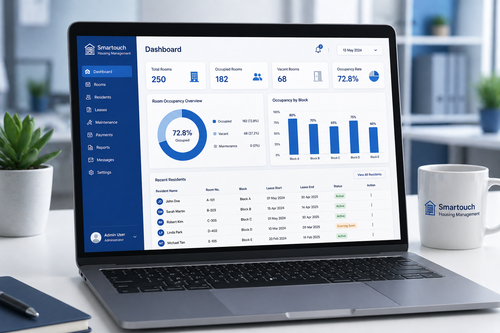
A comprehensive foreign worker management system typically includes workforce management capabilities such as worker profiles, visa and documentation tracking, employment contracts, and work permits. It also incorporates dormitory and hostel management features including room allocation and occupancy tracking, facility maintenance scheduling, and utility usage monitoring.
Additional components usually cover attendance and time tracking linked to accommodation status, payroll integration with deductions for accommodation costs, compliance reporting for Malaysian employment regulations, and communication tools connecting HR teams with facility managers and workers.
Key Benefits Of Connecting Workforce And Housing Data
Improved Operational Efficiency
When workforce data and housing information are integrated, organisations eliminate the need to update multiple systems separately. A single entry point for worker information reduces data entry errors and ensures all departments work with the same accurate information. Room assignments can be coordinated automatically based on worker profiles and requirements, and facility management can be prioritised based on actual occupancy and worker needs.
Better Worker Welfare And Support
An integrated system enables organisations to provide more responsive support to their workers. Managers can quickly identify workers who require assistance, track their accommodation status, and coordinate support services more effectively. In emergencies, having all worker information—including their current accommodation location—readily available supports faster response and better safety outcomes.
Enhanced Compliance And Accountability
Malaysian employment regulations require employers to maintain proper records and ensure worker welfare standards. A centralised system makes it easier to demonstrate compliance by maintaining comprehensive, auditable records of worker employment details, accommodation conditions, and facility management. This documentation is valuable during inspections and when addressing compliance inquiries from relevant authorities.
Data-Driven Decision Making
When workforce and housing data are connected, managers can analyse patterns and trends across both domains. For example, organisations can identify whether workers in certain accommodation blocks have higher absence rates, correlate worker satisfaction with facility conditions, or plan accommodation expansion based on workforce projections.
Cost Management
Integrated systems help organisations optimise accommodation costs by improving occupancy tracking, reducing maintenance waste, planning utility consumption more effectively, and identifying inefficiencies in facility operations that can be addressed to reduce expenses.
How A Foreign Worker Management System Supports Compliance
Malaysian employers are subject to various employment and safety regulations. While specific requirements may evolve, employers are generally expected to maintain adequate employment records, ensure workplace safety, provide appropriate accommodation for workers where applicable, and maintain documentation for inspection purposes.
An integrated foreign worker management system supports compliance by:
- Maintaining centralised, audit-ready employment records that can be produced during inspections
- Tracking worker documentation including work permits, contracts, and certifications
- Recording accommodation conditions, safety measures, and facility maintenance
- Generating compliance reports for internal review and regulatory submission
- Creating an audit trail of all worker-related decisions and actions
For the most current requirements and compliance standards, organisations should consult with the Ministry of Human Resources or other relevant Malaysian authorities, as employment regulations and standards can change.
Practical Applications In Different Industries
Construction And Engineering
Construction projects often employ large numbers of foreign workers who require on-site or near-site accommodation. An integrated system helps coordinate project staffing with accommodation capacity, track worker certifications and safety training, and manage high turnover as projects progress.
Manufacturing And Processing
Manufacturing facilities typically maintain stable workforces housed in company dormitories. Integration of workforce and housing data helps optimise shift patterns with accommodation availability, track worker performance alongside facility conditions, and plan maintenance around production schedules.
Hospitality And Service Sectors
Hotels, resorts, and service providers that house workers benefit from coordinating guest-facing operations with worker accommodation management, ensuring staff availability matches operational needs, and managing flexible accommodation arrangements for casual or seasonal workers.
How Smart Touch Technology Can Help
Smart Touch Technology offers a dormitory and hostel management system designed to address the specific challenges of managing worker accommodation and connecting it with workforce data. The system provides a practical, integrated platform that helps Malaysian organisations streamline their dormitory operations while maintaining better visibility of their workforce.
By implementing Smart Touch Technology’s solution, organisations can centralise their accommodation management, improve coordination between HR and facility teams, generate compliance documentation more efficiently, and make better decisions based on integrated data.
Want to know more about this product? Click here to learn how Smart Touch Technology’s dormitory system can help your organisation connect workforce and housing data more effectively.
Conclusion
Managing foreign workers and their accommodation represents a significant operational responsibility for Malaysian employers. When workforce data and housing information remain disconnected, organisations face inefficiencies, compliance challenges, and missed opportunities for better worker support and decision-making.
A foreign worker management system that integrates personnel records with accommodation management creates a more cohesive operational approach. By connecting these data streams, organisations improve efficiency, enhance worker welfare, strengthen compliance, and gain better visibility across their workforce and facilities.
For Malaysian employers managing foreign workers in dormitories or hostels, adopting an integrated management system represents a practical investment in operational excellence and worker care. The right technology platform can transform separate, manual processes into a coordinated, data-driven system that serves both business objectives and worker wellbeing.
Smart Touch Technology Pte Ltd
Singapore: www.smartouch.com.sg | +65-63964767 | sales@smartouch.com.sg
Malaysia: www.smartouch.com.my | +607-3889903 | sales@smartouch.com.my