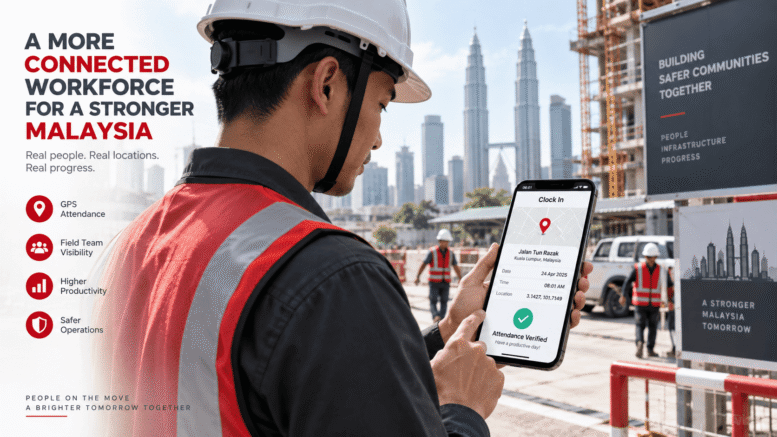
Geofencing vs Traditional Attendance Systems: What Businesses Should Know
Attendance tracking is a fundamental aspect of workforce management, yet many Malaysian businesses still rely on outdated methods that consume time, resources, and create operational inefficiencies. As technology evolves, organisations face an important decision: should they continue with traditional attendance systems, or should they consider modern alternatives like geofencing?
Understanding the differences between these approaches is crucial for business leaders, human resources managers, and operations teams who want to streamline processes, improve accuracy, and enhance employee accountability. This article explores both methods in detail, helping you make an informed decision about what works best for your organisation.
Understanding Traditional Attendance Systems
Traditional attendance systems have been used in workplaces for decades. These methods typically include manual sign-in sheets, biometric fingerprint readers, ID card swipes, or time clocks stationed at fixed locations.
How traditional systems work:
- Employees physically sign a register or use a punch card system
- Biometric scanners record fingerprints or facial recognition at entry points
- Magnetic swipe cards authenticate employee presence
- Supervisors manually track attendance in spreadsheets or basic software
- Attendance data is compiled periodically for payroll and reporting purposes
These systems have provided a foundation for attendance management, but they come with inherent limitations that can affect modern, dynamic workplaces.
The Limitations of Traditional Attendance Systems
While traditional methods have served businesses for many years, they face several challenges in today’s work environment, particularly with the rise of flexible work arrangements and multiple work locations.
Physical Infrastructure Requirements
Traditional systems require dedicated hardware installed at specific entry points. This means they only capture attendance data when employees physically pass through designated locations. For organisations with multiple offices, warehouses, or field operations, managing multiple systems becomes costly and complex.
Time and Administrative Burden
Manual attendance tracking and data entry consume significant staff time. Supervisors must regularly reconcile attendance records, investigate discrepancies, and address missing data. This administrative overhead diverts resources from more strategic business activities.
Inaccuracy and Human Error
Manual systems are prone to errors. Employees may forget to sign in, biometric scanners can malfunction, and data entry mistakes are common. Buddy punching—where one employee clocks in for another—remains a persistent issue that traditional systems struggle to prevent.
Limited Flexibility
Fixed-location systems don’t adapt well to modern work patterns. Employees working from multiple sites, remote locations, or on field assignments may not have easy access to attendance recording points, making it difficult to capture accurate data.
Data Accessibility
Retrieving and analysing attendance data can be time-consuming. Reports often require manual compilation, making real-time insights and quick decision-making challenging for managers.
What Is Geofencing Technology?
Geofencing represents a modern approach to attendance tracking that leverages GPS and mobile technology. Geofencing creates virtual boundaries around specific physical locations using GPS coordinates. When an employee’s mobile device enters or exits these defined areas, the system automatically records the time and location.
How Geofencing Works
Geofencing technology operates by establishing digital perimeters around work locations. When employees arrive at or leave a designated area, their devices trigger automatic check-ins and check-outs. The system records precise timestamps and location data, creating a comprehensive attendance log without requiring physical interaction with hardware.
This approach is particularly useful for organisations with:
- Multiple work locations across Malaysia
- Field-based employees or sales teams
- Flexible or remote work arrangements
- Construction sites or project-based work
- Delivery and logistics operations
Geofencing vs Traditional Attendance Systems: Key Comparisons
| Aspect | Traditional Systems | Geofencing Technology |
|---|---|---|
| Installation | Requires physical hardware at fixed locations | Software-based, works on existing mobile devices |
| Flexibility | Limited to designated entry points | Works anywhere within defined boundaries |
| Cost | Higher initial hardware investment and maintenance | Lower upfront costs, subscription-based model |
| Real-time Reporting | Manual compilation, delayed insights | Instant data access and automated reports |
| Fraud Prevention | Susceptible to buddy punching and manipulation | GPS-verified location data reduces fraud |
| Scalability | Difficult to expand to new locations | Easy to add new geofenced areas |
| Employee Experience | Requires physical check-in action | Automatic, seamless process |
Benefits of Geofencing for Malaysian Businesses
Geofencing technology offers several advantages that make it increasingly attractive for Malaysian organisations seeking to modernise their attendance management.
Enhanced Accuracy and Reliability
Geofencing provides GPS-verified location data, eliminating many sources of error found in traditional systems. Attendance records are automatically generated and timestamped, reducing discrepancies and creating a reliable audit trail.
Improved Operational Efficiency
Automatic attendance recording reduces administrative workload. HR teams spend less time managing attendance data and more time on strategic initiatives. The system generates reports instantly, enabling faster decision-making.
Cost Savings
While traditional systems require ongoing hardware maintenance, replacements, and upgrades, geofencing operates on a software basis. This typically results in lower total cost of ownership, particularly for organisations with multiple locations or expanding workforce needs.
Better Visibility for Distributed Teams
For organisations with employees spread across different locations—whether sales teams, field service technicians, or regional managers—geofencing provides clear visibility into team whereabouts and working patterns without intrusive monitoring.
Fraud Prevention
GPS-verified location data makes buddy punching virtually impossible. Employees must be physically present at the geofenced location for the system to register attendance, significantly reducing fraudulent practices.
Scalability and Flexibility
Adding new geofenced locations is straightforward and cost-effective. This makes it easy for growing businesses to extend coverage to new offices, branches, or project sites without substantial capital investment.
Considerations and Challenges with Geofencing
While geofencing offers clear advantages, businesses should also consider potential challenges before implementation.
Privacy and Employee Concerns
GPS tracking raises legitimate privacy concerns among employees. Transparent communication about how location data is collected, stored, and used is essential. Organisations should develop clear policies addressing data protection and employee privacy rights, in compliance with Malaysian data protection regulations.
Technology Requirements
Geofencing requires employees to carry mobile devices with GPS capability and maintain internet connectivity. Organisations must ensure adequate mobile infrastructure and plan for situations where devices are unavailable or malfunctioning.
Accuracy Limitations
GPS accuracy can vary depending on location, weather conditions, and building structures. In urban areas with tall buildings or underground facilities, signal strength may be affected, occasionally requiring manual adjustments.
Implementation and Training
Introducing new technology requires proper training and change management. Employees need clear guidance on how the system works, what is expected of them, and how it affects their daily routines.
Choosing the Right Attendance System for Your Business
The best attendance system depends on your organisation’s specific needs, workforce structure, and operational model.
Consider traditional systems if your business:
- Operates from a single fixed location with a stable workforce
- Requires strict physical verification of presence at controlled entry points
- Has limited mobile device adoption among employees
- Prioritises minimal technology investment
Consider geofencing if your business:
- Operates across multiple locations or has mobile field teams
- Employs staff in flexible or remote work arrangements
- Seeks to reduce administrative overhead and improve efficiency
- Values real-time attendance insights and automated reporting
- Wants to minimise attendance fraud and improve accountability
How Smart Touch Technology Can Help
Smart Touch Technology offers SmartGogo Apps, a mobile-based solution designed to streamline attendance and location tracking for modern Malaysian businesses. SmartGogo provides an easy-to-use platform that leverages geofencing and mobile technology to automate attendance management.
With SmartGogo Apps, organisations can move away from manual, time-consuming attendance processes and embrace a modern, automated approach. The application works seamlessly across multiple locations, supports flexible work arrangements, and provides real-time visibility into team whereabouts and attendance patterns.
Whether you’re managing a distributed sales team, coordinating field service technicians, or overseeing multiple office locations across Malaysia, SmartGogo Apps simplifies attendance tracking while maintaining accuracy and reducing administrative burden.
Interested in this product? Click here to learn more: https://www.smartouch.com.my/smartgogo/
Conclusion
The decision between geofencing and traditional attendance systems is not simply a matter of choosing newer technology for its own sake. Rather, it involves understanding your organisation’s specific requirements, workforce structure, and operational priorities.
Traditional attendance systems continue to serve organisations with fixed, centralised operations effectively. However, as Malaysian businesses increasingly adopt flexible work arrangements, expand to multiple locations, and seek greater operational efficiency, geofencing technology has emerged as a compelling alternative.
Geofencing offers enhanced accuracy, reduced administrative overhead, improved fraud prevention, and better scalability. For organisations with mobile or distributed teams, the benefits often outweigh implementation considerations.
The key is to evaluate your current challenges, assess your workforce needs, and select a solution that aligns with your business objectives. By doing so, you can ensure that your attendance management system supports your organisation’s growth and operational excellence.
Smart Touch Technology Pte Ltd
Singapore: www.smartouch.com.sg | +65-63964767 | sales@smartouch.com.sg
Malaysia: www.smartouch.com.my | +607-3889903 | sales@smartouch.com.my