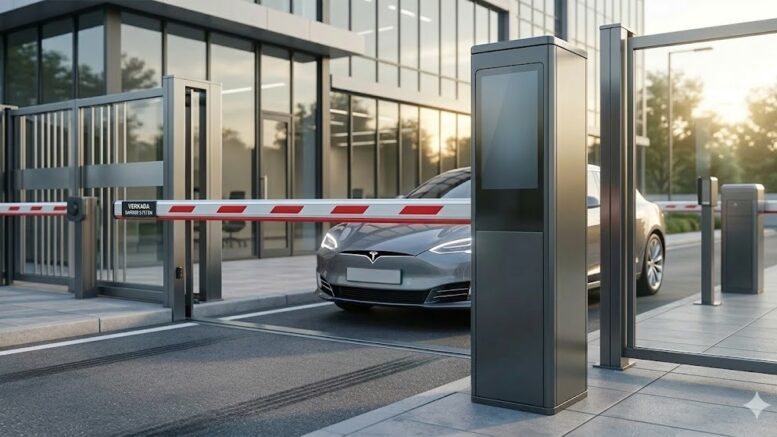
Industrial loading zones are among the busiest and most high-risk areas in any facility. In Malaysia’s rapidly growing logistics, manufacturing, and warehousing sectors, these zones experience constant movement of heavy vehicles, forklifts, and personnel. Without proper control systems, the likelihood of accidents, unauthorized access, and operational inefficiencies increases significantly.
High-speed vehicle barriers have emerged as a critical solution for modern industrial environments. Designed to combine rapid response, durability, and intelligent access control, these systems play a vital role in ensuring seamless operations while maintaining strict safety standards. Our focus is to explore how high-speed vehicle barriers can transform industrial loading zones across Malaysia.
Understanding High-Speed Vehicle Barriers
High-speed vehicle barriers are automated systems engineered to control vehicle access efficiently. Unlike traditional barriers, these systems operate at significantly faster opening and closing speeds, reducing waiting time and improving traffic flow.
Key features include:
- Rapid opening/closing speeds (typically 1–3 seconds)
- Heavy-duty construction for industrial environments
- Integration with access control systems (RFID, license plate recognition)
- Weather-resistant design suitable for Malaysia’s tropical climate
- Safety sensors to prevent accidents
These features make them particularly suitable for high-traffic industrial loading zones where time and safety are equally critical.
The Importance of High-Speed Barriers in Malaysian Industrial Settings
1. Improving Operational Efficiency
In logistics and manufacturing hubs such as Klang Valley, Penang, and Johor, delays at loading zones can result in significant financial losses. High-speed barriers reduce vehicle queuing time, ensuring faster turnaround for deliveries and dispatches.
With automated access systems, authorized vehicles can pass through without manual checks, minimizing bottlenecks and human error.
2. Enhancing Workplace Safety
Industrial loading zones are prone to accidents due to the interaction between vehicles and workers. High-speed barriers equipped with advanced sensors help prevent collisions by detecting obstacles and stopping operation when necessary.
By clearly defining entry and exit points, these systems reduce confusion and enforce structured traffic movement, significantly lowering accident risks.
3. Strengthening Security Control
Unauthorized vehicle access can lead to theft, vandalism, or operational disruption. High-speed barriers act as the first line of defense by restricting entry to approved vehicles only.
When integrated with technologies such as RFID cards or license plate recognition, they provide a seamless yet secure access control system that ensures only verified personnel and vehicles enter the premises.
4. Adapting to Malaysia’s Climate
Malaysia’s weather conditions—heavy rainfall, high humidity, and intense heat—require robust and weather-resistant equipment. High-quality vehicle barriers are designed with corrosion-resistant materials and waterproof components, ensuring long-term reliability even in harsh environments.
Key Applications in Industrial Loading Zones
Logistics Warehouses
Warehouses handling high volumes of goods require quick and controlled vehicle access. High-speed barriers ensure that trucks enter and exit efficiently, reducing congestion and improving scheduling accuracy.
Manufacturing Plants
Factories often operate on tight production timelines. Delays in raw material delivery or product dispatch can disrupt the entire workflow. High-speed barriers help maintain a smooth supply chain by minimizing entry delays.
Ports and Freight Terminals
Malaysia’s ports are among the busiest in Southeast Asia. High-speed barriers play a crucial role in managing the constant flow of container trucks, ensuring security while maintaining operational speed.
Distribution Centers
E-commerce growth has led to increased demand for fast and accurate delivery systems. Distribution centers benefit from high-speed barriers by streamlining vehicle movement and enhancing overall efficiency.
Key Features to Consider When Choosing High-Speed Barriers
Speed and Performance
The primary advantage of these systems is their speed. Selecting a barrier with adjustable opening and closing speeds ensures flexibility based on traffic volume.
Durability and Build Quality
Industrial environments require heavy-duty equipment. Barriers should be made from high-grade steel or aluminum with anti-corrosion coatings.
Integration Capabilities
Modern facilities rely on smart systems. High-speed barriers should integrate seamlessly with:
- RFID access systems
- License plate recognition (LPR)
- Security management software
- CCTV surveillance systems
Safety Mechanisms
Safety is non-negotiable. Essential features include:
- Infrared sensors
- Loop detectors
- Emergency stop functions
- Anti-crash mechanisms
Maintenance and Support
Reliable after-sales support and easy maintenance are crucial for long-term performance. Systems should be designed for minimal downtime and quick servicing.
Benefits of Implementing High-Speed Barriers
Reduced Waiting Time
Fast operation significantly cuts down vehicle idle time, improving fuel efficiency and reducing emissions.
Increased Productivity
With smoother traffic flow, loading and unloading processes become more efficient, leading to higher productivity.
Enhanced Professional Image
A well-organized and technologically advanced loading zone reflects positively on a company’s brand, especially when dealing with international partners.
Cost Savings
Although the initial investment may be higher than traditional barriers, the long-term savings from reduced labor, improved efficiency, and fewer accidents make it a cost-effective solution.
Future Trends in Vehicle Barrier Technology
The evolution of industrial automation is driving innovation in vehicle barrier systems. In Malaysia, we are witnessing increasing adoption of:
- AI-powered license plate recognition
- Cloud-based access control systems
- IoT-enabled monitoring and maintenance
- Integration with smart factory systems
These advancements are transforming high-speed barriers into intelligent systems capable of predictive maintenance and real-time data analysis.
Implementation Strategy for Malaysian Businesses
To maximize the benefits of high-speed vehicle barriers, businesses should adopt a strategic approach:
- Conduct a thorough site assessment to understand traffic flow and risk areas
- Choose a system that matches operational requirements and future scalability
- Ensure proper installation by experienced professionals
- Train staff on system usage and safety protocols
- Schedule regular maintenance to ensure optimal performance
Conclusion: A Smart Investment for Safer and Faster Operations
High-speed vehicle barriers are no longer a luxury but a necessity for modern industrial loading zones in Malaysia. They offer a powerful combination of speed, safety, and security, enabling businesses to operate more efficiently while protecting their assets and workforce.
As industries continue to evolve and demand higher levels of automation, investing in advanced access control solutions like high-speed barriers ensures that facilities remain competitive, secure, and future-ready.
By implementing the right system, we can create industrial environments that are not only productive but also safe and intelligently managed.
For more information about the product, please click here: https://www.smartouch.com.my/category/time-clock/barrier/
Smart Touch technology pte ltd , www.smartouch.com.sg +65-63964767, sales@smartouch.com.sg , www.smartouch.com.my +607-3889903 sales@smartouch.com.my