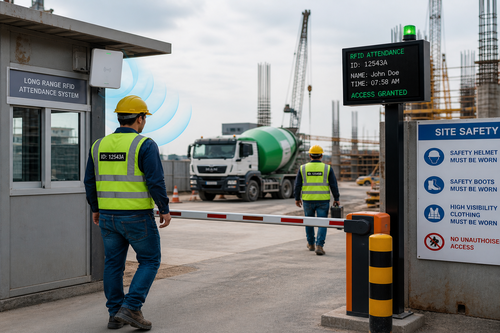
Businesses that run rotating shifts, night crews, or staggered work hours know how quickly attendance tracking can spiral into a payroll headache. A reliable time attendance and e attendance system takes the guesswork out of shift management, giving HR teams accurate clock-in data no matter how complex the roster gets. For Malaysian companies juggling multiple shift patterns across factories, warehouses, and retail outlets, this technology has become less of a luxury and more of an operational necessity.
In this article, we look at why shift-based businesses struggle with outdated attendance methods, how a modern time attendance and e attendance system solves these problems, and the best practices for rolling one out successfully.
Why Shift-Based Businesses Struggle With Traditional Attendance Tracking
Manual timesheets and punch cards were never designed for the complexity of modern shift work. When employees rotate between morning, afternoon, and night shifts, small errors in logging hours multiply quickly. Common problems include buddy punching, where one employee clocks in for another, illegible handwriting on paper timesheets, and delays in submitting hours to payroll.
These issues do not just cost time. They cost money. Overpayments, underpayments, and compliance disputes are all common outcomes when a business relies on outdated tracking methods for a shift-based workforce.
What Is a Time Attendance and E Attendance System?
A time attendance and e attendance system combines hardware and cloud software to record when employees start and end their shifts. Instead of paper logs, employees clock in using biometric verification, proximity cards, or a mobile app. The data syncs automatically to a central dashboard, giving HR real-time visibility into attendance across every shift and location.
Key Components of a Modern System
Most e attendance solutions share a few core building blocks that work together to eliminate manual tracking errors.
- Clocking hardware: biometric terminals, RFID card readers, or facial recognition devices installed at entry points.
- Mobile app: allows field staff or remote workers to clock in with GPS verification.
- Cloud dashboard: gives managers a live view of who is on shift, who is late, and who is absent.
- Reporting engine: automatically generates attendance summaries ready for payroll processing.
Key Benefits of Time Attendance and E Attendance for Shift Workers
Switching to an automated system delivers measurable improvements across HR, payroll, and operations.
| Benefit | Description |
|---|---|
| Accurate shift tracking | Every clock-in and clock-out is time-stamped and tied to the correct shift pattern. |
| Reduced payroll errors | Automated calculations remove the manual data entry that causes overpayment or underpayment. |
| Real-time visibility | Managers can see attendance status across multiple sites from a single dashboard. |
| Labor law compliance | Digital records make it easier to demonstrate compliance with Malaysian employment regulations. |
| Employee accountability | Biometric or facial verification prevents buddy punching and time theft. |
Best Practices for Managing Shift Work With E Attendance
Rolling out a new attendance system works best when it is planned carefully rather than rushed. Follow these steps for a smooth transition.
Step-by-Step Implementation
- Map out shift patterns: document every shift type, including rotating and split shifts, before configuring the system.
- Choose the right verification method: biometric, card, or mobile clock-in depending on your workforce and site conditions.
- Integrate with payroll: connect the attendance system directly to your payroll software to eliminate manual re-entry.
- Train employees and supervisors: a short onboarding session reduces confusion and resistance during rollout.
- Review reports regularly: use the dashboard to spot patterns like chronic lateness or unplanned overtime.
Manual Timesheets vs Automated Time and E Attendance
| Feature | Manual Timesheet | Time & E Attendance System |
|---|---|---|
| Data accuracy | Prone to human error | Automated and precise |
| Payroll processing time | Hours of manual calculation | Minutes with automated reports |
| Fraud prevention | Easy to manipulate | Biometric verification prevents buddy punching |
| Multi-site visibility | Requires manual consolidation | Centralized cloud dashboard |
Key Takeaways
- Shift-based businesses lose time and money when relying on manual attendance tracking.
- A time attendance and e attendance system automates clock-ins, reduces payroll errors, and improves compliance.
- Successful rollout depends on mapping shift patterns, choosing the right hardware, and integrating with payroll early.
Conclusion
Managing shift work does not have to mean juggling spreadsheets and chasing down missing timesheets. A well-implemented time attendance and e attendance system gives HR teams the accuracy and visibility they need to run shift-based operations smoothly, while giving employees a fair and transparent way to log their hours. The result is fewer payroll disputes, better compliance, and more time for your HR team to focus on strategic work instead of manual data entry.
Frequently Asked Questions
What is the difference between time attendance and e attendance?
Time attendance generally refers to the overall process of tracking employee working hours, while e attendance specifically refers to the digital, often cloud-based, method of capturing that data through biometric devices, cards, or mobile apps.
Can e attendance handle multiple shift patterns?
Yes. Modern e attendance systems allow HR teams to configure multiple shift types, including rotating, split, and night shifts, and automatically apply the correct rules to each employee.
Is e attendance suitable for small and medium businesses in Malaysia?
Absolutely. Cloud-based e attendance systems are scalable, meaning SMEs can start with a basic setup and expand as their workforce grows, without heavy upfront infrastructure costs.
How does e attendance integrate with payroll?
Most systems sync attendance data directly with payroll software, automatically calculating regular hours, overtime, and deductions based on actual clock-in and clock-out records.
Is employee data secure in a cloud-based attendance system?
Reputable providers use encrypted cloud storage and role-based access controls to protect employee attendance and biometric data from unauthorized access.
Read the product overview here: http://www.smartouch.com.my/tms-time-management-system-singapore-malaysia/
Smart Touch technology pte ltd , www.smartouch.com.sg +65-63964767, sales@smartouch.com.sg , www.smartouch.com.my +607-3889903 sales@smartouch.com.my