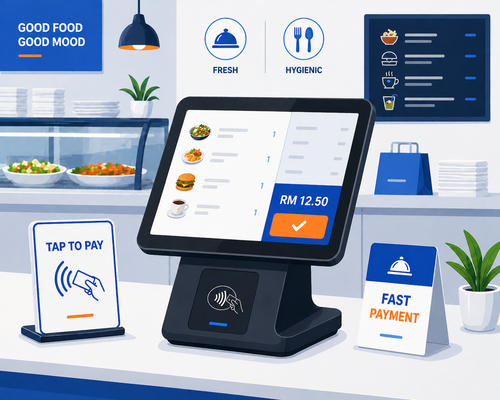
A manufacturing site canteen system helps factories manage employee meals with greater speed, accuracy, and control. Large workforces often arrive at the cafeteria within short break windows, creating queues, manual recording errors, and uncertainty about meal subsidies. A purpose-built digital platform replaces paper coupons and spreadsheets with an organized process that connects employee identification, meal transactions, eligibility rules, and management reporting.
For Malaysian manufacturers, efficient meal administration is more than a convenience. It supports workforce welfare, reduces administrative work, improves cost visibility, and helps HR teams apply company policies consistently. Whether a factory operates one dining area or several canteens across multiple sites, the right system provides reliable data for daily decisions and long-term planning.
Why a Manufacturing Site Canteen System Matters
Factory cafeterias face operating conditions that ordinary restaurants rarely encounter. Hundreds of employees may take breaks at the same time, different shifts may have different meal allowances, and contractors or visitors may require separate payment rules. Manual processes struggle to keep pace with this level of complexity.
A digital canteen platform records each transaction as it happens. Employees can identify themselves using an approved card, biometric credential, employee number, or another connected method. The system checks eligibility, applies the relevant subsidy, and records the meal without requiring staff to calculate benefits manually.
Faster Service During Peak Breaks
Long queues reduce the time employees have to rest and eat. They can also delay the return to production lines. Automated identification and cashless processing shorten each transaction, helping canteen teams serve more people within a limited period. Faster service improves the employee experience while supporting production schedules.
Accurate Meal Subsidy Control
Many manufacturers provide free meals, fixed-value allowances, or discounted food as part of employee benefits. Without a structured system, duplicate claims and incorrect subsidy amounts can be difficult to detect. Digital rules can limit meals by employee, shift, date, location, or meal period. This creates a consistent policy that is easier to administer and explain.
Core Features for Factory Canteen Management
The best solution should fit existing factory operations instead of forcing unnecessary changes. Important capabilities include employee registration, shift-based eligibility, cashless transactions, vendor management, reporting, and integration with HR or attendance records.
Employee Identification and Access
A secure identification method confirms who is receiving the meal benefit. Depending on the facility, this may use an employee card, proximity credential, QR code, fingerprint, or facial identification. The system should respond quickly and prevent the same credential from being used repeatedly when the policy permits only one subsidized meal.
Configurable Meal Rules
Different employee groups may receive different benefits. Permanent staff, temporary workers, contractors, and visitors can each have separate entitlements. Administrators should be able to configure breakfast, lunch, dinner, and supper periods, along with daily limits and subsidy values. Flexible rules are particularly useful for factories operating rotating or overnight shifts.
Cashless Payments and Subsidies
Cash handling slows service and increases reconciliation work. A cashless system can deduct purchases from an employee balance, apply a company subsidy, or split the transaction between both. Clear records show the full meal price, employer contribution, and employee portion, making settlement easier for HR, finance, and canteen vendors.
Real-Time Reports
Management reports reveal how many meals were served, which locations were busiest, how much subsidy was used, and whether unusual transaction patterns occurred. Daily and monthly summaries help finance teams verify vendor invoices. Historical information also supports menu planning, staffing decisions, and food purchasing.
Key Business Benefits
| Business Area | Benefit |
|---|---|
| Operations | Shorter queues and smoother break-time service |
| Human Resources | Consistent application of employee meal entitlements |
| Finance | Accurate subsidy records and simpler reconciliation |
| Management | Reliable reports for planning and cost control |
| Employees | Convenient, transparent, and cashless meal access |
Reduced Administrative Work
HR staff no longer need to collect paper coupons, combine separate vendor lists, or calculate allowances from handwritten records. Automated reports provide a dependable source of information. Teams can spend less time correcting transactions and more time supporting employees and business operations.
Better Cost Visibility
Meal benefits can become a significant expense in a large facility. Detailed transaction data helps management understand spending by department, shift, location, employee group, and meal period. When costs increase, managers can identify the cause and adjust policies using evidence rather than estimates.
Improved Accountability
Every approved transaction is connected to a date, time, user, and location. This audit trail discourages misuse and makes discrepancies easier to investigate. Role-based administration can also limit who is allowed to change employee eligibility, prices, or subsidy settings.
How to Implement a Manufacturing Site Canteen System
1. Review Current Processes
Begin by documenting how employees currently receive meals, how vendors record sales, and how finance verifies charges. Identify recurring problems such as long queues, lost coupons, duplicate meals, delayed reports, or inconsistent subsidy calculations.
2. Define Employee and Shift Rules
List the employee groups that use the canteen and the benefits assigned to each group. Include shift times, meal windows, allowance values, daily limits, and exceptions. Clear rules make configuration and testing more efficient.
3. Select the Identification Method
Choose a method that suits the factory environment. Existing staff cards may be convenient when they are already used for attendance or door access. Biometric options can strengthen identity verification where card sharing is a concern. The final choice should balance speed, security, hygiene, and ease of use.
4. Test Before Full Deployment
Run a pilot with one department, shift, or canteen counter. Test normal purchases, insufficient balances, duplicate meal attempts, new employees, terminated employees, and network interruptions. Gather feedback from canteen operators and employees before expanding the rollout.
5. Train Users and Monitor Results
Provide simple instructions for employees and practical training for cashiers, HR administrators, and finance staff. After launch, monitor queue times, transaction exceptions, subsidy totals, and support requests. Regular reviews ensure the configuration continues to match company policy.
Best Practices for Long-Term Success
Keep employee records synchronized so new joiners and departing staff are updated promptly. Review permissions regularly and restrict sensitive settings to authorized administrators. Back up transaction data according to company policy, and ensure reports are reviewed on a consistent schedule.
Factories should also plan for operational continuity. Ask how transactions are handled during temporary network issues and how data will synchronize afterward. A well-designed process should remain practical for canteen staff even during busy periods.
Conclusion
A manufacturing site canteen system gives factories a structured way to manage meals, subsidies, employee eligibility, and vendor reconciliation. By reducing queues, preventing duplicate claims, and delivering accurate reports, it improves both workforce convenience and management control. The greatest value comes from choosing a flexible platform, defining clear rules, and testing the workflow under real factory conditions.
With reliable automation in place, HR and finance teams gain better visibility while employees enjoy a quicker and more transparent dining experience.
Frequently Asked Questions
What is a manufacturing site canteen system?
It is a digital platform that records employee meal transactions, applies eligibility and subsidy rules, supports cashless processing, and produces reports for HR, finance, and canteen management.
Can the system support different shifts?
Yes. Meal periods and entitlements can be configured for day, night, rotating, or custom shifts, helping factories apply benefits consistently across the workforce.
Can it prevent employees from claiming multiple subsidized meals?
Yes. Administrators can define limits by employee, meal period, date, and location. The system checks each transaction against those rules before approving the subsidy.
Does it integrate with employee cards or biometrics?
Depending on the selected configuration, it can work with proximity cards, QR codes, employee IDs, fingerprints, facial recognition, or other supported identification technologies.
What reports should management receive?
Useful reports include daily meal counts, subsidy totals, employee transaction history, vendor settlement summaries, peak service periods, and exception records.
You can read more about our compliance features by https://www.smartouch.com.my/canteen-management-system-2/.
Smart Touch technology pte ltd , [www.smartouch.com.sg](http://www.smartouch.com.sg) +65-63964767, [sales@smartouch.com.sg](mailto:sales@smartouch.com.sg) , [www.smartouch.com.my](http://www.smartouch.com.my) +607-3889903 [sales@smartouch.com.my](mailto:sales@smartouch.com.my)