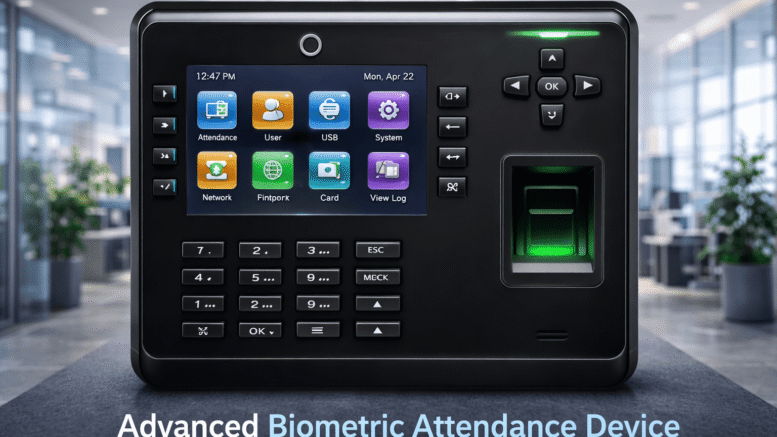
Buddy punching, where one employee clocks in for another, costs businesses real money every month. Fingerprint time attendance systems solve this problem by requiring a unique biological trait to record every clock-in, making it virtually impossible for one employee to falsely register attendance for a colleague.
This article weighs the pros and cons of fingerprint time attendance systems in modern workplaces, helping employers decide whether biometric clocking is the right fit for their organization.
Why Fingerprint Time Attendance Systems Are Gaining Popularity
As labor costs rise and compliance requirements tighten, employers are looking for attendance methods that are both accurate and tamper-resistant. Fingerprint time attendance systems offer a level of verification that cards and PIN codes cannot match.
Eliminating Buddy Punching
Because a fingerprint is unique to each individual, it is virtually impossible for employees to clock in on behalf of an absent colleague, closing a common source of payroll leakage.
Simplifying Payroll Accuracy
Accurate clock-in and clock-out data feeds directly into payroll, reducing disputes over hours worked and overtime calculations.
The Pros of Fingerprint Time Attendance Systems
High Accuracy and Fraud Prevention
Fingerprint verification is significantly harder to fake than swiping a card or entering a shared PIN, making it one of the most reliable attendance methods available. This accuracy translates directly into more trustworthy payroll data and fewer disputes between employees and management over recorded hours.
Fast and Convenient for Employees
Clocking in takes just a second, and employees never need to worry about forgetting a card or remembering a PIN code.
Lower Long-Term Costs
Unlike cards, which need replacement when lost or damaged, fingerprints cannot be misplaced, reducing ongoing hardware replacement costs. Over several years, this can add up to meaningful savings for organizations with large or high-turnover workforces.
The Cons of Fingerprint Time Attendance Systems
Upfront Hardware Investment
Biometric scanners typically cost more upfront than simple card readers, which can be a consideration for smaller businesses with tight budgets.
Hygiene Concerns in Shared Environments
Shared touchpoints can raise hygiene concerns in certain industries, though many modern scanners now offer touchless or contactless fingerprint capture to address this.
Employee Privacy Considerations
Biometric data collection requires clear employee consent and secure storage practices to comply with data protection regulations. Employers should also be transparent about how long biometric data is retained and what happens to it when an employee leaves the organization.
Fingerprint Attendance vs Other Clocking Methods
| Method | Fraud Risk | Convenience | Ongoing Cost |
|---|---|---|---|
| Manual sign-in sheet | High | Low | Low |
| Card or badge | Medium | Medium | Medium, due to replacement cards |
| Fingerprint biometric | Very low | High | Low after initial hardware cost |
How to Implement Fingerprint Time Attendance Successfully
Step 1: Communicate Clearly with Employees
Explain why the system is being introduced and how biometric data will be stored and protected before rollout, to build trust and reduce resistance.
Step 2: Choose PDPA-Compliant Technology
Select a vendor whose system stores biometric templates securely and complies with Malaysia’s Personal Data Protection Act (PDPA).
Step 3: Integrate with Payroll Software
Ensure the attendance system connects directly to payroll so hours worked flow through automatically without manual re-entry.
Best Practices for Fingerprint Attendance Systems
- Offer an alternative clocking method for employees with medical conditions affecting fingerprint recognition.
- Regularly clean and maintain scanners to ensure consistent accuracy.
- Store biometric templates securely, encrypted, and separate from other personal data where possible.
- Review attendance reports regularly to catch and correct any recognition errors quickly.
Industries That Benefit Most from Fingerprint Attendance
While fingerprint attendance can benefit almost any organization, some industries see especially strong returns. Manufacturing plants with large shift-based workforces often struggle most with buddy punching, making biometric verification particularly valuable. Retail chains with multiple outlets benefit from centralized attendance data across locations, while professional services firms appreciate the reduced administrative burden of not managing physical access cards. Construction and field service companies, on the other hand, may prefer mobile-based biometric or GPS verification given the lack of a fixed worksite, which is worth factoring into any technology decision.
Weighing Cost Against Long-Term Savings
Decision-makers should look beyond the sticker price of biometric hardware and consider the full cost picture over several years. Reduced payroll leakage from eliminated buddy punching, lower card replacement costs, and faster payroll processing often offset the initial investment within the first year or two of deployment. Building this total cost of ownership into a business case makes it easier to secure budget approval from finance stakeholders who may initially focus only on upfront hardware pricing.
Key Takeaways
- Fingerprint time attendance systems significantly reduce buddy punching and payroll fraud.
- The technology offers convenience and accuracy but requires upfront investment and privacy safeguards.
- Successful implementation depends on clear communication, PDPA compliance, and payroll integration.
Conclusion
Fingerprint time attendance systems offer Malaysian employers a reliable way to eliminate buddy punching and improve payroll accuracy, though the decision should weigh upfront hardware costs and privacy considerations against long-term benefits. For most modern workplaces, the accuracy and fraud prevention gained from biometric clocking outweigh the initial investment.
If you are considering upgrading your attendance system, it is worth exploring how fingerprint time attendance technology could work for your organization.
Frequently Asked Questions
Is fingerprint time attendance data secure?
Reputable systems store fingerprint templates as encrypted mathematical representations rather than actual images, in compliance with data protection regulations.
What happens if an employee’s fingerprint cannot be read?
Most systems allow for a backup verification method, such as a PIN or card, for employees with fingerprints that are difficult to scan.
Does fingerprint attendance reduce payroll costs?
Yes, by eliminating buddy punching and improving time tracking accuracy, many employers see a measurable reduction in unnecessary labor costs.
Are fingerprint scanners hygienic for shared use?
Many modern scanners now offer touchless or contactless options to address hygiene concerns in shared workplace environments.
Click here to find out how the product works : https://www.smartouch.com.my/category/time-clock/biometric-fingerprint/
Smart Touch technology pte ltd , www.smartouch.com.sg +65-63964767, sales@smartouch.com.sg , www.smartouch.com.my +607-3889903 sales@smartouch.com.my