SmartTime: OT Rate In Malaysia For Secure Digital Operations
Overtime (OT) management is a critical component of payroll administration and employee relations in Malaysia. As businesses increasingly digitise their operations, the need for accurate, transparent, and secure overtime tracking has become more important than ever. Employers must ensure they comply with Malaysian employment regulations whilst maintaining fairness and accuracy in calculating overtime compensation. This is where modern time and attendance systems play a vital role in streamlining OT rate management and protecting both employers and employees.
In this article, we explore how overtime rates function in Malaysia’s business landscape, why secure digital operations matter for OT management, and how organisations can implement reliable systems to ensure compliance and operational efficiency.
Understanding Overtime Rates in Malaysia
Overtime compensation in Malaysia is governed by employment law and contractual agreements between employers and employees. Generally, overtime is paid when employees work beyond their normal working hours, which are typically 8 hours per day or 40 hours per week, depending on the industry and company policy.
The calculation and rate of overtime can vary based on several factors:
- Employment contract terms and conditions
- Industry sector and collective agreements
- Type of work performed (ordinary work versus hazardous work)
- Whether work is performed on ordinary days or rest days
- Time of day (daytime versus night shifts)
Malaysian employers should ensure they understand the specific regulations applicable to their industry and maintain accurate records of employee working hours. For the most current and detailed information regarding overtime rates and legal requirements, it is advisable to consult the Ministry of Human Resources or refer to the Employment Act 1955, as regulations may be updated periodically.
Why Secure Digital Operations Matter for OT Management
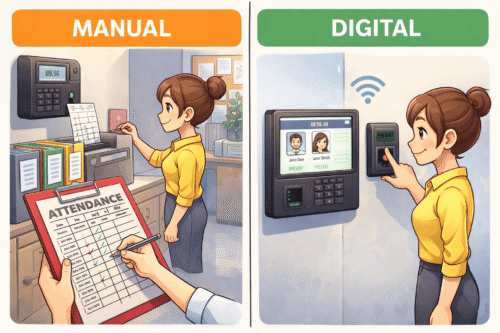
Manual overtime tracking methods—such as paper timesheets, spreadsheets, or informal record-keeping—are prone to errors, inconsistencies, and potential disputes. In today’s digital environment, secure systems offer significant advantages for managing overtime effectively.
Accuracy and Reduced Errors
Digital time tracking systems automatically record employee clock-in and clock-out times, eliminating manual data entry errors. This ensures that overtime calculations are accurate and consistent, reducing the likelihood of payroll discrepancies that can lead to employee dissatisfaction or compliance issues.
Transparency and Employee Trust
When employees can view their recorded working hours and overtime accumulation through a digital platform, it builds transparency and trust. Employees understand exactly how their overtime is being calculated and compensated, which reduces misunderstandings and disputes.
Compliance and Audit Trail
Secure digital systems maintain comprehensive audit trails showing when hours were recorded, any modifications made, and who authorised them. This documentation is invaluable during audits and helps employers demonstrate compliance with employment regulations and internal policies.
Operational Efficiency
Automated systems reduce administrative burden on HR and payroll teams. Instead of manually compiling timesheets and calculating overtime, staff can focus on strategic tasks. This efficiency translates to cost savings and faster payroll processing cycles.
Common Challenges in Overtime Management
Many Malaysian organisations face specific challenges when managing overtime:
- Inconsistent recording methods: Different departments or shifts may use different methods to track hours, creating inconsistency.
- Buddy punching: Without secure systems, employees may clock in or out for colleagues, leading to inaccurate records.
- Data security concerns: Manual records and unsecured digital files pose risks to sensitive employee information and payroll data.
- Calculation errors: Manual overtime calculations are susceptible to mathematical mistakes, especially when rates vary by shift type or day.
- Regulatory compliance: Keeping up with Malaysian employment law requirements and ensuring all overtime practices align with legal standards can be complex.
- Reporting and analysis: Manual systems make it difficult to analyse overtime trends, identify patterns, or generate meaningful reports for management decision-making.
Key Features of a Reliable Digital OT Management System
An effective digital system for managing overtime should include several essential features:
- Automated time tracking: Captures accurate clock-in and clock-out times without manual intervention.
- Flexible OT rate configuration: Allows configuration of different overtime rates based on shift type, day of week, and other relevant factors.
- Real-time monitoring: Provides visibility into current working hours and overtime accumulation throughout the pay period.
- Secure data storage: Protects employee and payroll information with encryption and access controls.
- Audit trail functionality: Records all time entries, modifications, and approvals for compliance purposes.
- Integration with payroll systems: Seamlessly passes verified overtime data to payroll processing for accurate compensation calculation.
- Employee self-service access: Allows employees to view their hours and overtime records, promoting transparency.
- Management reporting: Generates overtime reports for analysis and decision-making.
Implementing Digital OT Management in Your Organisation
Transitioning to a digital overtime management system requires careful planning and execution:
Assess Your Current Process
Begin by documenting how overtime is currently tracked, calculated, and paid. Identify pain points, inefficiencies, and compliance gaps. Understand the specific overtime rates and policies that apply to your organisation and different employee groups.
Select an Appropriate System
Choose a system that can accommodate your organisation’s specific overtime policies and Malaysian regulatory requirements. The system should be reliable, secure, and user-friendly for both administrators and employees.
Configure the System Correctly
Work with your HR, payroll, and IT teams to configure the system with accurate overtime rates, shift definitions, and calculation rules specific to your organisation. Test the configuration thoroughly to ensure accuracy.
Communicate and Train
Inform employees about the new system, how it works, and the benefits it provides. Provide training to ensure both employees and administrators can use the system correctly. Clear communication helps with adoption and reduces resistance to change.
Monitor and Optimise
After implementation, monitor the system’s performance and gather feedback from users. Make adjustments as needed to ensure the system continues to meet your organisation’s needs.
How Smart Touch Technology Can Help
Smart Touch Technology’s SmartTime solution is designed to help Malaysian organisations manage time and attendance with accuracy, transparency, and security. SmartTime provides the tools needed to track working hours effectively, calculate overtime accurately, and maintain comprehensive records for compliance purposes.
With SmartTime, organisations can configure flexible overtime rates that reflect their specific policies and Malaysian regulatory requirements. The system’s secure, digital approach eliminates the errors and inefficiencies associated with manual overtime tracking, whilst providing both employers and employees with clear visibility into working hours and compensation.
For organisations looking to modernise their overtime management and ensure secure digital operations, SmartTime offers a reliable foundation. Click here to view complete product specifications: https://www.smartouch.com.my/smartime-time-system/
Conclusion
Effective overtime rate management is essential for Malaysian businesses seeking to maintain compliance, ensure fairness, and operate efficiently. Manual, paper-based systems introduce risks of errors, inconsistencies, and compliance issues that can affect both employee satisfaction and organisational operations.
Digital time and attendance systems provide the accuracy, transparency, and security needed to manage overtime effectively. By automating overtime tracking, configuring accurate rate calculations, and maintaining secure audit trails, organisations can simplify payroll administration, build employee trust, and confidently demonstrate regulatory compliance.
Whether your organisation is just beginning to formalise overtime management or seeking to upgrade from manual systems, investing in a reliable digital solution is a strategic decision that benefits both your business and your employees. The shift to secure digital operations for overtime management is not just about compliance—it is about creating a fair, efficient, and professional workplace.
Smart Touch Technology Pte Ltd
Singapore: www.smartouch.com.sg | +65-63964767 | sales@smartouch.com.sg
Malaysia: www.smartouch.com.my | +607-3889903 | sales@smartouch.com.my