Staff scheduling is one of the most critical operational challenges in the education sector. Whether you manage a primary school, secondary institution, or higher education facility, coordinating teachers, support staff, and administrative personnel across multiple classes, shifts, and departments requires careful planning and execution.
Manual scheduling methods—spreadsheets, paper-based systems, or fragmented communication channels—often lead to inefficiencies, conflicts, and frustration among staff members. An HRMS mobile app designed for education offers a modern solution that streamlines the entire scheduling process while improving visibility, flexibility, and compliance.
This guide explores how educational institutions in Malaysia can leverage HRMS mobile applications to transform staff scheduling from a time-consuming headache into a strategic advantage.
Why Staff Scheduling Matters in Education
Educational institutions operate under unique constraints. Unlike traditional businesses with fixed working hours, schools must balance classroom coverage, specialist subject allocation, duty rotations, examination supervision, and extracurricular activities. Poor scheduling directly impacts:
- Student learning outcomes when qualified teachers are unavailable
- Staff morale and retention when schedules are unfair or inflexible
- Operational efficiency when substitute arrangements are disorganised
- Compliance with employment regulations and contractual obligations
- Budget control through overtime and emergency staffing costs
Effective staff scheduling ensures that the right person is in the right place at the right time, supporting both institutional goals and employee satisfaction.
Common Scheduling Challenges in Educational Settings
Educational administrators face distinct scheduling obstacles that generic workforce management systems often fail to address.
Complexity of Multiple Roles
Teachers may have primary classroom responsibilities, but also cover specialist roles such as form tutors, examination invigilators, co-curriculum coordinators, or pastoral care leads. Managing these overlapping commitments across a single schedule requires granular visibility.
Unpredictable Absences
Staff illness, emergency leave, or unforeseen circumstances can disrupt carefully planned schedules. Educational institutions need rapid response mechanisms to identify suitable replacements and maintain classroom continuity.
Regulatory Compliance
Malaysian educational institutions must adhere to employment regulations, contracted working hours, and fair scheduling practices. Ensuring compliance while accommodating preferences and constraints demands systematic record-keeping.
Communication Gaps
When schedules exist only on paper or in email threads, staff members may miss updates, misunderstand their duties, or fail to receive urgent notifications about changes.
Fairness and Transparency
Staff perception of favouritism in duty allocation, shift distribution, or special privileges can damage morale and create grievances if the scheduling process lacks transparency.
How HRMS Mobile Apps Address Scheduling Problems
A dedicated HRMS mobile application provides educational institutions with integrated tools designed to overcome traditional scheduling challenges.
Centralised Schedule Management
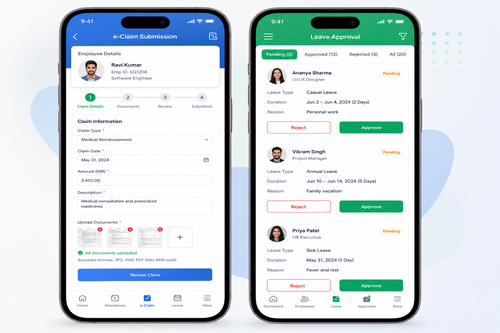
HRMS mobile apps consolidate all scheduling information in a single, accessible platform. Administrators can create, modify, and publish schedules efficiently, while staff members access their assignments instantly through their mobile devices. This eliminates the confusion caused by multiple versions or outdated information.
Real-Time Notifications
When changes occur—whether schedule amendments, shift swaps, or urgent coverage requests—mobile app notifications ensure staff are informed immediately. This reduces the lag between decision and awareness, enabling faster response times.
Leave and Absence Management
Integrated leave management allows staff to request time off, view approval status, and understand how their absence affects scheduling. Administrators see leave requests in context with scheduled duties, making it easier to arrange appropriate coverage or plan around anticipated gaps.
Shift Swap and Coverage Requests
Modern HRMS apps enable staff to request shift swaps or coverage assistance through the app itself. Administrators can review requests against availability and institutional needs, then approve or suggest alternatives without extended email chains.
Fair Allocation and Transparency
Digital scheduling creates an audit trail showing how duties are distributed. Staff can see their allocation compared to colleagues, reducing perceptions of unfairness and providing objective data if disputes arise.
Substitute Management
When absences occur, HRMS mobile apps can notify available substitute staff automatically, track acceptances, and confirm coverage arrangements. This accelerates the replacement process and reduces the burden on administration staff.
Key Features to Look For in an Education HRMS Mobile App
When evaluating HRMS mobile applications for your educational institution, consider these essential features:
- Intuitive mobile interface: Teachers and staff should find the app easy to navigate without extensive training
- Flexible scheduling templates: The system should accommodate different schedule patterns for classroom teachers, support staff, and administrators
- Multi-level approval workflows: Implement checks ensuring that schedule changes follow institutional procedures
- Integration with payroll: Accurate scheduling data should feed directly into payroll calculations to prevent errors
- Reporting and analytics: Generate insights on staff utilisation, overtime patterns, and scheduling efficiency
- Offline functionality: Staff should access their schedules even without internet connectivity
- Calendar sync: The ability to export schedules to personal calendar applications improves staff engagement
- Customisation options: The system should adapt to your institution’s specific structure, roles, and requirements
Practical Implementation Steps
Introducing an HRMS mobile app for staff scheduling requires thoughtful planning to ensure adoption and success.
Define Your Requirements
Before selecting a system, map your current scheduling processes, identify pain points, and clarify what outcomes you want to achieve. Involve key stakeholders—school administrators, heads of departments, and representative staff members—in this process.
Choose an Appropriate Solution
Select an HRMS app that matches your institution’s size, complexity, and budget. Test the system with a pilot group before full implementation to validate that it meets your needs.
Plan Your Data Migration
If moving from manual or legacy systems, plan how to migrate existing staff records, contract details, and historical scheduling information accurately.
Provide Comprehensive Training
Ensure all users—administrators, teachers, and support staff—understand how to use the app effectively. Offer training sessions, user guides, and ongoing support to encourage adoption.
Establish Clear Policies
Define institutional policies around schedule requests, change procedures, and approval processes. Communicate these clearly to all staff members.
Monitor and Refine
After implementation, gather feedback, monitor system performance, and make adjustments to optimise the scheduling process over time.
Benefits for Educational Institutions
When implemented effectively, an HRMS mobile app for staff scheduling delivers measurable benefits:
- Improved operational efficiency: Scheduling that previously took hours can be completed in minutes
- Better staff satisfaction: Transparent, fair scheduling increases morale and reduces turnover
- Enhanced compliance: Systematic record-keeping ensures adherence to employment regulations and contractual terms
- Cost control: Optimised scheduling reduces unnecessary overtime and emergency staffing expenses
- Faster response to absences: Rapid notification and coverage arrangement minimises disruption to teaching and learning
- Data-driven decision making: Analytics reveal scheduling patterns and inform workforce planning
- Reduced administrative burden: Automation frees administrators to focus on strategic rather than transactional tasks
How Smart Touch Technology Can Help
Smart Touch Technology offers smartgogo apps, a comprehensive HRMS mobile solution designed to simplify staff scheduling and workforce management for educational institutions. The smartgogo app brings together scheduling, leave management, and communication features in a single, mobile-first platform that works for schools and educational organisations throughout Malaysia.
With smartgogo, educational administrators can create and manage complex schedules efficiently, while staff members enjoy transparent visibility of their duties and simple processes for requesting changes or leave. The app’s real-time notification system keeps everyone informed of updates, and integrated workflows ensure that schedule changes follow your institution’s approval procedures.
Whether you manage a single school or multiple educational facilities, smartgogo provides the tools to streamline staff scheduling, improve compliance, and support better workforce management decisions.
Interested in this product? Click here to learn more about how smartgogo can transform staff scheduling in your educational institution.
Conclusion
Effective staff scheduling is fundamental to educational success. Manual systems create inefficiencies, frustration, and compliance risks. An HRMS mobile app designed for education transforms scheduling from a laborious administrative task into a streamlined, transparent process that supports both institutional operations and staff satisfaction.
By centralising schedules, automating notifications, managing leave and absences, and providing clear visibility into duty allocation, modern HRMS mobile apps address the specific challenges faced by Malaysian educational institutions. The result is better operational efficiency, improved staff morale, stronger regulatory compliance, and reduced administrative overhead.
If your educational institution is struggling with staff scheduling, it may be time to explore how a dedicated HRMS mobile solution can help. The right technology, implemented thoughtfully with clear policies and staff engagement, delivers real benefits that extend far beyond the schedule itself.
Smart Touch Technology Pte Ltd
Singapore: www.smartouch.com.sg | +65-63964767 | sales@smartouch.com.sg
Malaysia: www.smartouch.com.my | +607-3889903 | sales@smartouch.com.my