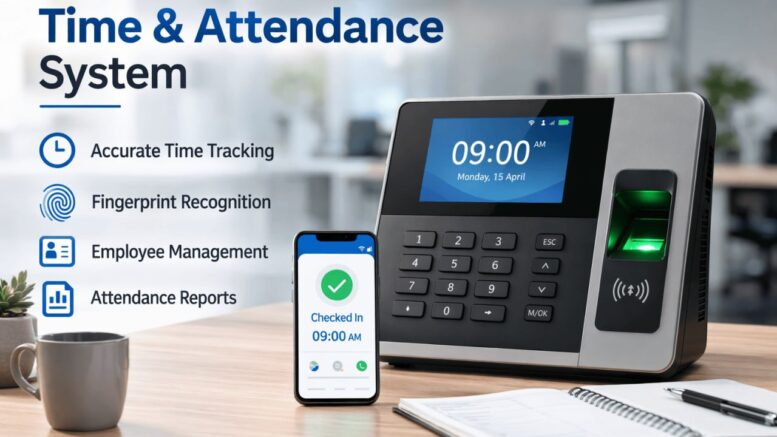
Time And Attendance System: Biometric Attendance Integration For Faster Daily Operations
In today’s competitive business environment, organisations across Malaysia are constantly seeking ways to streamline operations and improve efficiency. One area that significantly impacts daily productivity is how businesses manage employee time and attendance. Traditional manual attendance methods—such as paper registers or basic punch cards—are not only time-consuming but also prone to errors and manipulation. A modern time and attendance system with biometric integration offers a practical solution that can transform how organisations track workforce presence and optimise operational workflows.
For employers, HR managers, and business leaders, implementing an automated time and attendance system represents a strategic investment in accuracy, compliance, and operational efficiency. This article explores how biometric attendance integration works, why it matters for Malaysian businesses, and how it can accelerate your daily operations.
Understanding Time and Attendance Systems
A time and attendance system is a technology solution designed to automatically record when employees arrive at work, when they leave, and how much time they spend on-site or on assigned tasks. Unlike traditional manual methods, modern systems provide real-time data that can be accessed by managers and HR personnel from any location.
The core function of these systems is simple: capture attendance data accurately and make that information available for payroll, compliance, and operational analysis. However, the technology behind effective time and attendance systems has evolved significantly, offering far more than basic clock-in and clock-out capabilities.
What Is Biometric Attendance Integration?
Biometric attendance integration refers to the use of biological identifiers—such as fingerprints, facial recognition, or iris scanning—to verify and record employee attendance. Rather than relying on ID cards that can be shared, passwords that can be forgotten, or manual entry by supervisors, biometric systems use unique physical characteristics that are difficult to falsify.
When an employee arrives at work, they simply present their biometric identifier to the system, which instantly records their presence and timestamps the data. This process takes seconds and eliminates the possibility of buddy punching, where one employee clocks in for another.
How Biometric Systems Work
Biometric attendance systems operate through a straightforward process. First, during the enrollment phase, employees are registered in the system, and their unique biometric data is captured and stored securely. When an employee arrives at work, they present their biometric identifier to the device. The system compares the presented data with the stored record, confirms a match, and automatically logs the attendance. This data is then stored in a centralised database that managers and HR personnel can access.
Key Benefits of Biometric Attendance Integration
Implementing a biometric-integrated time and attendance system offers several substantial advantages for Malaysian organisations:
- Improved Accuracy: Eliminates manual entry errors and ensures precise attendance records that can be relied upon for payroll and compliance purposes.
- Prevention of Buddy Punching: Biometric verification makes it virtually impossible for employees to clock in or out for colleagues, ensuring authentic attendance data.
- Faster Daily Operations: Automated attendance processes reduce administrative burden on HR teams, allowing them to focus on more strategic tasks rather than manually reviewing timesheets.
- Real-Time Visibility: Managers gain instant access to attendance data, enabling better resource planning and rapid response to staffing issues.
- Enhanced Compliance: Accurate attendance records support compliance with Malaysian employment regulations and company policies, creating an auditable trail.
- Reduced Administrative Costs: By automating the attendance process, organisations reduce the time and resources spent on manual tracking, verification, and corrections.
- Improved Employee Accountability: When employees know attendance is tracked accurately, it encourages punctuality and professional conduct.
- Data Security: Centralised systems with secure databases protect sensitive attendance information better than paper-based records.
Why Malaysian Organisations Need Better Attendance Systems
Malaysian businesses operate in a dynamic, fast-paced environment where operational efficiency directly impacts competitiveness. Whether you’re managing a manufacturing facility, a corporate office, a retail operation, or a service-based business, knowing exactly how many employees are present and working during each shift is fundamental to smooth operations.
Additionally, Malaysia’s employment laws require employers to maintain accurate records of working hours and attendance. A reliable time and attendance system helps organisations meet these regulatory requirements while providing documentation that protects both employers and employees.
For growing businesses, a biometric-integrated attendance system scales easily. Whether you have 50 employees or 500, the system continues to function reliably, capturing accurate data across multiple locations if needed.
Common Challenges Without Automated Attendance Systems
Organisations that rely on manual or basic attendance methods often face several recurring problems:
- Time Theft and Buddy Punching: Employees or supervisors may manipulate manual records, resulting in paid time for hours not worked.
- Administrative Overload: HR teams spend excessive time entering, verifying, and correcting attendance data instead of focusing on employee development and strategy.
- Payroll Errors: Inaccurate attendance records lead to payroll mistakes, which can frustrate employees and create compliance issues.
- Lack of Real-Time Insights: Without automated systems, managers may not know about staffing issues until days later, hindering responsive decision-making.
- Compliance Risks: Manual records are vulnerable to loss, tampering, or disputes, creating legal risks for the organisation.
- Employee Disputes: Without objective, automated records, disagreements about hours worked become difficult to resolve fairly.
How Biometric Attendance Improves Operational Speed
The operational acceleration provided by biometric attendance integration extends beyond simply recording when employees arrive. When attendance data is accurate and immediately available, organisations can make faster, better-informed decisions throughout the day.
For example, if a manager discovers that a key team member is unexpectedly absent, they can quickly reassign tasks or bring in coverage before delays occur. Payroll departments can process payments more quickly when they have verified, accurate attendance records rather than spending time investigating discrepancies. HR personnel can focus on employee relations and development rather than administrative troubleshooting.
In shift-based operations such as retail or manufacturing, real-time attendance data helps supervisors confirm that scheduled staffing levels are actually present and can adjust as needed within the hour, rather than discovering problems at the end of the day when adjustments become difficult.
Integration Capabilities and System Flexibility
Modern time and attendance systems are designed to integrate with other business systems, making them more valuable to the broader organisation. When attendance data connects with payroll software, for example, the process becomes more streamlined and less error-prone. Similarly, integration with scheduling systems can help match planned staffing with actual attendance, revealing gaps in advance.
Many organisations also benefit from multi-location capabilities, where attendance data from multiple physical sites flows into a single centralised system, giving senior management comprehensive visibility across the entire operation.
How Smart Touch Technology Can Help
Smart Touch Technology provides comprehensive time and attendance solutions specifically designed for Malaysian businesses. The company’s Time Management System combines biometric integration with practical functionality that addresses the real challenges organisations face in managing workforce attendance and optimising daily operations.
By choosing a proven solution from Smart Touch Technology, organisations gain access to a system built with the Malaysian business environment in mind, supported by professional implementation and ongoing support to ensure smooth operations.
To learn more about how Smart Touch Technology’s time and attendance system can transform your operations, read the product overview here: http://www.smartouch.com.my/tms-time-management-system-singapore-malaysia/
Conclusion
A time and attendance system with biometric integration represents a modern, practical solution to one of the most fundamental operational challenges facing Malaysian organisations. By eliminating manual processes, preventing attendance fraud, and providing real-time visibility into workforce presence, these systems enable businesses to operate faster, more accurately, and more efficiently.
Whether you’re looking to reduce administrative burden, improve payroll accuracy, enhance compliance, or simply gain better control over daily operations, biometric attendance integration offers measurable benefits that extend well beyond simple clock-in and clock-out functionality.
As Malaysian businesses continue to compete in an increasingly demanding marketplace, investing in automation and accuracy in areas like attendance management is not just a convenience—it’s a strategic advantage that can impact your bottom line and operational effectiveness.
Smart Touch Technology Pte Ltd
Singapore: www.smartouch.com.sg | +65-63964767 | sales@smartouch.com.sg
Malaysia: www.smartouch.com.my | +607-3889903 | sales@smartouch.com.my