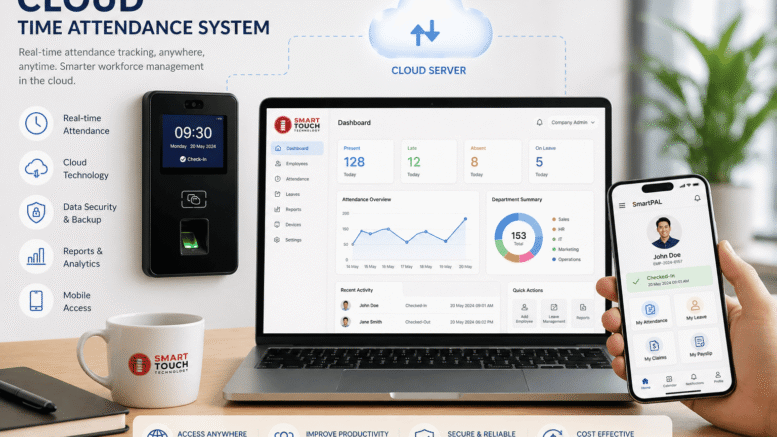
The banking sector operates under some of the strictest security and compliance requirements of any industry. From protecting sensitive customer data to maintaining precise operational records, every process must meet regulatory standards. Time attendance for banking must therefore go beyond basic clock-in and clock-out — it must integrate seamlessly with data security protocols while delivering the accuracy and reliability that financial institutions demand. Facial clocking technology is transforming how banks manage workforce attendance.
Why Standard Attendance Systems Fall Short in Banking
Generic attendance solutions designed for retail or manufacturing environments are not built for the stringent demands of banking. Common shortcomings include:
- Insufficient security for access-controlled environments
- No integration with banking core systems or HR platforms
- Vulnerability to buddy punching and identity fraud
- Inadequate audit trails for compliance reporting
- Poor performance in high-traffic banking halls and back-office areas
A purpose-fit time attendance system for the banking sector addresses each of these challenges head-on.
How Facial Recognition Clocking Works in Banking
Facial clocking technology uses advanced biometric algorithms to identify employees by their unique facial features. The process is fast, contactless, and highly secure:
- Employee enrolment — Staff facial data is captured and encrypted during onboarding.
- Live recognition — When an employee approaches the terminal, the camera captures their face and compares it to the encrypted template in milliseconds.
- Access and attendance logged — A match triggers both door access (where integrated) and an attendance record simultaneously.
- Data synced securely — All records are transmitted to the central HR or time management system over encrypted channels.
Key Features Required for Banking Time Attendance Systems
High-Security Biometric Identification
Facial recognition with liveness detection prevents spoofing using photographs or video. This is critical in banking, where identity security is paramount.
Integration with Access Control
Banking environments require strict control over who can enter which area — from the customer floor to the vault and server room. Time attendance systems that integrate with access control ensure every movement is logged and authorised.
Data Encryption and Privacy Compliance
Biometric data is highly sensitive. Systems used in banking must encrypt all stored and transmitted data and comply with Malaysia’s Personal Data Protection Act 2010 (PDPA) and Bank Negara Malaysia’s IT governance requirements.
Shift and Roster Management
Banks operate across multiple shifts — including early, late, and weekend banking hours. The attendance system must support complex shift patterns, overtime calculations, and roster planning with minimal manual intervention.
Real-Time Monitoring and Alerts
Branch managers and HR can monitor attendance in real time. Automated alerts flag late arrivals, early departures, or unauthorised access attempts — enabling immediate response.
Comprehensive Audit Trails
Every transaction — clocking event, access attempt, or system action — is logged with a timestamp and user identity. These records support internal audits, Bank Negara inspections, and employee dispute resolution.
Benefits of Facial Clocking Technology for Banks
| Benefit | Impact |
|---|---|
| Eliminates buddy punching | Accurate attendance = accurate payroll |
| Contactless operation | Hygienic and fast — no card or fingerprint required |
| Dual-purpose device | Attendance + access control in one terminal |
| Regulatory compliance | Audit-ready records for Bank Negara requirements |
| Real-time visibility | Instant headcount and attendance monitoring |
Implementation Considerations for Banking Environments
Deploying facial clocking technology in a banking environment requires careful planning:
- Privacy impact assessment — Conduct an assessment before deployment to ensure PDPA compliance.
- Network security — Ensure biometric terminals connect over secure, isolated network segments.
- Backup systems — Plan for alternative authentication methods in case of system downtime.
- Staff communication — Inform employees about biometric data usage and obtain appropriate consent.
- Vendor compliance — Choose a vendor with proven experience in financial sector deployments.
Conclusion
Time attendance for banking is a specialised discipline that demands the highest standards of accuracy, security, and compliance. Facial clocking technology meets these demands by delivering fast, contactless identification that integrates with access control, payroll, and HR systems — all within a fully auditable, encrypted framework.
For Malaysian banks and financial institutions looking to modernise their workforce management, facial recognition time attendance systems offer a compelling combination of operational efficiency and regulatory alignment.
Read the product overview here: http://www.smartouch.com.my/tms-time-management-system-singapore-malaysia/
Frequently Asked Questions (FAQ)
Why is facial recognition preferred over fingerprint in banking?
Facial recognition is contactless and faster, which reduces queues during shift changes. It also cannot be spoofed as easily as fingerprints and works well in high-security environments where hygiene and speed are critical.
Is facial biometric data safe in a banking environment?
Yes, when implemented correctly. Reputable systems encrypt biometric templates and store them securely, complying with PDPA and financial sector data governance requirements.
Can the system handle large staff numbers across multiple branches?
Yes. Centralised cloud-based time attendance systems can manage thousands of employees across dozens of branches, with real-time data aggregation for head office reporting.
How does the system support Bank Negara compliance requirements?
The system generates comprehensive audit trails for all attendance and access events, supporting internal audits and regulatory inspections with tamper-evident, timestamped records.
What happens if the facial recognition terminal goes offline?
Most systems operate in offline mode, storing data locally and syncing when connectivity is restored. Backup authentication methods such as PIN or card can be enabled for continuity.
Smart Touch technology pte ltd , www.smartouch.com.sg +65-63964767, sales@smartouch.com.sg , www.smartouch.com.my +607-3889903 sales@smartouch.com.my