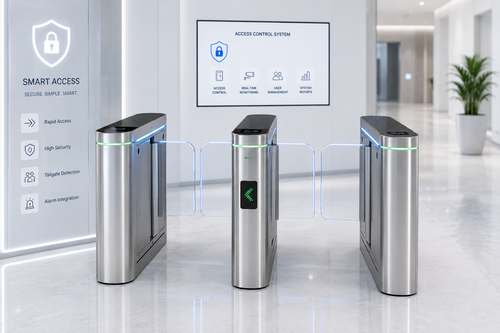
Modern buildings are expected to provide more than basic security. They must deliver a fast, safe, hygienic, and professional entry experience for employees, tenants, visitors, contractors, students, residents, and guests. As organizations continue to digitalize workplace operations, entrance control has become an important part of daily building management. Touchless Access with High-Speed Flap Barrier Technology offers a smarter way to manage pedestrian flow while improving security, convenience, hygiene, and operational efficiency.
A high-speed flap barrier is an advanced entrance control system designed to allow authorized users to pass quickly without physical contact. When integrated with facial recognition, QR code scanning, RFID card access, mobile credentials, visitor management software, lift control, and time attendance systems, it becomes a complete smart access solution for modern offices, commercial buildings, factories, schools, hospitals, condominiums, transport hubs, and high-security facilities.
At Smart Touch technology pte ltd, our touchless access and flap barrier solutions are designed to help organizations create faster entry points, reduce unauthorized access, improve traffic flow, and support a more hygienic and future-ready building environment.
What Is High-Speed Flap Barrier Technology?
High-speed flap barrier technology refers to an automated pedestrian entrance system that uses retractable flap panels to control access. The barrier remains closed when access is not authorized. Once a user is verified, the flaps open quickly and allow one person to pass through. After the person exits the passage lane, the flaps close automatically to prevent unauthorized entry.
Unlike traditional doors or manual gates, flap barriers are built for high-traffic environments. They are commonly installed at office lobbies, corporate towers, transit entrances, school campuses, commercial buildings, industrial facilities, gyms, libraries, and secured access zones. Their slim design, fast movement, and elegant appearance make them suitable for both premium front-of-house locations and practical operational areas.
When combined with touchless verification methods, users can enter without touching any shared surface. This creates a smoother and cleaner access experience, especially in locations where hygiene, speed, and security are important.
Why Touchless Access Is Important for Modern Facilities
Touchless access has become a key requirement for many organizations. Shared buttons, keypads, handles, and manual sign-in tools can slow down entry and increase contact points. In busy locations, hundreds or thousands of people may enter through the same access point every day. A touchless system reduces physical interaction while improving convenience.
With touchless access, users can enter by using facial recognition, QR codes, mobile credentials, RFID cards, or automatic visitor passes. The system verifies identity quickly and opens the flap barrier without requiring manual operation.
This is especially useful for corporate buildings, hospitals, schools, laboratories, factories, cleanrooms, and public facilities where hygiene and efficient people movement are important. Touchless access also creates a more premium experience for visitors and employees because the entry process feels modern, fast, and seamless.
The Role of Flap Barriers in Smart Building Security
Security is one of the main reasons organizations invest in flap barrier technology. A reception counter or guard post alone may not be enough to control daily access, especially in large buildings or busy workplaces. People may enter without proper authorization, follow behind others, or access restricted floors.
Flap barriers create a clear physical checkpoint. Each user must be verified before entering. When connected to an access control system, the barrier only opens for authorized credentials. This helps reduce unauthorized entry, tailgating, and misuse of access cards.
For buildings with multiple tenants or departments, flap barriers can be linked with lift control and access permissions. This means a user can enter the lobby and access only the floors or zones they are allowed to visit.
A smart flap barrier system strengthens security while maintaining a welcoming and professional entry environment.
Key Benefits of High-Speed Flap Barrier Technology
1. Fast and Smooth Pedestrian Flow
High-speed flap barriers are designed to manage large numbers of people efficiently. The flaps open and close quickly, allowing authorized users to pass with minimal delay. This is important during peak hours, such as morning arrival, lunch time, shift changes, class start times, and event registration.
A fast access lane reduces congestion at entrances and helps people move smoothly into the building. For corporate towers, factories, schools, and transport-linked buildings, this improvement can make daily operations much more efficient.
2. Touchless and Hygienic Entry
Touchless access reduces the need to press buttons, handle cards directly, use shared keypads, or open doors manually. With facial recognition or QR code scanning, users can complete verification without touching the barrier system.
This creates a cleaner access process and supports better hygiene practices. It is especially valuable in healthcare facilities, laboratories, food production areas, schools, and high-traffic commercial environments.
3. Stronger Access Control
Flap barriers help ensure that only authorized people can enter controlled areas. Every passage can be linked to a credential, user profile, visitor pass, or access record. This improves accountability and gives management clearer visibility over who enters and when.
When integrated with access control software, the system can support time-based access, department permissions, visitor validity, contractor access, blacklist alerts, and restricted zone control.
4. Better Visitor Experience
Visitors often form their first impression at the entrance. A modern flap barrier system creates a professional and organized arrival experience. Pre-registered visitors can receive QR codes before arrival, scan the code at the entrance, and pass through quickly after approval.
This reduces waiting time at reception and improves the overall image of the organization. It also helps reception staff manage visitors more efficiently.
5. Reduced Manual Security Workload
Without automated barriers, security guards may need to check cards, confirm visitors, open doors, and manually monitor entry. A flap barrier system automates much of this process. Guards can focus on supervision, exception handling, and safety instead of repetitive access checking.
This improves security efficiency and reduces human error.
6. Real-Time Entry Records
Every access event can be recorded by the system. Management can review entry logs by user, time, device, department, visitor type, or location. These records are useful for security audits, attendance tracking, visitor management, emergency investigation, and compliance reporting.
Real-time records create better transparency and stronger operational control.
Touchless Access Methods for Flap Barrier Systems
A high-speed flap barrier can support different types of touchless or low-contact verification methods depending on the organization’s needs.
Facial Recognition Access
Facial recognition allows users to enter by looking at a verification terminal. The system identifies the user and opens the flap barrier automatically if access is approved. This is one of the most convenient touchless methods because users do not need to carry a card or scan a code.
Facial recognition is suitable for offices, factories, schools, laboratories, gyms, and high-security areas where fast and reliable identity verification is required.
QR Code Access
QR code access is practical for visitors, contractors, event guests, temporary staff, and delivery personnel. A QR code can be issued through a visitor management system or appointment platform. The code can be valid for a specific date, time, entrance, or visit purpose.
When the visitor scans the QR code at the flap barrier, the system verifies permission and opens the lane. This helps prevent unauthorized reuse and makes temporary access easier to manage.
RFID Card Access
RFID cards remain a popular access method for employees, tenants, students, and residents. Users tap or present their card near the reader, and the barrier opens if the card is valid.
Although RFID requires carrying a card, it is still a fast and reliable option for many organizations. It can also be integrated with employee attendance and building access systems.
Mobile Credential Access
Mobile credential access allows users to enter using a smartphone-based credential. This can reduce the need for physical cards and support a more digital workplace experience.
Mobile access is especially suitable for modern office buildings, co-working spaces, residential facilities, and organizations that want flexible credential management.
Biometric Integration
In some environments, biometric verification such as fingerprint or palm recognition may be used. For touchless-focused facilities, facial recognition is often preferred, but biometric options can be selected based on security requirements and user environment.
High-Speed Flap Barriers for Corporate Offices
Corporate offices need a balance between security and hospitality. Employees should enter quickly, while visitors should be processed professionally. High-speed flap barriers provide a modern lobby experience while preventing unauthorized entry.
Employees can use face recognition, RFID cards, or mobile credentials for daily access. Visitors can use QR codes generated by a digital visitor management system. Reception teams can monitor visitor status and access logs through the software.
For corporate towers with multiple tenants, flap barriers can also support tenant-level permissions and lift access integration.
High-Speed Flap Barriers for Commercial Buildings
Commercial buildings receive a constant flow of tenants, staff, contractors, suppliers, and visitors. Manual access control may not be enough to manage large volumes efficiently.
Flap barriers help building management create controlled access lanes at the main lobby, car park lift lobby, tenant floors, or restricted areas. The system can reduce unauthorized movement and improve the overall security standard of the property.
A sleek flap barrier design also enhances the appearance of premium commercial spaces.
High-Speed Flap Barriers for Factories and Industrial Facilities
Factories and industrial sites often need to control employee entry, contractor access, production floor access, and restricted zones. During shift changes, hundreds of workers may enter or exit within a short time.
High-speed flap barriers help manage this flow efficiently. When integrated with time attendance software, each entry can also record attendance. When connected to access control permissions, only authorized workers can enter specific areas.
For electronics manufacturing, food production, pharmaceutical facilities, and cleanroom-related environments, touchless access can also support hygiene and process control.
High-Speed Flap Barriers for Schools and Universities
Schools, colleges, and universities need to protect students, staff, and facilities while maintaining smooth daily movement. Flap barriers can be installed at main entrances, libraries, dormitories, laboratories, staff areas, and administrative buildings.
Students and staff can enter using ID cards, facial recognition, or QR codes. Visitors and parents can be managed through a visitor management system. This improves campus security and provides accurate records of access activity.
For universities with multiple buildings, centralized access management can make campus operations more organized.
High-Speed Flap Barriers for Hospitals and Healthcare Facilities
Hospitals and healthcare environments require controlled access for staff, patients, visitors, contractors, and restricted medical areas. Touchless flap barrier technology supports both hygiene and security.
Authorized medical staff can enter restricted zones using face recognition or access cards. Visitors can be limited to specific areas and valid visiting hours. Contractors can receive temporary QR access for maintenance work.
This helps healthcare facilities improve access control while reducing unnecessary physical contact.
High-Speed Flap Barriers for Residential Buildings
Modern condominiums, serviced residences, apartments, and gated communities are increasingly adopting smart access systems. Flap barriers can be used at lobby entrances, lift lobbies, clubhouse areas, and shared facilities.
Residents can enter using cards, face recognition, or mobile credentials. Visitors can be pre-registered and issued temporary QR codes. Security teams can monitor access records and improve control over building entry.
A smart flap barrier system enhances both safety and resident convenience.
Integration with Visitor Management Systems
A high-speed flap barrier becomes more powerful when integrated with a digital visitor management system. Visitors can be pre-registered by hosts, receive QR codes, check in at a kiosk, and pass through the flap barrier after approval.
The system can record visitor entry and exit automatically. Access can be limited by time, area, host, or appointment. Expired visitor passes can be blocked automatically.
This creates a seamless visitor journey from invitation to check-out, while improving security and reducing front desk workload.
Integration with Time Attendance Systems
For companies that need accurate attendance records, flap barriers can be connected to time attendance software. When employees pass through the barrier, their entry time can be recorded automatically.
This is useful for offices, factories, schools, laboratories, warehouses, and service facilities. It reduces buddy punching, improves attendance accuracy, and gives HR better records for payroll and workforce management.
When used with SmartTime attendance, flap barriers can become part of a complete HR and access control ecosystem.
Integration with Lift Control
In commercial buildings and corporate towers, access control should not stop at the lobby. Lift control integration allows users to access only approved floors after passing through the flap barrier.
For example, an employee may be allowed to access their company floor and shared facilities only. A visitor may be allowed to access only the host’s floor during the approved appointment time. A contractor may be allowed to access only maintenance areas.
This creates a stronger building security structure and reduces unauthorized floor access.
Anti-Tailgating and Safety Features
High-speed flap barriers can include sensors that detect abnormal passage behavior. If two people attempt to pass using one credential, the system can trigger an alarm. If a person tries to force entry, the barrier can alert security staff. If an object blocks the lane, safety sensors can prevent improper closing.
Important safety features may include anti-pinch protection, emergency open function, fire alarm integration, lane status indicators, alarm output, passage counting, and automatic reset.
These features help protect users while maintaining secure access control.
Choosing the Right High-Speed Flap Barrier Solution
The right flap barrier solution depends on the building layout, user volume, security requirements, access method, design preference, and integration needs. A premium office lobby may require elegant stainless steel and glass-style barriers. A factory may require durable high-throughput lanes. A school may need student card access and visitor control. A hospital may prioritize touchless verification and hygiene.
Important considerations include lane width, passage speed, access reader type, safety sensors, material quality, software integration, emergency requirements, and future scalability.
A good flap barrier system should be reliable, easy to use, fast, and suitable for daily high-volume operation.
Why Choose Smart Touch for Touchless Flap Barrier Technology
Smart Touch technology pte ltd provides practical access control, visitor management, time attendance, HR, and smart security solutions for modern buildings and facilities. Our high-speed flap barrier solutions are designed to help organizations improve entry control, reduce unauthorized access, support touchless verification, and create a professional entrance experience.
We understand that every site has different needs. An office lobby needs a premium look and smooth visitor flow. A factory needs fast shift access and attendance integration. A school needs student safety and visitor control. A hospital needs hygiene-focused access. A residential building needs resident convenience and secure visitor entry.
Our solution can be configured with facial recognition, QR code access, RFID cards, visitor management, lift control, attendance software, and centralized reporting to match your environment.
Build a Faster, Safer, and Smarter Entrance
Touchless Access with High-Speed Flap Barrier Technology is an effective way to modernize building entry while improving security, hygiene, and user convenience. It helps organizations manage people movement more efficiently, reduce manual checking, prevent unauthorized access, and create accurate digital entry records.
For offices, commercial towers, factories, schools, hospitals, residential buildings, laboratories, and high-security facilities, high-speed flap barriers provide a powerful combination of speed, safety, design, and control.
As buildings become smarter and users expect more seamless experiences, touchless flap barrier systems will continue to play an important role in modern access control. With the right solution, organizations can create an entrance that is fast, secure, hygienic, and ready for the future.
Want to know more about this product? Click here: https://www.smartouch.com.my/category/time-clock/barrier/
Smart Touch technology pte ltd, www.smartouch.com.sg, +65-63964767, sales@smartouch.com.sg, www.smartouch.com.my, +607-3889903, sales@smartouch.com.my