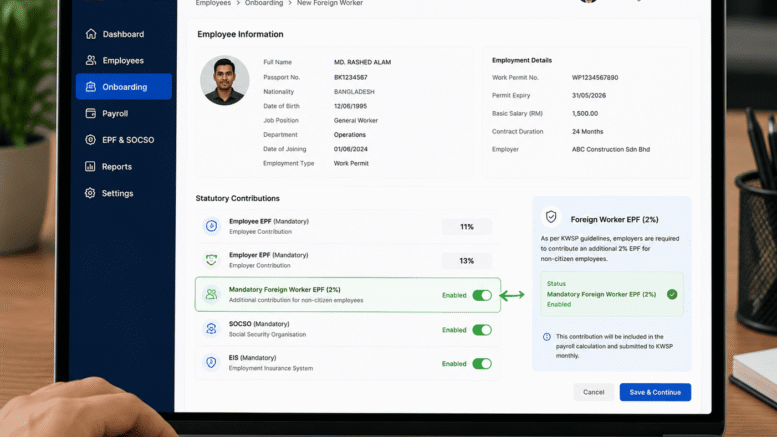
The Employees Provident Fund (EPF) is a cornerstone of Malaysia’s retirement savings system, affecting nearly every employer and employee in the country. However, EPF contribution rates and regulations are subject to periodic changes, and staying informed about these adjustments is crucial for business compliance and financial planning.
For Malaysian employers, understanding EPF contribution changes isn’t merely about regulatory adherence—it directly impacts payroll budgets, employee benefits, and overall HR operations. Whether you’re running a small business or managing a large enterprise, keeping up with EPF modifications ensures you maintain compliance while optimising your workforce management strategies.
In this article, we’ll explore what EPF contribution changes mean for Malaysian employers, how they affect your business, and practical steps to manage these adjustments effectively.
What Are EPF Contributions?
The EPF is a mandatory social security and retirement savings scheme managed by the Employees Provident Fund Board. Both employers and employees contribute a percentage of the employee’s salary to individual EPF accounts.
EPF contributions are divided into two main components:
- Employee contribution: Employees contribute a percentage of their basic salary, allowances, and other qualifying payments
- Employer contribution: Employers match or contribute an additional percentage on behalf of their employees
These contributions accumulate in individual accounts and earn investment returns, creating a retirement fund that employees can access upon reaching the statutory retirement age or under specific withdrawal conditions.
Common Types Of EPF Contribution Changes
EPF contribution rates and regulations can change for several reasons, including adjustments to social security policy, economic conditions, or government initiatives aimed at enhancing retirement security.
Rate Adjustments
The EPF Board periodically reviews and adjusts contribution rates for both employers and employees. These changes are typically announced in advance, allowing businesses time to adjust their payroll systems and budgets. Rate adjustments may increase or decrease the percentage of salary that must be contributed.
Age-Based Contribution Variations
EPF regulations often include age-based adjustments. For instance, employees aged 60 and above may have different contribution rates than younger workers, reflecting their proximity to retirement.
Salary Ceiling Changes
The maximum salary subject to EPF contributions may be adjusted annually. This ceiling affects how contributions are calculated for higher-earning employees and influences the total employer contribution liability.
Special Contribution Schemes
The government occasionally introduces temporary or targeted contribution schemes, such as reduced employer contributions for specific industries or reduced rates during economic challenges.
Why EPF Contribution Changes Matter For Your Business
Understanding and responding to EPF contribution changes is essential for several reasons:
Financial Planning And Budgeting
Changes in contribution rates directly affect your payroll expenses. An increase in employer contributions will increase your overall labour costs. Accurate forecasting requires staying informed about upcoming changes so you can plan your budget accordingly and avoid unexpected financial strain.
Employee Satisfaction
When employee contributions increase, take-home pay decreases (assuming gross salary remains constant). Being transparent about these changes and explaining their purpose helps maintain employee morale and trust. Conversely, reduced contribution rates can be presented as a benefit to your workforce.
Regulatory Compliance
Failing to implement EPF contribution changes correctly can result in penalties, fines, and reputational damage. Compliance is non-negotiable, and timely implementation of changes protects your business legally and operationally.
Payroll System Updates
EPF contribution changes require updates to your payroll software and processes. Lead time allows your HR and finance teams to implement these changes smoothly without errors or delays in salary processing.
Key Considerations For Employers
Timing Of Implementation
The EPF Board typically provides advance notice of contribution changes, specifying an effective date. Ensure your payroll team understands this timeline and implements the new rates on the correct date. Delays or early implementation can create complications with employee payments and regulatory reporting.
Accurate Calculation
Different employee categories may have different contribution rates based on age, salary level, or employment type. Verify that your payroll system correctly applies the appropriate rates to each employee to avoid underpayments or overpayments.
Communication With Employees
Proactively inform your employees about upcoming EPF contribution changes. Provide clear explanations of how the change affects their salary and the rationale behind it. Good communication reduces confusion and demonstrates your commitment to transparency.
Reconciliation And Reporting
After implementing changes, reconcile your payroll records to ensure contributions have been calculated and submitted correctly. The EPF requires accurate reporting, and discrepancies can trigger inquiries and additional administrative burden.
Impact On Different Business Sizes
Small And Medium Enterprises (SMEs)
For SMEs operating on tighter margins, EPF contribution increases can significantly impact profitability. These businesses should prioritise advance planning and may need to review pricing strategies or operational efficiency to absorb increased labour costs.
Large Enterprises
Larger organisations typically have dedicated HR and finance teams equipped to manage contribution changes across hundreds or thousands of employees. However, the sheer scale of these organisations means that system updates must be carefully coordinated to avoid errors affecting many staff members.
Seasonal Or Contract-Based Businesses
Businesses employing seasonal or temporary workers must ensure that contribution changes are applied consistently to all eligible employees, regardless of employment duration or contract type.
Steps To Prepare For EPF Contribution Changes
Monitor Official Communications
Regularly check the official EPF website and subscribe to updates from the Employees Provident Fund Board. Official announcements will contain details about rate changes, effective dates, and implementation requirements.
Review Your Current System
Conduct an audit of your existing payroll system to understand how EPF contributions are currently calculated and recorded. Identify any manual processes that may need adjustment.
Update Payroll Software
Work with your payroll software provider or in-house IT team to update contribution rates and calculation rules before the effective date. Test the changes with sample payrolls to identify any errors.
Train Your Team
Ensure your payroll, HR, and finance staff understand the changes and their implications. Provide clear documentation and training sessions to minimise errors during implementation.
Plan Internal Communications
Prepare employee communications explaining the changes, how they affect individual salaries, and the reasons for the adjustments. Deliver these communications before the effective date to reduce confusion.
How Smart Touch Technology Can Support Your Compliance
Managing EPF contributions across your workforce requires accurate, up-to-date systems and reliable processes. Smart Touch Technology provides solutions designed to streamline HR and payroll operations, helping Malaysian businesses maintain compliance and efficiency.
With integrated systems that handle payroll calculations, contribution tracking, and reporting, Smart Touch Technology enables you to implement EPF contribution changes confidently and accurately. By centralising your HR and payroll data, you can ensure consistency across your organisation and reduce the administrative burden on your team.
Whether you’re preparing for upcoming changes or refining your current processes, technology solutions that prioritise compliance and ease of use help you navigate EPF requirements with greater confidence and control.
Conclusion
EPF contribution changes are a regular part of doing business in Malaysia, and understanding their impact is essential for every employer. By staying informed about regulatory updates, preparing your systems in advance, and communicating clearly with your employees, you can manage these changes smoothly while maintaining compliance and morale.
The key to successful implementation lies in proactive planning, accurate systems, and clear communication. Taking these steps not only protects your business legally but also demonstrates your commitment to supporting your employees’ financial security and retirement planning.
Stay informed, stay prepared, and ensure your business remains compliant with Malaysia’s EPF requirements. If you would like to learn more about how integrated HR and payroll solutions can simplify your compliance processes, contact Smart Touch Technology today to discover how we can support your business.