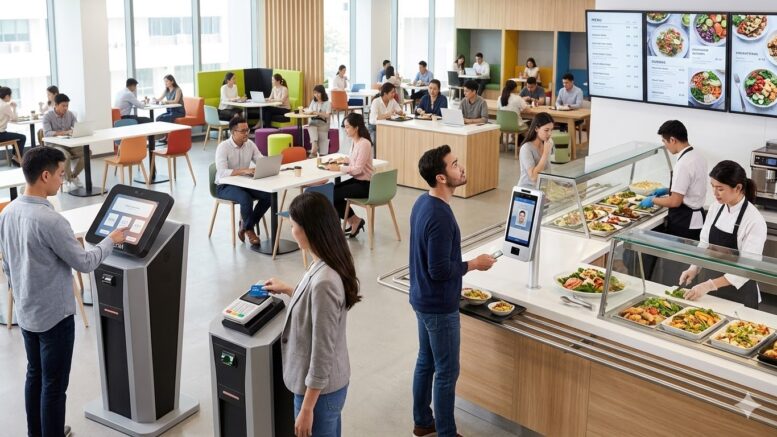
Feeding a workforce efficiently is more complicated than it looks. Long queues, cash handling, and manual meal subsidy tracking waste time and create friction between employees and the canteen operator. A workplace dining management system solves these problems by digitizing ordering, payment, and reporting across your entire canteen or cafeteria operation.
This guide explains how a workplace dining management system works, why Malaysian employers are adopting it, and what to look for when choosing a solution for your organization.
Why Employers Need a Workplace Dining Management System
As companies grow, so does the complexity of managing meal breaks, subsidies, and vendor payments. A workplace dining management system centralizes these processes so HR, finance, and canteen operators are always working from the same data.
The Cost of Manual Canteen Operations
Cash-based canteens are prone to shortages, disputes, and long queues during peak lunch hours. Staff lose valuable break time standing in line, and finance teams struggle to reconcile subsidy claims at the end of each month.
Rising Expectations for Workplace Amenities
Employees increasingly expect the same convenience at work that they get from food delivery apps and cashless retail. A modern dining system meets that expectation while giving management better visibility into food spend.
Key Features of a Workplace Dining Management System
Cashless Payment and Wallet Integration
Employees top up a digital wallet or link their staff card, then pay for meals with a simple tap. This eliminates the need for cash handling and speeds up the checkout line significantly.
Automated Meal Subsidy Management
Employers can configure subsidy rules directly in the system, automatically deducting the company-sponsored portion of each meal and billing the employee only for the remainder.
Real-Time Reporting and Analytics
Finance teams gain instant access to spending reports, popular menu items, and peak usage times, replacing manual spreadsheets with accurate, exportable data.
Benefits of a Workplace Dining Management System
| Benefit | Impact on Your Business |
|---|---|
| Faster queues | Cashless tap-to-pay reduces wait times during peak hours |
| Accurate subsidy tracking | Automated deductions eliminate manual reconciliation errors |
| Better hygiene | Reduces cash handling, supporting cleaner food service environments |
| Data-driven menu planning | Analytics reveal which meals are most popular with staff |
| Improved employee satisfaction | A smoother dining experience boosts morale during breaks |
How to Choose the Right Dining Management System
Step 1: Map Your Current Canteen Workflow
Understand how meals are currently ordered, paid for, and subsidized before evaluating vendors, so you know exactly which pain points need to be solved.
Step 2: Confirm Integration with Payroll and HR Systems
A workplace dining management system should sync with your payroll or HR platform so that subsidy deductions and top-ups are reflected accurately without manual data entry.
Step 3: Evaluate Hardware Requirements
Consider whether your canteen needs card readers, QR code scanners, or biometric terminals, and confirm the vendor can supply and support that hardware locally.
Best Practices for a Smooth Rollout
- Pilot the system in one cafeteria before rolling it out company-wide.
- Communicate subsidy rules clearly to employees before launch day.
- Provide a simple top-up channel, such as a mobile app or kiosk, to avoid queue bottlenecks.
- Review usage reports monthly to catch pricing or subsidy configuration errors early.
Comparing Traditional Canteens to Digital Dining Systems
| Aspect | Traditional Canteen | Workplace Dining Management System |
|---|---|---|
| Payment | Cash or manual vouchers | Cashless wallet or staff card |
| Subsidy tracking | Manual spreadsheets | Automated, rule-based deductions |
| Reporting | End-of-month manual reconciliation | Real-time dashboards |
| Queue speed | Slow during peak hours | Fast tap-to-pay checkout |
This comparison highlights why so many Malaysian employers are moving away from manual canteen processes. The upfront investment in a digital system is typically recovered quickly through reduced administrative workload and fewer billing disputes.
Common Mistakes to Avoid
Underestimating Staff Training
Canteen staff need clear guidance on handling refunds, top-up issues, and system downtime to avoid frustrating employees during busy lunch periods.
Ignoring Peak-Hour Load Testing
A system that works fine with light usage can slow down dramatically when hundreds of employees check out within the same fifteen-minute window. Confirm the platform can handle your peak load before going live.
Overlooking Data Privacy
Payment and dietary data should be stored securely and in compliance with Malaysia’s Personal Data Protection Act (PDPA), especially when biometric identification is used for wallet top-ups.
Choosing a Rigid, Non-Customizable Platform
Every organization structures its meal subsidies differently, whether by department, seniority, or shift pattern. Avoid platforms that force a one-size-fits-all subsidy model, since this often leads to manual workarounds later.
Frequently Overlooked Advantages
Beyond faster queues and cleaner reporting, a workplace dining management system also supports better vendor accountability. Canteen operators are paid based on verified transaction data rather than estimated headcounts, reducing disputes over monthly invoices. It also opens the door to healthier eating initiatives, since management can track which menu items are ordered most and adjust offerings accordingly.
Key Takeaways
- A workplace dining management system replaces cash and manual subsidy tracking with a fast, cashless experience.
- Employers gain real-time reporting that improves both budgeting and menu planning.
- Successful adoption depends on clear communication, adequate training, and integration with existing HR systems.
Conclusion
A well-implemented workplace dining management system turns a daily source of friction into a smooth, efficient part of the employee experience. By replacing cash handling with cashless payments, automating subsidy calculations, and giving finance teams real-time reporting, organizations can improve morale while cutting administrative overhead.
If your canteen operations still rely on manual processes, now is a good time to explore how a purpose-built workplace dining management system can modernize the experience for your staff.
Frequently Asked Questions
What is a workplace dining management system?
It is software, often paired with kiosks or card readers, that digitizes meal ordering, payment, and subsidy tracking within a company canteen or cafeteria.
Can employees still pay with cash?
Most systems are designed to reduce cash handling, though some operators choose to keep a cash lane available during a transition period.
Does the system integrate with payroll?
Yes, most platforms can sync subsidy deductions and top-up records with payroll or HR software to simplify reconciliation.
Is a workplace dining management system suitable for small offices?
Yes. Smaller offices can start with a simple mobile wallet setup and scale up to multi-terminal kiosks as headcount grows.
You can read more about our compliance features by https://www.smartouch.com.my/canteen-management-system-2/.
Smart Touch technology pte ltd , www.smartouch.com.sg +65-63964767, sales@smartouch.com.sg , www.smartouch.com.my +607-3889903 sales@smartouch.com.my