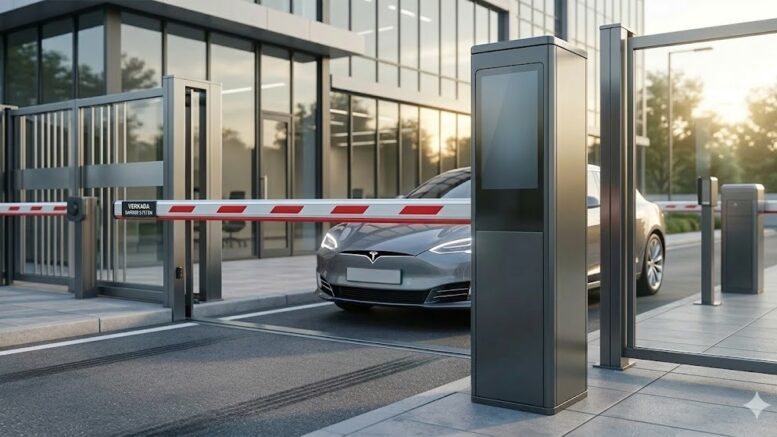
Controlling vehicle access at car parks, factories, and residential compounds requires equipment that can withstand constant daily use. A durable boom barrier is one of the most effective ways to manage traffic flow while keeping unauthorized vehicles out. This article explores how boom barriers work, why durability matters, and what features to look for when choosing a system for your property in Malaysia.
What Is a Boom Barrier?
A boom barrier is a mechanical arm that rises and lowers to control vehicle entry and exit at a controlled point, such as a car park entrance, gated community, or factory loading area. It is typically paired with access control technology such as RFID cards, license plate recognition, or ticketing systems.
Why Traffic Flow Control Matters
Poorly managed vehicle access leads to congestion, security risks, and unauthorized parking. A well-designed boom barrier system keeps traffic moving efficiently while ensuring only authorized vehicles gain entry, which is especially important during peak hours in busy commercial or residential areas.
Why Durability Is a Critical Factor
1. High-Frequency Daily Use
Boom barriers at busy car parks may open and close hundreds of times a day. A poorly built barrier will wear out quickly under this level of usage, leading to frequent breakdowns and repair costs.
2. Exposure to Weather Conditions
Malaysia’s tropical climate, with heavy rain and high humidity, puts outdoor equipment under constant stress. A durable barrier is built with weather-resistant materials and sealed electronics to prevent damage.
3. Reduced Downtime and Maintenance Costs
A well-built barrier requires less frequent servicing, minimizing disruption to traffic flow and reducing long-term maintenance expenses.
4. Long-Term Cost Savings
While a durable boom barrier may have a higher upfront cost, it typically saves money over its lifespan through reduced repairs and replacement frequency.
Key Features to Look For in a Boom Barrier
| Feature | Why It Matters |
|---|---|
| Heavy-duty motor | Supports high-frequency daily operation |
| Weatherproof housing | Protects internal components from rain and humidity |
| Fast opening/closing speed | Reduces vehicle queue time during peak hours |
| Integration with access control | Works with RFID, ticketing, or license plate recognition |
| Anti-crash safety features | Prevents damage from vehicles that fail to stop in time |
| Backup power support | Continues operating during power interruptions |
Step-by-Step: How Boom Barrier Systems Work
Step 1: Vehicle Approaches
The vehicle approaches the entry point equipped with the boom barrier system.
Step 2: Access Verification
The system verifies access through an RFID tag, ticket, or license plate recognition camera.
Step 3: Barrier Opens
Once verified, the barrier arm lifts to allow the vehicle through.
Step 4: Automatic Closing
The barrier lowers automatically after the vehicle passes, using sensors to avoid collisions.
Comparing Boom Barrier Types
| Type | Best For | Key Advantage |
|---|---|---|
| Standard arm barrier | Car parks, factories | Cost-effective and widely used |
| Fast-speed barrier | High-traffic entrances | Reduces queue time significantly |
| Folding arm barrier | Narrow spaces | Requires less clearance space |
| Heavy-duty industrial barrier | Factories, logistics hubs | Built for very high daily usage volume |
Key Benefits at a Glance
- Improved security: Restricts entry to authorized vehicles only
- Efficient traffic flow: Reduces congestion at entry points
- Long service life: Durable construction reduces breakdown frequency
- Weather resistance: Performs reliably in Malaysia’s tropical climate
- Integration ready: Works with existing access control systems
Best Practices for Boom Barrier Maintenance
Schedule regular maintenance checks to inspect the motor, sensors, and arm mechanism, especially after heavy rain seasons. Keep the barrier’s safety sensors clean and unobstructed to ensure reliable vehicle detection and prevent accidental damage.
Conclusion
A durable boom barrier is essential for managing vehicle traffic efficiently while maintaining strong access security at car parks, factories, and residential compounds. By choosing a barrier built for high-frequency use and weather resistance, and pairing it with the right access control integration, businesses can reduce downtime and long-term maintenance costs while keeping traffic flowing smoothly.
Frequently Asked Questions
1. How long does a durable boom barrier typically last?
With proper maintenance, a well-built boom barrier can operate reliably for many years, even under high daily usage volumes.
2. Can boom barriers integrate with existing access card systems?
Yes, most boom barriers are designed to integrate with RFID, ticketing, or license plate recognition systems already in use.
3. Are boom barriers safe for pedestrians nearby?
Modern systems include safety sensors that detect obstructions and prevent the barrier from closing on vehicles or people.
4. Do boom barriers work during a power outage?
Many systems include backup power options or manual override mechanisms to keep operating during power interruptions.
5. What maintenance is required for a boom barrier?
Routine maintenance includes checking the motor, lubricating moving parts, and testing safety sensors periodically to ensure reliable operation.
For more information about the product, please click here: https://www.smartouch.com.my/category/time-clock/barrier/
Smart Touch technology pte ltd , www.smartouch.com.sg +65-63964767, sales@smartouch.com.sg , www.smartouch.com.my +607-3889903 sales@smartouch.com.my