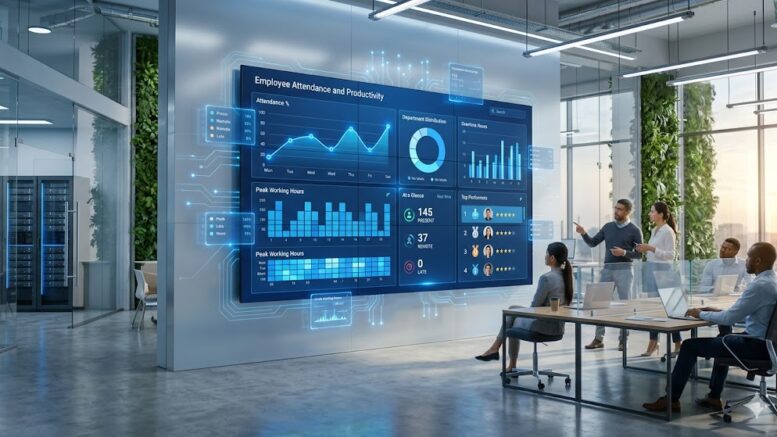
Time and attendance tracking is one of those back-office functions that rarely gets attention until something goes wrong: a payroll dispute, a buddy-punching incident, or a compliance audit that reveals incomplete records. Smart time attendance systems, particularly facial clocking software, are changing that by turning attendance tracking from a manual chore into an accurate, automated process that delivers a measurable return on investment.
What Is Facial Clocking Software?
Facial clocking software uses facial recognition technology to verify an employee’s identity at clock-in and clock-out, replacing physical cards, PINs, or fingerprint scanners. Because facial recognition cannot be shared or lent to another person, it eliminates one of the most common forms of attendance fraud.
Why Smart Time Attendance Delivers Real ROI
Eliminating Buddy Punching
Card-based and PIN-based systems are vulnerable to buddy punching, where one employee clocks in for another. Facial recognition removes this loophole entirely, directly reducing payroll leakage from unearned wages.
Reducing Payroll Processing Time
When attendance data flows automatically into payroll, HR teams no longer need to manually reconcile timesheets, cutting payroll processing time significantly each month.
Improving Compliance and Audit Readiness
Automated, timestamped attendance records give businesses a clear, defensible audit trail for labour compliance reviews, reducing the risk of penalties.
Faster, Contactless Clock-In
Facial recognition clock-in is faster than swiping a card or scanning a fingerprint, reducing bottlenecks at entry points during shift changes.
Calculating the ROI of Smart Time Attendance
The return on investment for facial clocking software typically comes from three areas: reduced payroll leakage from time fraud, reduced administrative hours spent reconciling attendance data, and reduced compliance risk. For a mid-sized business, even a small reduction in time theft can offset the cost of the system within months.
Key Benefits of Smart Time Attendance Systems
| Benefit | ROI Impact |
|---|---|
| Facial recognition verification | Eliminates buddy punching and time fraud |
| Automated payroll integration | Reduces administrative hours |
| Real-time attendance data | Improves workforce visibility |
| Audit-ready records | Reduces compliance risk and penalties |
Facial Clocking Software vs Traditional Attendance Methods
| Feature | Card or PIN Systems | Facial Clocking Software |
|---|---|---|
| Fraud resistance | Low, easily shared | High, tied to the individual |
| Clock-in speed | Moderate | Fast, contactless |
| Hygiene | Requires physical contact | Touchless |
| Data accuracy | Vulnerable to manipulation | Highly accurate |
Best Practices for Maximizing ROI
- Integrate facial clocking data directly with your payroll system to avoid manual reconciliation.
- Set up real-time alerts for late arrivals or unusual attendance patterns.
- Track your buddy-punching and time-fraud reduction over the first three months to quantify savings.
- Use attendance analytics to identify overtime trends and staffing inefficiencies.
- Ensure your system remains compliant with local data privacy requirements for biometric data.
Key Takeaways
Smart time attendance software, powered by facial recognition, delivers measurable ROI by eliminating time fraud, reducing administrative overhead, and improving compliance readiness. For businesses still relying on card or PIN-based systems, the upgrade often pays for itself within the first year.
Conclusion
Facial clocking software is no longer just a security upgrade; it is a direct contributor to payroll accuracy and operational efficiency. By eliminating fraud, speeding up clock-in, and integrating seamlessly with payroll, smart time attendance systems deliver a clear and measurable return on investment.
Frequently Asked Questions
1. How does facial clocking software prevent time fraud?
Because facial recognition verifies the specific individual at clock-in, it prevents one employee from clocking in on behalf of another.
2. Is facial recognition attendance software accurate in different lighting conditions?
Modern facial recognition systems are designed to work reliably across a range of lighting conditions, though placement and camera quality still matter.
3. How quickly can businesses expect to see ROI?
Many businesses see measurable payroll savings within the first few months, particularly if time fraud was previously a significant issue.
4. Does facial clocking software integrate with existing payroll systems?
Yes, most modern facial attendance systems are designed to integrate directly with payroll platforms to automate calculations.
5. Is biometric attendance data stored securely?
Reputable systems store biometric data securely and in compliance with relevant data protection regulations.
Read the product overview here: http://www.smartouch.com.my/tms-time-management-system-singapore-malaysia/
Smart Touch technology pte ltd , www.smartouch.com.sg +65-63964767, sales@smartouch.com.sg , www.smartouch.com.my +607-3889903 sales@smartouch.com.my