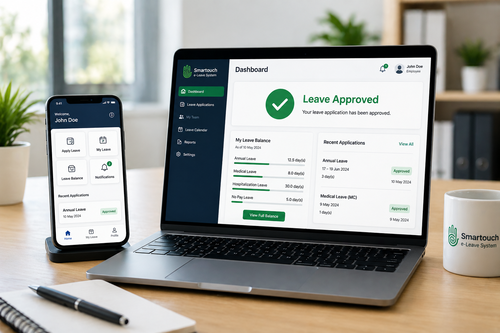
Coordinating shifts and approving leave by spreadsheet or WhatsApp becomes unmanageable once a company grows past a handful of employees. A dedicated shift scheduling and leave system in Malaysia solves both problems at once, giving HR teams and shift supervisors a single source of truth for who is working, who is on leave, and who is available to cover a gap.
Why Malaysian Businesses Need Integrated Shift Scheduling and Leave Management
Retail chains, F&B outlets, healthcare providers, and manufacturing plants all share the same scheduling headache: employees work rotating shifts, request leave at different times, and managers need to approve requests without accidentally leaving a shift understaffed. When scheduling and leave tracking live in separate systems, or worse, in separate spreadsheets, conflicts slip through. An employee gets approved for annual leave, then still appears on the roster for that day, and nobody notices until the shift is short-staffed.
An integrated shift scheduling and leave system in Malaysia closes that gap by checking leave status automatically whenever a schedule is built, so approved leave blocks out the relevant shifts in real time.
Core Features of a Modern Shift Scheduling and Leave System
Automated Shift Rostering
Instead of manually building rosters week after week, modern systems let managers set shift patterns once and generate schedules automatically, factoring in employee availability, maximum working hours, and rest day requirements under the Employment Act 1955.
Real-Time Leave Balance Tracking
Employees and managers can see exactly how much annual, medical, or emergency leave remains at any time. This removes the back-and-forth of checking leave balances manually and reduces disputes over entitlement calculations, especially for staff who joined partway through the year.
Mobile Employee Self-Service
Frontline and shift-based staff rarely sit at a desk, so leave requests, shift swaps, and roster viewing need to work from a phone. A mobile-friendly system lets employees apply for leave, check their upcoming shifts, and receive approval notifications without needing to visit the HR office.
Shift Swap and Approval Workflows
Employees can request to swap shifts with a colleague directly in the system, with the swap routed to a manager for approval. This keeps shift coverage intact while giving staff flexibility to manage personal commitments.
Compliance with Malaysian Employment Law
Malaysian employers must track statutory leave entitlements correctly, including annual leave, sick leave, maternity and paternity leave, and public holidays under the Employment Act 1955 and, where applicable, the Sabah and Sarawak labour ordinances. A proper shift scheduling and leave system Malaysia businesses can rely on should automatically apply the correct entitlement tiers based on years of service, track carry-forward rules, and flag when an employee is approaching an unpaid leave situation.
Getting this wrong is not a minor administrative slip. Incorrect leave records can lead to underpayment claims, Labour Department complaints, and disputes during termination when unused leave must be paid out.
How to Choose the Right System for Your Business
- Confirm it supports Malaysian statutory leave types and public holiday calendars out of the box
- – Check that shift rostering integrates directly with leave approvals, not as a separate module
- – Look for mobile access so frontline staff can use it without a desktop computer
- – Ensure it generates audit-ready reports for payroll and compliance reviews
- – Prioritise systems with configurable approval workflows that match your management structure
Key Benefits at a Glance
Common Scheduling and Leave Management Mistakes to Avoid
Even businesses that invest in scheduling software can undermine its value through poor implementation. A frequent mistake is running the new system alongside old spreadsheets during a long transition period, which creates two conflicting sources of truth and confuses both managers and staff. Another common issue is failing to configure Malaysian-specific leave rules correctly at setup, leading to incorrect entitlement calculations that surface months later during an audit or a resignation payout.
Some businesses also underuse the mobile self-service features, continuing to route leave requests through WhatsApp or verbal approval even after rolling out a proper system. This defeats the purpose of automated tracking and leaves gaps in the audit trail. Finally, managers sometimes approve leave without checking the live roster, recreating the exact scheduling conflicts the system was meant to prevent. Proper training during rollout, combined with a clear policy that all leave and shift changes must go through the system, resolves most of these issues within the first few weeks.
Businesses that move from manual scheduling to an integrated system typically see fewer understaffed shifts, faster leave approvals, and significantly less time spent by HR resolving roster conflicts. Employees also report higher satisfaction once they can check their schedule and leave balance from their phone instead of asking a supervisor.
Conclusion
A well-implemented shift scheduling and leave system in Malaysia removes the guesswork from workforce planning. It keeps rosters accurate, ensures leave entitlements are calculated correctly under Malaysian labour law, and gives both managers and employees visibility they can act on. Businesses still relying on spreadsheets or paper forms are exposed to avoidable scheduling conflicts and compliance risk that a proper system eliminates from day one. For a complete breakdown of features and modules, visit our product page here: https://www.smartouch.com.my/e-leave-system/.
Frequently Asked Questions
What is a shift scheduling and leave system?
It is software that combines employee roster planning with leave application and approval, so schedules automatically account for approved leave and avoid understaffing.
Does it work for businesses with rotating or irregular shifts?
Yes. Modern systems are built to handle rotating shifts, split shifts, and irregular patterns common in retail, F&B, healthcare, and manufacturing environments.
Can employees apply for leave and view their schedule from a mobile phone?
Most modern systems include a mobile app or mobile-friendly portal so employees can apply for leave, check upcoming shifts, and request shift swaps without needing a desktop computer.
How does the system handle Malaysian public holidays and statutory leave?
A properly configured system applies Malaysia’s statutory leave entitlements and public holiday calendars automatically, adjusting for state-specific holidays and years of service.
Is it difficult to switch from manual scheduling to a digital system?
Most providers offer onboarding support and data migration assistance, so businesses can transition without disrupting ongoing rosters or losing historical leave records.
Smart Touch technology pte ltd , www.smartouch.com.sg +65-63964767, sales@smartouch.com.sg , www.smartouch.com.my +607-3889903 sales@smartouch.com.my