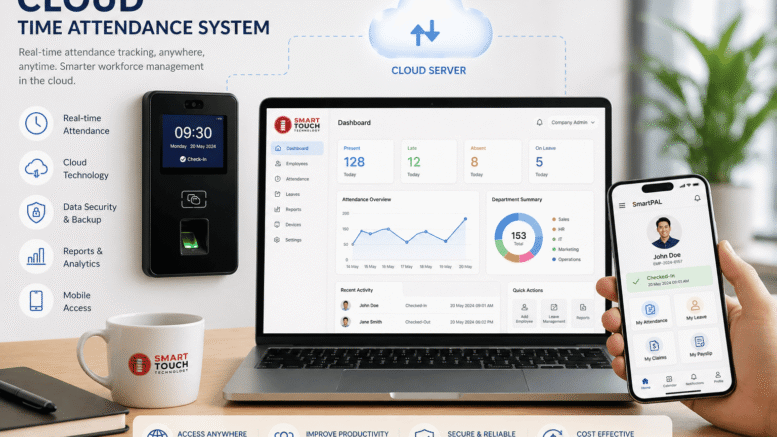
Manual timesheets and payroll adjustments cost Malaysian businesses hours of admin work every month. When time and attendance data doesn’t connect directly to payroll, HR teams end up re-keying hours, chasing overtime approvals, and correcting errors after payslips have already gone out. Integrating a time and attendance system with payroll software closes that gap, turning clock-in data into accurate, audit-ready pay runs with far less manual effort.
Why Time Attendance and Payroll Integration Matters
Most SMEs in Malaysia still operate time and attendance and payroll as separate systems. Attendance data sits in one platform, gets exported to a spreadsheet, and is then manually entered or re-uploaded into payroll software. Every manual step introduces risk: missed clock-ins, miscalculated overtime, wrong public holiday rates, or late submissions to EPF, SOCSO, and EIS. For companies with shift workers, multiple outlets, or field staff, these small errors compound quickly across dozens or hundreds of employees each pay cycle.
Integrating the two systems means attendance records – clock-in, clock-out, breaks, leave, and overtime – flow directly into payroll calculations without manual re-entry. This reduces processing time, minimizes disputes over pay, and gives HR and finance teams a single source of truth for hours worked.
How the Integration Works
A properly integrated system typically follows this flow:
- Employees clock in and out via biometric terminal, mobile app, QR code, or web portal
- Attendance data is validated against approved shift schedules and leave records
- Overtime, late arrivals, and early departures are automatically flagged based on configurable rules
- Approved hours are pushed to the payroll module on a set schedule (daily, weekly, or at cut-off)
- Payroll calculates gross pay, statutory deductions, and net pay using the verified hours
Because the data moves automatically, payroll staff only need to review exceptions – such as missing clock-outs or manager-approved overtime – rather than processing every single record by hand.
Key Features to Look For
Not every payroll-linked attendance system delivers the same level of accuracy. When evaluating vendors, Malaysian businesses should prioritize these capabilities:
- Real-time sync between attendance and payroll modules, not batch uploads that run once a month
- Built-in compliance with Malaysian statutory requirements, including EPF, SOCSO, EIS, and PCB tax calculations
- Configurable overtime and shift differential rules that match company policy and the Employment Act
- Mobile clock-in with GPS or geofencing for field staff and multi-outlet operations
- Audit trails that log every edit to attendance records, including who approved manual corrections
- Self-service portals where employees can view payslips, attendance history, and leave balances
Benefits for Malaysian Businesses
Companies that integrate time and attendance with payroll typically see improvements across several areas of operations.
Faster Payroll Processing
Payroll runs that once took days of manual reconciliation can be completed in hours, since verified attendance data is already formatted for payroll calculation. This is especially valuable for businesses with tight pay cycles or multiple branches reporting on different schedules.
Fewer Payroll Disputes
When employees can see the same attendance data that payroll uses, disagreements over hours worked or overtime pay drop significantly. Transparent, system-generated records also reduce the burden on HR to investigate and resolve individual complaints.
Stronger Compliance Posture
Automated statutory calculations reduce the risk of underpaying or misreporting EPF, SOCSO, and EIS contributions – errors that can trigger penalties during an audit. A single integrated system also makes it easier to produce records if LHDN or the Labour Department requests them.
Better Workforce Visibility
Managers gain real-time insight into attendance patterns, late trends, and overtime costs across departments or outlets, supporting better staffing and budget decisions.
Implementation Best Practices
Switching to an integrated system is easier when businesses follow a structured rollout rather than attempting a full switch overnight.
Start with a Data Audit
Before migrating, review existing attendance and payroll records for inconsistencies. Cleaning up employee IDs, shift codes, and leave balances beforehand prevents errors from carrying over into the new system.
Run a Parallel Payroll Cycle
Most vendors recommend running the new integrated system alongside the existing process for at least one pay cycle. This allows HR to compare outputs, catch discrepancies, and build confidence before fully switching over.
Train Managers on Approval Workflows
Since overtime and leave approvals often sit with line managers, make sure they understand how to review and approve requests within the new system. Delays in approval can hold up an entire payroll run.
Conclusion
For Malaysian businesses still juggling separate attendance and payroll systems, integration is one of the highest-impact operational changes available. It reduces manual errors, speeds up payroll processing, strengthens statutory compliance, and gives managers better visibility into workforce costs. Whether you operate a single office or multiple outlets with shift workers, connecting these two systems turns a recurring administrative burden into a streamlined, largely automated process.
FAQ
Does integrating time and attendance with payroll work for small businesses?
Yes. While the benefits scale with headcount, even small businesses with a handful of employees save time on manual data entry and reduce the risk of payroll errors.
How long does implementation typically take?
Most Malaysian SMEs can implement an integrated system within four to eight weeks, including data migration, testing, and a parallel run, depending on the complexity of existing shift and payroll rules.
Will an integrated system handle Malaysian public holidays and shift allowances?
A properly configured system should support Malaysia-specific rules, including public holiday rates, shift differentials, and statutory overtime calculations under the Employment Act. Businesses with staff across multiple states should double-check that the system correctly applies each state’s specific gazetted holidays, since these can vary from one region to another.
Can employees access their own attendance and payroll records?
Most modern systems include an employee self-service portal where staff can view their clock-in history, leave balances, and payslips without needing to contact HR directly. Many providers also offer a mobile app version of the self-service portal, so employees can check their hours or apply for leave directly from their phone without needing to be in the office.
Read the product overview here: http://www.smartouch.com.my/tms-time-management-system-singapore-malaysia/
Smart Touch technology pte ltd , www.smartouch.com.sg +65-63964767, sales@smartouch.com.sg , www.smartouch.com.my +607-3889903 sales@smartouch.com.my