The Corporate Office Blueprint: Designing Hybrid Work Via A Mobile HR App
The modern workplace has transformed dramatically over the past few years. Hybrid work—where employees split their time between the office and remote locations—has become the new standard for many Malaysian organisations. However, managing a hybrid workforce presents unique challenges that traditional HR systems struggle to address effectively.
The question is no longer whether to adopt hybrid work, but how to manage it successfully. Companies across Malaysia are discovering that a well-designed hybrid work strategy requires more than just flexibility policies. It demands intelligent systems that can coordinate schedules, track attendance, manage communication, and ensure consistent employee experiences regardless of location.
This is where mobile HR applications become essential. A modern mobile HR app serves as the digital backbone of hybrid work management, enabling seamless coordination between office-based and remote teams while keeping HR processes efficient and transparent.
Understanding the Hybrid Work Challenge
Hybrid work offers significant benefits: improved employee satisfaction, access to wider talent pools, and often increased productivity. Yet it introduces operational complexities that many organisations underestimate.
When employees work across different locations on different days, several critical issues emerge:
- Tracking who is in the office on any given day becomes complicated
- Scheduling meetings and collaboration requires real-time visibility
- Attendance records become difficult to maintain accurately
- Employee engagement and company culture risk dilution
- HR administrative burden increases significantly
- Communication gaps develop between office and remote workers
Traditional HR systems—often desktop-based or paper-dependent—simply cannot handle the dynamic nature of hybrid work. Employees need mobile access to HR functions, and managers need real-time data about team availability and scheduling.
The Role of Mobile HR Apps in Hybrid Work Strategy
A purpose-built mobile HR application addresses the core operational challenges of hybrid work. Rather than treating remote work as an exception to office-based norms, a modern HR app rebuilds HR processes around flexibility and mobility.
Real-Time Attendance and Scheduling
Mobile HR apps provide instant visibility into team schedules and attendance. Employees can indicate whether they are working from home or at the office, update their schedules in real time, and managers can see team availability at a glance. This eliminates confusion about who is where and when, making it easier to schedule meetings and coordinate work.
Streamlined Leave and Absence Management
Hybrid work doesn’t simplify leave management—it complicates it. Employees working from home still take leave, and the process should be seamless. Mobile HR apps allow employees to request leave, check balances, and receive approvals from anywhere, while managers can track team availability across both office and remote locations.
Enhanced Communication and Collaboration
When teams are distributed, communication becomes critical. Mobile HR apps often integrate messaging, announcements, and notification systems that keep remote and office-based employees equally informed about company updates, policy changes, and important information.
Data-Driven Insights
Mobile HR applications generate valuable data about hybrid work patterns. Organisations can analyse which days see the highest office occupancy, identify collaboration patterns, and optimise office space allocation. This intelligence helps refine hybrid policies to suit actual employee behaviour and business needs.
Key Features for Effective Hybrid Work Management
Not all HR apps are equal when it comes to hybrid work support. Effective solutions typically include:
- Mobile-first design: Employees should access all essential HR functions from their smartphones without limitation
- Real-time scheduling visibility: Instant updates on team member locations and availability
- Integrated approval workflows: Leave, attendance, and other approvals should move quickly without multiple systems
- Automated notifications: Important updates reach employees regardless of location
- Flexible access control: Employees can access only relevant information while maintaining data security
- Integration with existing systems: The app should work alongside payroll, benefits, and other HR systems
- Reporting and analytics: Managers and HR teams need clear dashboards to monitor trends
Benefits of a Mobile-First HR Approach for Hybrid Teams
Implementing a mobile HR app specifically designed for hybrid work creates measurable organisational benefits.
Reduced Administrative Burden
Mobile HR apps automate routine tasks like attendance tracking, leave approvals, and schedule updates. HR teams spend less time on administrative work and more time on strategic initiatives that drive business value.
Improved Employee Experience
When employees can manage HR tasks from their phones—requesting leave, checking pay slips, updating personal information—they experience fewer frustrations. This convenience translates to higher satisfaction and retention.
Better Decision-Making
Real-time data from a mobile HR app enables managers to make informed decisions about scheduling, resource allocation, and team coordination. No more guessing about office capacity or team availability.
Consistent Policies Across Locations
A centralised mobile platform ensures that whether employees work from home or the office, they follow the same policies and procedures. This consistency reduces confusion and potential disputes.
Enhanced Compliance
Malaysian businesses must comply with employment regulations, including attendance and leave requirements. Mobile HR apps provide audit trails and accurate records that simplify compliance management.
Designing Your Hybrid Work Blueprint
Choosing and implementing a mobile HR app requires careful planning. Consider these steps:
Define Your Hybrid Work Policy First
Before selecting an app, clarify your hybrid work model. Which roles can work remotely? How many days should office attendance be required? What are your collaboration expectations? Once your policy is clear, you can select an app that supports it effectively.
Involve Key Stakeholders
Input from HR teams, managers, and employees ensures the solution addresses real needs. What challenges do managers face? What features would employees value? This feedback prevents misalignment between your policy and your technology.
Prioritise User Experience
The best HR app succeeds only if people actually use it. Ensure the interface is intuitive, that common tasks require minimal steps, and that support is readily available. A complicated system creates adoption problems.
Plan for Integration
Your mobile HR app must integrate with existing systems—payroll, benefits administration, email, and calendars. Poor integration creates manual work and data inconsistencies that undermine the system’s value.
Establish Clear Training and Change Management
Rolling out a new mobile HR app requires communication and training. Help managers understand how to use the app to manage hybrid teams effectively, and give employees time to become comfortable with new processes.
How Smart Touch Technology Can Help
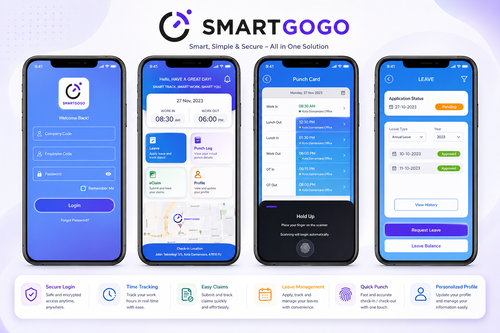
Smart Touch Technology’s smartgogo apps platform is specifically designed to support modern HR operations, including hybrid work management. The mobile-first approach ensures that employees and managers have access to essential HR functions anytime, anywhere—ideal for organisations managing distributed teams.
smartgogo apps enables real-time attendance tracking, flexible scheduling visibility, and streamlined approval workflows that reduce administrative overhead. For Malaysian organisations managing hybrid teams, the platform provides a foundation for consistent HR processes across office and remote locations.
By centralising HR information and making it accessible through mobile devices, smartgogo apps helps reduce the complexity of hybrid work management while improving the employee experience. The system provides the data visibility that managers need to coordinate hybrid teams effectively, and the convenience that employees expect from modern workplace technology.
Conclusion
Designing an effective hybrid work environment requires more than a flexible policy—it demands intelligent systems that can manage the operational complexity of distributed teams. A mobile HR app becomes the blueprint that transforms hybrid work from a logistical challenge into a coordinated, manageable process.
For Malaysian businesses, the investment in a purpose-built mobile HR solution pays dividends in reduced administrative burden, improved employee satisfaction, better data-driven decision-making, and consistent policy application across all work locations. As hybrid work becomes increasingly standard, organisations that implement effective HR technology gain a significant competitive advantage in attracting and retaining talent.
The question is not whether your organisation can afford to implement a mobile HR app for hybrid work management—it is whether you can afford not to. In an increasingly distributed workforce, the right technology is not a luxury; it is a business necessity.
Smart Touch Technology Pte Ltd
Singapore: www.smartouch.com.sg | +65-63964767 | sales@smartouch.com.sg
Malaysia: www.smartouch.com.my | +607-3889903 | sales@smartouch.com.my