Are Foreign Workers Eligible For EIS? Untangling The Exceptions In Malaysian Payroll
Managing payroll in Malaysia comes with numerous regulatory requirements, and one question that frequently puzzles employers is whether foreign workers are eligible for Employment Insurance Scheme (EIS) contributions. The answer is not straightforward, as Malaysia’s employment insurance framework contains several important exceptions and conditions that directly affect how organisations must handle payroll deductions and contributions for their international workforce.
Understanding EIS eligibility for foreign workers is critical for compliance, accurate payroll processing, and avoiding potential penalties. Whether you operate a multinational corporation, a regional office, or a local business with foreign staff, getting this aspect of payroll right matters significantly to your bottom line and your relationship with the relevant authorities.
What Is The Employment Insurance Scheme (EIS)?
The Employment Insurance Scheme is a statutory social security programme administered by the Social Security Organisation (SOCSO) in Malaysia. EIS provides income protection and benefits to employees who lose their jobs due to retrenchment or other covered circumstances. Employers are required to contribute to EIS on behalf of their eligible employees, with contributions calculated as a percentage of the employee’s monthly salary.
The scheme applies to most private sector employees in Malaysia, and understanding its scope is essential for payroll professionals and business leaders alike. However, the scheme does not apply uniformly to all workers, and foreign workers occupy a specific position within this framework.
The General Rule: Are Foreign Workers Covered By EIS?
In Malaysia, the general principle is that foreign workers are not automatically eligible for EIS contributions. This is one of the key distinctions between local Malaysian citizens and international employees. The Employment Insurance Scheme was designed primarily to provide social protection for Malaysian workers, and this focus shapes the eligibility criteria.
Foreign workers, including expatriates and migrant workers, are typically excluded from EIS coverage under the standard provisions of the scheme. This means that employers are generally not required to make EIS contributions on behalf of foreign employees. However, like many employment regulations, there are important nuances and exceptions to this rule that employers must understand.
Understanding The Exceptions And Special Cases
Permanent Residents And Long-Term Residents
Certain categories of foreign workers may have different eligibility status. Permanent residents of Malaysia, depending on their employment contract terms and the specific provisions in force at the time, may fall into different categories for EIS purposes. It is crucial to verify the current status of permanent residents with SOCSO, as regulations and individual circumstances can vary.
Bilateral Agreements And International Arrangements
Malaysia has entered into various social security agreements and bilateral arrangements with other countries. These agreements may establish reciprocal benefits or special conditions for workers from those nations. If your organisation employs workers from countries with such agreements with Malaysia, it is worth investigating whether special EIS provisions apply.
Employment Pass And Work Permit Holders
The type of work authorisation a foreign worker holds can influence their EIS eligibility in certain contexts. While most Employment Pass and work permit holders remain ineligible for EIS, the specific terms of their employment contract and their residential status in Malaysia may occasionally create exceptions. This is an area where employers should seek clarification on a case-by-case basis.
Why Does EIS Eligibility Matter For Your Payroll?
Correctly classifying workers for EIS purposes directly impacts your payroll calculations and your compliance obligations. If you incorrectly apply EIS contributions to foreign workers who are not eligible, you may be making unnecessary deductions from their salaries and overpaying to SOCSO. Conversely, if you fail to contribute for eligible foreign workers, you expose your organisation to compliance risks.
Accurate EIS handling also affects:
- Monthly payroll processing and employee salary calculations
- Financial reporting and accounting records
- Compliance with SOCSO reporting requirements
- Employee relations and salary transparency
- Audit trails and documentation for regulatory inspections
Best Practices For Managing Foreign Worker Payroll In Malaysia
Verify Eligibility At Onboarding
When hiring foreign workers, take time during the onboarding process to document their employment category, work authorisation type, and citizenship status. This information should be recorded clearly in your HR and payroll systems so that payroll staff can make correct decisions about EIS and other statutory deductions.
Maintain Clear Documentation
Keep copies of work permits, employment passes, contracts, and any correspondence with SOCSO regarding EIS eligibility. Clear documentation protects your organisation if your decisions are ever questioned by regulators or during an audit.
Stay Updated On Regulatory Changes
Employment regulations and social security requirements evolve over time. It is wise to periodically check the official SOCSO website and consult with employment law advisors to ensure your payroll practices remain compliant with current rules.
Separate Payroll Processing For Different Employee Categories
Many organisations find it helpful to segment their payroll processing by employee category, with clear workflows for Malaysian citizens, permanent residents, and foreign workers on various work authorisations. This reduces the risk of applying incorrect deductions.
Common Payroll Mistakes To Avoid
Applying EIS contributions to all employees uniformly: This is perhaps the most common mistake. Foreign workers should be processed separately to avoid incorrect deductions and overpayments to SOCSO.
Failing to document eligibility decisions: Without clear records of why certain employees are excluded from EIS, your organisation cannot easily defend its payroll decisions during an audit.
Not updating records when an employee’s status changes: If a foreign worker becomes a permanent resident, for example, their EIS eligibility may change. Ensure your payroll system is updated promptly.
Assuming all work permits carry the same conditions: Different types of work authorisations may have different implications for payroll deductions and contributions.
How Smart Touch Technology Can Help
Managing payroll compliance for a diverse workforce requires robust systems and clear processes. Smart Touch Technology’s payroll solutions are designed to help Malaysian businesses streamline their payroll operations while maintaining compliance with local regulations.
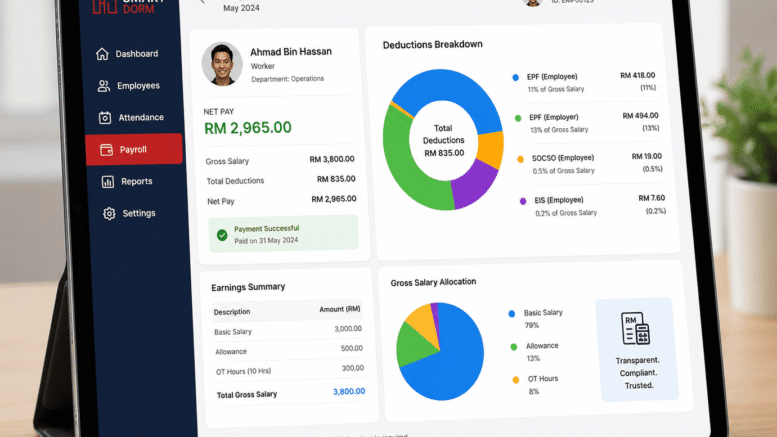
Our payroll management platform allows you to configure employee profiles with their employment category, work authorisation type, and eligibility status for various statutory schemes. This means you can automate the correct application of EIS contributions and other deductions based on each employee’s actual eligibility, reducing manual errors and ensuring accurate payroll processing.
By centralising employee data and payroll rules, Smart Touch Technology helps your organisation maintain clear audit trails, generate compliant reports, and simplify payroll administration for both local and foreign workers. This is particularly valuable if you manage a large team or work across multiple locations in Malaysia.
Checking The Latest Requirements
Employment insurance regulations and eligibility rules can change, and individual circumstances may create exceptions to general principles. Before making final decisions about EIS eligibility for foreign workers in your organisation, we recommend verifying the current position directly with:
- The Social Security Organisation (SOCSO)
- Your employment law advisor or HR consultant
- The relevant state labour department
Getting clear guidance on your specific situation ensures you remain compliant and treat all employees fairly.
Conclusion
Foreign workers are generally not eligible for EIS contributions under Malaysia’s standard employment insurance framework, but exceptions and special cases do exist. Understanding these distinctions is essential for accurate payroll processing, compliance, and fair treatment of your workforce.
The key takeaway is that EIS eligibility cannot be assumed uniformly across all employees. Instead, it requires careful classification based on citizenship, work authorisation type, residency status, and any applicable special agreements. By maintaining clear documentation, verifying eligibility at onboarding, and staying informed about regulatory requirements, your organisation can manage this aspect of payroll confidently and correctly.
Whether you are a growing business expanding your international team or an established organisation refining your payroll processes, taking the time to understand EIS eligibility rules is a worthwhile investment in compliance and operational efficiency.
Smart Touch Technology Pte Ltd
Singapore: www.smartouch.com.sg | +65-63964767 | sales@smartouch.com.sg
Malaysia: www.smartouch.com.my | +607-3889903 | sales@smartouch.com.my