Manual Leave Tracking Versus Automated E-Leave: Which System Is Right for Your Organisation?
Managing employee leave is a fundamental responsibility for every organisation in Malaysia. Whether you operate a small business with a handful of staff or manage a large corporate team, the way you track and approve leave requests has a direct impact on your operational efficiency, employee satisfaction, and compliance with Malaysian labour regulations.
Many Malaysian businesses still rely on manual leave tracking methods—spreadsheets, paper forms, and email exchanges. While these traditional approaches have served organisations for decades, they come with significant limitations in today’s fast-paced business environment. As workforces grow and operations become more complex, the question arises: should your organisation continue with manual leave tracking, or is it time to transition to an automated e-leave system?
This article explores the key differences between manual leave tracking and automated e-leave solutions, helping you understand which approach best suits your organisation’s needs.
Understanding Manual Leave Tracking
Manual leave tracking refers to the traditional method of managing employee leave requests using paper-based forms, spreadsheets, or basic email systems. In this approach, employees submit leave requests on paper or via email, managers review and approve them, and the information is recorded in spreadsheets or physical files.
Common Features of Manual Leave Tracking
- Paper forms or email-based leave request submissions
- Excel spreadsheets for recording leave balances and approvals
- Manual calculation of remaining leave entitlements
- File-based storage of leave records
- Email notifications for approvals and rejections
- Limited visibility into leave requests across the organisation
Challenges With Manual Leave Tracking
Time-Consuming Processes: Manual leave tracking requires significant administrative time. HR personnel must review emails, update spreadsheets, calculate leave balances, and communicate with managers and employees. What could be completed in seconds with an automated system takes considerably longer when done manually.
High Risk of Errors: Manual spreadsheet management is prone to human error. Accidental miscalculations, duplicate entries, and inconsistent data entry can lead to confusion about leave balances and approval status. These errors become increasingly common as the organisation grows.
Poor Visibility and Reporting: With manual tracking, gaining a clear picture of leave patterns across the organisation is difficult. Generating reports requires significant effort, and real-time visibility into leave balances is virtually impossible. This lack of visibility can affect workforce planning and operational decisions.
Compliance Risks: Malaysian employment law has specific requirements regarding annual leave, public holidays, and sick leave. Manual systems make it easier to inadvertently violate these requirements. Without automated checks and balances, compliance issues may go unnoticed until problems arise.
Limited Communication: Coordinating between employees, managers, and HR becomes cumbersome with manual processes. Important information can be lost in email threads, and approval statuses may be unclear to all parties involved.
Scalability Issues: As your organisation grows, manual leave tracking becomes increasingly unmanageable. The administrative burden multiplies, and the system’s limitations become more apparent.
What Is an Automated E-Leave System?
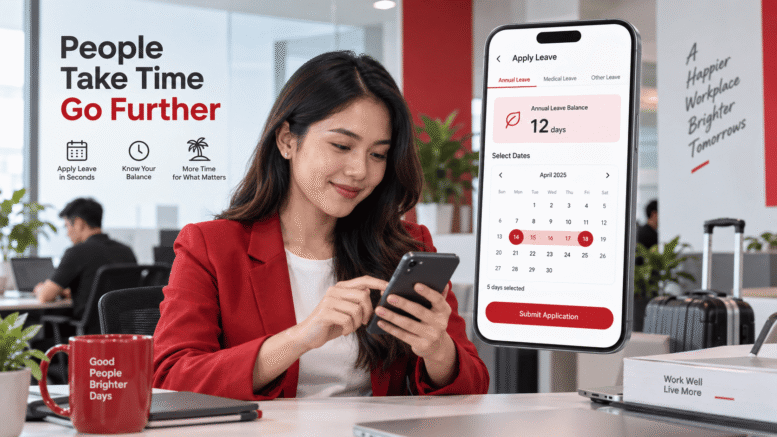
An automated e-leave system, commonly referred to as an e-leave system or leave management software, is a digital platform that automates the entire leave request and approval process. Employees submit leave requests through a user-friendly interface, managers receive instant notifications and can approve or reject requests with a few clicks, and the system automatically updates leave balances and generates reports.
Key Features of Automated E-Leave Systems
- User-friendly online leave request submission portal
- Automated approval workflows with configurable hierarchies
- Real-time leave balance calculations and updates
- Instant notifications for employees, managers, and HR
- Comprehensive reporting and analytics dashboards
- Integration with payroll and HR systems
- Mobile access for remote approvals and submissions
- Audit trails and compliance documentation
- Centralised leave records accessible across the organisation
Key Differences Between Manual Leave Tracking and Automated E-Leave
Understanding the practical differences between these two approaches helps organisations make informed decisions about their leave management strategy.
| Aspect | Manual Leave Tracking | Automated E-Leave System |
|---|---|---|
| Submission Method | Paper forms or email | Online portal or mobile app |
| Processing Speed | Days to weeks | Minutes to hours |
| Error Rate | High (manual calculations) | Low (automated calculations) |
| Leave Balance Accuracy | Often inconsistent | Always accurate and real-time |
| Reporting Capability | Limited and labour-intensive | Comprehensive and instant |
| Compliance Tracking | Manual monitoring required | Automated compliance checks |
| Scalability | Becomes unmanageable at scale | Handles unlimited users efficiently |
| Administrative Burden | Very high | Significantly reduced |
| Cost Per Transaction | High (staff time) | Low (automated) |
Benefits of Moving to an Automated E-Leave System
Improved Efficiency and Reduced Administrative Work
Automated e-leave systems eliminate repetitive manual tasks. HR staff no longer need to spend hours updating spreadsheets, manually calculating leave balances, or chasing down approval emails. This frees up valuable time for HR professionals to focus on strategic initiatives and employee development rather than administrative grunt work.
Increased Accuracy and Reduced Errors
Automated systems calculate leave balances automatically and eliminate the risk of human error in spreadsheets. All information is consistent across the organisation, and compliance with leave entitlements is maintained automatically. This accuracy protects both the organisation and employees.
Better Decision-Making With Real-Time Data
Managers and HR teams can access real-time information about leave balances, upcoming absences, and team capacity. This enables better workforce planning, informed project scheduling decisions, and the ability to anticipate staffing needs.
Enhanced Employee Experience
Employees appreciate the convenience of submitting leave requests online and receiving instant confirmation. The transparency of seeing their own leave balance and approval status builds trust and reduces confusion. Mobile access means employees can submit or check their leave status from anywhere.
Simplified Compliance Management
An automated e-leave system helps ensure compliance with Malaysian employment regulations by automatically enforcing leave policies and generating compliance reports. This reduces the risk of unintentional violations and provides documentation for audits.
Scalability for Growing Organisations
Whether your organisation grows from 50 to 500 employees, an automated system scales effortlessly. There is no increase in administrative burden or complexity—the system handles the additional volume without performance issues.
Considerations When Choosing Between Manual and Automated Approaches
Organisation Size
For very small organisations with fewer than 10 employees, manual processes might still be manageable. However, even small businesses benefit significantly from automation as they approach 20 or more employees. At that point, the efficiency gains become substantial.
Growth Plans
If your organisation plans to expand, investing in an automated e-leave system earlier rather than later makes financial and operational sense. A system implemented when you have 50 employees will serve you well at 200 employees without requiring replacement or rework.
Regulatory Requirements
Malaysian businesses must comply with employment regulations regarding leave entitlements, public holidays, and leave accrual. An automated system simplifies compliance management and provides audit trails. Organisations in highly regulated industries benefit particularly from this capability.
Budget Considerations
While automated e-leave systems require upfront investment, the return on investment typically comes within the first year through reduced administrative costs, fewer errors, and improved productivity. The cost per employee decreases significantly as your organisation grows.
Integration With Existing Systems
Modern e-leave systems should integrate with your existing HR and payroll systems. This integration eliminates duplicate data entry, ensures information consistency, and streamlines overall HR operations.
How Smart Touch Technology Can Help
Smart Touch Technology’s E-Leave System is specifically designed for Malaysian organisations seeking to transition from manual leave tracking to an automated, efficient solution. The platform provides a comprehensive approach to leave management that addresses the common challenges associated with manual processes.
The E-Leave System offers an intuitive interface for employees to submit leave requests, automated approval workflows that can be customised to your organisational structure, and real-time leave balance tracking that ensures accuracy. Managers benefit from centralised visibility into their team’s leave status, enabling better workforce planning and scheduling decisions.
HR teams gain access to powerful reporting and analytics tools that provide insights into leave patterns, compliance status, and resource availability. The system generates compliance documentation automatically, reducing the administrative burden of ensuring adherence to Malaysian employment regulations.
For a complete breakdown of features and modules, visit our product page here: https://www.smartouch.com.my/e-leave-system/
Making the Transition
Transitioning from manual leave tracking to an automated e-leave system does not need to be disruptive. Most modern systems support phased implementation, allowing you to migrate data gradually and train staff systematically. The key to successful adoption is selecting a system that aligns with your organisational needs and providing adequate training to all users.
Many organisations find that the transition pays for itself within months through reduced administrative costs and improved operational efficiency. The time freed up by eliminating manual processes can be redirected toward initiatives that directly contribute to your organisation’s growth and employee satisfaction.
Conclusion
The choice between manual leave tracking and an automated e-leave system is becoming increasingly clear for most Malaysian organisations. While manual processes may have served businesses adequately in the past, they simply cannot match the efficiency, accuracy, and scalability of modern automated systems. The administrative burden, high error rates, compliance risks, and limited visibility associated with manual tracking make it an unsustainable approach for growing organisations.
Automated e-leave systems offer substantial benefits including improved efficiency, reduced errors, better compliance management, enhanced employee experience, and the scalability needed for future growth. The investment in an e-leave system typically returns dividends quickly through reduced administrative costs and improved operational effectiveness.
For Malaysian businesses ready to modernise their leave management processes, an automated e-leave system represents a practical, cost-effective solution that benefits employees, managers, and HR teams alike.
Smart Touch Technology Pte Ltd
Singapore: www.smartouch.com.sg | +65-63964767 | sales@smartouch.com.sg
Malaysia: www.smartouch.com.my | +607-3889903 | sales@smartouch.com.my