E-Leave System Features Checklist: Everything Your Business Needs
Managing employee leave requests can be one of the most time-consuming tasks for human resources departments. Whether you are a small business, a growing organisation, or a large enterprise, tracking leave balances, approvals, and compliance requirements manually is prone to errors and inefficiencies. An e-leave system streamlines this entire process, transforming how your organisation manages leave from request to approval to record-keeping.
In Malaysia, where employment regulations require careful documentation and compliance with the Employment Act and other statutory requirements, having a reliable e-leave system is not just a convenience—it is a business necessity. This checklist will guide you through the essential features you should look for in an e-leave system to ensure your organisation operates smoothly and maintains full compliance.
Why Your Business Needs an E-Leave System
Before diving into the features checklist, it is important to understand why investing in an e-leave system matters. Traditional, manual leave management creates several challenges:
- Time-consuming manual processing of requests and approvals
- Higher risk of errors in leave balance calculations
- Difficulty tracking leave records and maintaining audit trails
- Compliance risks if documentation is incomplete or inaccurate
- Employee frustration with slow approval processes
- Difficulty generating accurate reports for management decisions
An e-leave system eliminates these pain points by automating workflows, centralising data, and providing transparency for both employees and management.
Essential E-Leave System Features Checklist
1. Leave Request and Submission
The foundation of any e-leave system is the ability for employees to submit leave requests easily. Your system should allow employees to:
- Submit leave requests through a simple, intuitive interface
- Specify leave type (annual leave, sick leave, compassionate leave, etc.)
- Select dates and duration of leave
- Add comments or reasons for the leave request
- Attach supporting documents when required (e.g., medical certificates for sick leave)
The submission process should be mobile-friendly, allowing employees to request leave from anywhere, at any time.
2. Leave Balance Tracking
Accurate leave balance calculations are critical. Your e-leave system should automatically track and display:
- Total leave entitlements per employee per year
- Leave taken year-to-date
- Remaining leave balance
- Pending leave requests
- Carryover policies and balances
Real-time balance updates prevent over-allocation and help both employees and managers make informed decisions about leave scheduling.
3. Multi-Level Approval Workflows
Different organisations have different approval hierarchies. A flexible e-leave system should support:
- Single-level approvals for smaller organisations
- Multi-level approvals with escalation paths
- Department-based approval routing
- Customisable approval rules based on leave type or duration
- Automatic notifications at each approval stage
Managers should be able to approve, reject, or request additional information directly from the system.
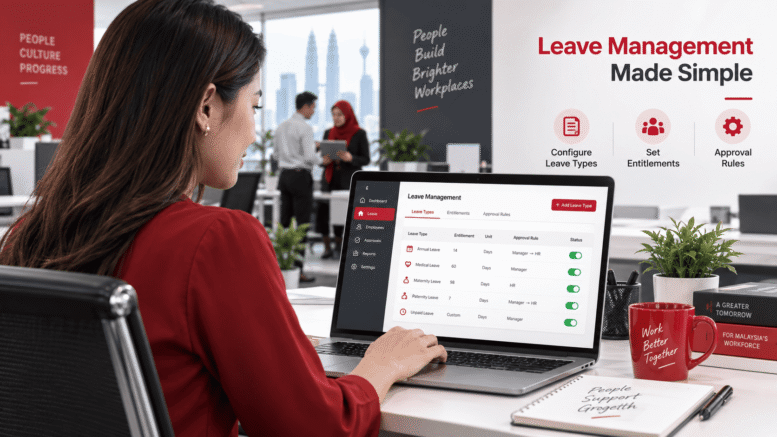
4. Leave Type Configuration
Malaysian employment regulations recognise various types of leave, and your system must support them. Essential leave types include:
- Annual leave
- Sick leave
- Compassionate leave
- Maternity leave
- Paternity leave
- Public holidays
- Unpaid leave
- Custom leave types specific to your organisation
Each leave type may have different entitlements, approval rules, and documentation requirements. Your system should accommodate this flexibility.
5. Compliance and Regulatory Features
In Malaysia, leave management is governed by employment legislation. Your e-leave system should help maintain compliance by:
- Enforcing statutory leave entitlements
- Maintaining complete audit trails of all leave transactions
- Generating compliance reports for auditing purposes
- Storing leave records for the required retention period
- Supporting different leave policies for different employee categories
While the system can support compliance, always verify the latest employment regulations with the relevant Malaysian authorities to ensure your policies align with current requirements.
6. Reporting and Analytics
Data-driven insights help organisations make better workforce planning decisions. Look for an e-leave system that provides:
- Leave taken by employee, department, or time period
- Leave balance reports
- Approval timeframe analytics
- Trend analysis for leave patterns
- Custom report generation
- Export functionality for further analysis
These reports help identify staffing gaps, plan for peak leave periods, and make data-informed HR decisions.
7. Calendar and Scheduling View
Visual representation of leave makes planning easier. An effective e-leave system should include:
- Interactive calendar views showing approved and pending leave
- Department-level leave calendars
- Team leave overviews for managers
- Public holiday integration
- Colour-coded leave status indicators
Managers can quickly identify when team members are away and plan workload accordingly.
8. Notifications and Reminders
Communication is key to smooth leave management. Your system should send:
- Instant notifications when leave requests are submitted
- Approval notifications to managers
- Decision notifications to employees
- Reminders for upcoming leave
- Alerts for leave requests nearing entitlement limits
Timely notifications keep all stakeholders informed and reduce unnecessary follow-up communication.
9. Mobile Access and User-Friendly Interface
Modern employees expect mobile access to HR systems. Your e-leave system should offer:
- Mobile app or responsive web design
- Easy navigation for both employees and managers
- Minimal training required for new users
- Accessibility features for diverse user needs
An intuitive interface reduces support requests and increases system adoption across your organisation.
10. Integration with Other Systems
An e-leave system should work seamlessly with your existing software stack, including:
- Payroll systems
- HR information systems (HRIS)
- Attendance tracking systems
- Email and calendar applications
Integration eliminates duplicate data entry and ensures consistency across your HR processes.
How Smart Touch Technology Can Help
Smart Touch Technology offers a comprehensive E-Leave System designed specifically for Malaysian businesses. Our solution incorporates the essential features outlined in this checklist, providing organisations with a reliable, compliant, and user-friendly platform for managing employee leave.
With Smart Touch Technology’s E-Leave System, your organisation can automate leave management from submission to approval, maintain accurate leave records, and ensure compliance with Malaysian employment regulations. The system is built to scale—whether you manage ten employees or thousands—and integrates with your existing HR infrastructure.
For a complete breakdown of features and modules, visit our product page here: https://www.smartouch.com.my/e-leave-system/
Conclusion
Implementing a proper e-leave system is a strategic investment that benefits both your organisation and your employees. By ensuring your chosen system includes the essential features outlined in this checklist—from leave request and balance tracking to compliance support and reporting—you create a foundation for efficient, transparent, and compliant leave management.
Whether you are transitioning from manual leave management or upgrading from an outdated system, prioritise functionality that aligns with your organisational needs, supports Malaysian employment requirements, and provides a positive experience for both employees and managers. An effective e-leave system reduces administrative burden, minimises errors, and allows your HR team to focus on more strategic initiatives.
Smart Touch Technology Pte Ltd
Singapore: www.smartouch.com.sg | +65-63964767 | sales@smartouch.com.sg
Malaysia: www.smartouch.com.my | +607-3889903 | sales@smartouch.com.my