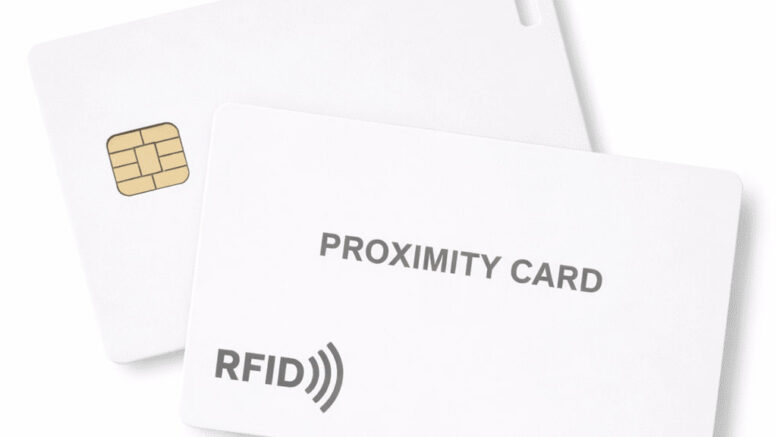
A proximity card for door access system is one of the most practical and widely used security solutions for offices, factories, warehouses, condominiums, schools, clinics, retail outlets, commercial buildings, laboratories, server rooms, and restricted areas in Malaysia. As companies and property owners move away from traditional keys, proximity card access provides a smarter, cleaner, and more manageable way to control entry.
Instead of unlocking a door with a physical key, authorised users can simply tap or present a proximity card near the access reader. The system verifies the card information and unlocks the door if the user has permission. This simple process improves security, reduces manual key problems, and gives management better control over who can enter specific areas.
For Malaysian businesses that want better workplace security, easier staff access, and more professional entry management, proximity card door access is a reliable and cost-effective solution.
What Is a Proximity Card?
A proximity card is a contactless access card used to identify authorised users in a door access control system. It contains embedded technology that communicates with a card reader when placed near the device. The user does not need to insert the card or swipe it through a machine. The card only needs to be brought close enough to the reader for verification.
When the access reader detects the proximity card, it sends the card information to the access control system. If the card is valid and the user has permission, the door unlocks. If the card is invalid, expired, blocked, or not authorised for that door, the system denies entry.
This makes proximity cards convenient for daily use and suitable for many workplace environments.
How a Proximity Card Door Access System Works
A proximity card door access system usually includes proximity cards, card readers, access controllers, electromagnetic locks, exit buttons, power supply units, emergency break glass units, door brackets, access software, and optional time attendance integration.
The process is simple. A user presents the proximity card to the reader. The reader detects the card credential. The system checks whether the card is authorised. If approved, the lock releases and the user can enter. The system can also record the access event, including the cardholder, door, date, and time.
This creates a complete access control process that is faster and more secure than using traditional keys.
Why Proximity Card Access Is Better Than Traditional Keys
Traditional keys are familiar, but they create many security and management problems. Keys can be lost, copied, stolen, borrowed, or forgotten. When an employee resigns or a tenant moves out, management may need to collect the key or replace the lock. If a key is copied without permission, the company may not even know.
A proximity card door access system solves these issues. If a card is lost, it can be disabled. If an employee leaves the company, the card can be removed from the system. If a user needs access to a new area, permission can be updated. If a card is misused, access records can help management investigate.
This gives our organisation better control and reduces the risks linked to physical keys.
Benefits of Proximity Card for Door Access System
A proximity card door access system offers many important benefits for businesses and properties in Malaysia. It improves access control, reduces key management problems, supports user tracking, provides convenience for employees, strengthens workplace security, and creates a more professional environment.
It also allows management to assign different access levels. For example, all employees may access the main entrance, but only authorised staff can access the server room, finance office, HR room, warehouse, laboratory, or management area.
This flexibility makes proximity card systems suitable for small offices, large companies, multi-tenant buildings, factories, condominiums, and high-security facilities.
Easy and Convenient Daily Access
One of the biggest advantages of proximity cards is convenience. Employees do not need to carry many keys or search for the correct key at every door. They only need one card to access approved areas.
This is especially useful in offices and commercial buildings where staff may need to enter the main door, staff entrance, meeting room area, pantry area, office department, or restricted room. With proximity card access, entry becomes faster and smoother.
For high-traffic areas, proximity card systems also reduce delays. Users can tap and enter quickly, helping maintain smooth movement throughout the workplace.
Better Control Over Who Can Enter
A proximity card system gives management control over access permissions. We can decide which users are allowed to enter each door. Different departments, roles, and staff levels can have different access rights.
For example, warehouse staff may access the storage area, but not the finance office. IT staff may access the server room, but general employees cannot. Cleaning staff may access certain areas only during approved hours. Management may have wider access across the premises.
This controlled access structure improves security and reduces unnecessary movement into sensitive areas.
Access Records and Audit Trails
Unlike traditional keys, proximity card access systems can record entry activity. Every time a card is used, the system may record the cardholder name, door location, date, and time. These access records are useful for security review, incident investigation, attendance support, and internal audits.
If there is a missing item, unauthorised entry concern, after-hours access, or workplace dispute, access logs can help management understand who entered the area and when.
This audit trail is one of the main reasons businesses in Malaysia choose electronic door access systems.
Proximity Card Door Access for Offices
Offices are one of the most common places to use proximity card door access. A modern office may have employees, visitors, contractors, cleaners, delivery personnel, and clients entering throughout the day. Access control helps protect the workplace while allowing authorised employees to move conveniently.
Proximity card readers can be installed at the main entrance, staff entrance, HR room, finance department, director room, meeting room, server room, storeroom, and document archive area.
For offices with flexible working hours, proximity card access is especially helpful because authorised employees can enter during approved times without needing someone to open the door manually.
Proximity Card Door Access for Factories
Factories need strong access control because they often have production areas, machinery zones, warehouses, raw material storage, chemical rooms, staff entrances, loading bays, and restricted areas. Proximity card systems help control who can enter each zone.
Factory workers can be assigned access according to their department or role. Supervisors may have wider access. Contractors and temporary workers may receive limited permissions. Visitors may be restricted to specific areas only.
This improves factory safety, reduces unauthorised movement, and protects valuable assets.
Proximity Card Door Access for Warehouses
Warehouses contain stock, equipment, tools, goods, packaging materials, and delivery areas. Unauthorised entry can lead to stock loss, safety risks, and operational disruption.
A proximity card door access system helps warehouse operators control access to storage rooms, loading areas, inventory zones, staff entrances, office sections, and high-value goods areas.
When combined with CCTV, access logs can support stronger security monitoring and investigation.
Proximity Card Door Access for Condominiums
Condominiums, apartments, serviced residences, and gated communities often use proximity cards for resident access. Cards can be used for lobby doors, lift lobbies, car park entrances, gym rooms, swimming pool areas, management offices, and common facilities.
Residents enjoy convenient access, while management can better control who enters the building. If a card is lost or a resident moves out, the card can be disabled. This is much safer than depending only on physical keys.
For property management teams, proximity card systems make resident access easier to manage.
Proximity Card Door Access for Schools and Education Centres
Schools, tuition centres, colleges, and training centres need safe and controlled access for staff, teachers, administrators, students, visitors, and contractors. Proximity card systems can be used to secure staff rooms, admin offices, laboratories, libraries, IT rooms, equipment rooms, hostels, and restricted areas.
Access control helps prevent unauthorised entry and supports a safer learning environment. It also allows administrators to manage access permissions more efficiently.
Proximity Card Door Access for Clinics and Healthcare Facilities
Clinics, dental centres, medical centres, laboratories, pharmacies, and wellness centres often need to protect sensitive areas such as consultation rooms, medicine storage, treatment rooms, staff rooms, records rooms, and laboratory areas.
A proximity card door access system helps ensure only authorised staff can enter these areas. This improves security, protects confidential information, and supports better internal control.
For healthcare environments, convenient and controlled access is highly important.
Proximity Card Door Access for Server Rooms
Server rooms and IT rooms require stronger access control because they contain network equipment, servers, data systems, CCTV recorders, backup devices, and business-critical infrastructure.
Proximity card access can restrict entry to authorised IT staff and management only. Access records help track who entered the server room and when.
For higher security, proximity card access can be combined with pin code entry or biometric verification. This adds another layer of protection for sensitive IT areas.
Proximity Card Door Access for Retail Shops
Retail shops can use proximity card access to secure back offices, cashier rooms, stock rooms, staff entrances, and restricted storage areas. This is useful for boutiques, supermarkets, convenience stores, pharmacies, electronics shops, restaurants, and chain stores.
By limiting access to authorised staff only, retailers can reduce stock loss, improve accountability, and protect cash handling areas.
For retail chains, proximity card systems can help standardise security across multiple outlets.
Proximity Card Door Access for Multi-Tenant Buildings
Commercial buildings and multi-tenant offices often need access control for different tenants, departments, floors, rooms, and facilities. Proximity card systems allow building management to issue cards based on tenant access rights.
A tenant may access only their office floor, shared facilities, car park, and main entrance. Maintenance staff may access service rooms. Building management may have wider control.
This makes proximity card access ideal for office towers, business centres, coworking spaces, serviced offices, and commercial complexes.
Integration with Time Attendance
Proximity card systems can also support time attendance functions. Employees can use the same card for door access and attendance clocking depending on the system setup.
This is convenient because staff do not need separate cards for access and attendance. HR can use the records to monitor clock-in and clock-out activity, while management controls physical access.
For companies that want a combined attendance and access solution, proximity card systems provide a practical option.
Integration with CCTV
Proximity card door access becomes more powerful when integrated with CCTV. When a card is used to enter a door, CCTV can record video footage of the access event. This helps verify whether the correct person used the card and supports investigation if something unusual happens.
For high-security areas such as warehouses, server rooms, finance offices, laboratories, and restricted entrances, CCTV integration improves visibility and evidence collection.
Integration with Alarm Systems
Door access systems can also integrate with alarm systems. If a door is forced open, left open too long, or accessed outside approved conditions, the system may trigger an alert depending on configuration.
This helps management respond faster to abnormal activity. Alarm integration is useful for offices, factories, warehouses, schools, clinics, and buildings with restricted zones.
Standalone Proximity Card Access System
A standalone proximity card access system is suitable for smaller premises or single-door applications. User cards are usually managed directly at the reader or controller. This type of system is often used for small offices, storerooms, private rooms, and simple access control needs.
Standalone systems are generally cost-effective and easy to use. However, they may have limited reporting and central management features.
Network Proximity Card Access System
A network proximity card access system is more advanced and suitable for companies with multiple doors, many users, different access levels, and reporting needs. The system is connected to access control software, allowing administrators to manage users, permissions, schedules, and access records more efficiently.
Network systems are suitable for larger offices, factories, warehouses, schools, commercial buildings, and multi-branch businesses.
For growing companies, a network access system provides better scalability and long-term flexibility.
Different Types of Proximity Cards
There are different types of proximity cards used for access control. Some cards operate at low frequency, while others use high frequency or smart card technology. The correct card type depends on the reader and access control system.
Common proximity card options include standard access cards, key fobs, wristbands, sticker tags, and multi-purpose cards. Some companies print employee names, staff photos, company logos, and ID numbers on the card so it can also function as a staff ID badge.
Choosing the right card format depends on the workplace environment and user convenience.
Proximity Card vs RFID Card
Many people use the terms proximity card and RFID card together because proximity cards use radio frequency technology to communicate with readers. In practical door access systems, a proximity card is a type of RFID credential designed for contactless access.
The main difference depends on frequency, reading distance, security level, and card technology. For normal door access, short-range proximity cards are commonly used. For parking barriers or vehicle access, long-range RFID tags may be used instead.
A professional access control provider can recommend the right card technology for each application.
Proximity Card vs Pin-Code Access
Pin-code access allows users to enter a numeric code to unlock the door. It is simple and does not require a physical card. However, pin codes can be shared, guessed, or forgotten.
Proximity card access is more manageable because each card is assigned to a specific user. If a card is lost, it can be disabled. If a user leaves the company, their access can be removed.
For stronger security, companies can combine proximity card and pin-code access. This requires users to present a card and enter a code, providing two-step verification.
Proximity Card vs Biometric Access
Biometric access uses fingerprint or face recognition to verify a person’s identity. It provides stronger identity confirmation because the user must be physically present. Proximity card access is faster and more convenient, but cards can be shared if not controlled properly.
The best choice depends on the security requirement. For general office access, proximity cards are convenient and effective. For high-security rooms, biometric verification or card plus pin code may be more suitable.
Many companies use a combination of access methods for different areas.
Managing Lost or Stolen Cards
One of the advantages of proximity card systems is that lost or stolen cards can be disabled. When a user reports a missing card, the administrator can remove or block the card from the system. A replacement card can then be issued.
This is much safer than losing a traditional key because the company does not need to replace the entire lock. The system simply rejects the missing card once it is blocked.
Good card management is important. Companies should maintain a proper record of issued cards, user names, card numbers, access levels, and return status.
Access Schedules and Time Zones
Proximity card access systems can support access schedules. This means users can be allowed to enter only during approved times.
For example, office staff may access the building from Monday to Friday during working hours. Cleaning staff may access only during evening hours. Contractors may receive temporary access for a specific period. Management may have 24-hour access.
Access scheduling helps improve security and prevents unnecessary after-hours entry.
Improving Workplace Security
Proximity card systems improve workplace security by controlling access and reducing dependence on traditional keys. Sensitive areas can be protected, access records can be reviewed, and permissions can be updated quickly.
This creates a stronger security culture inside the company. Employees understand that access is controlled, restricted areas are protected, and entry records are monitored.
For businesses in Malaysia, this supports safer and more professional workplace management.
Supporting Business Growth
As a company grows, physical keys become harder to manage. More employees mean more keys, more doors, more departments, more access requirements, and more risk of lost keys.
A proximity card door access system supports business growth because new users can be added easily. Access levels can be adjusted as departments change. Additional doors can be connected as the premises expands.
This makes proximity card access a scalable solution for SMEs and larger organisations.
Professional Installation for Proximity Card Door Access
Professional installation is important to ensure the system works safely and reliably. A door access system involves electrical wiring, lock installation, reader placement, controller setup, emergency exit device installation, power supply configuration, and software setup.
Poor installation can cause doors not to lock properly, readers to fail, cards to be rejected, access logs to be missing, or emergency exit devices to malfunction.
Professional installers understand different door types, including wooden doors, glass doors, aluminium doors, metal doors, sliding doors, and fire-rated doors. They can recommend the right lock, bracket, reader, and control setup for each location.
Choosing the Best Proximity Card Door Access System
The best proximity card door access system depends on our actual needs. Before choosing a system, we should consider the number of doors, number of users, door types, security level, reporting needs, access schedules, integration requirements, and future expansion plans.
A small office may only need one standalone card reader. A factory may need multiple access points and centralised software. A condominium may need resident access management. A server room may require card plus pin code or biometric verification.
The right system should be easy to use, reliable, secure, and suitable for long-term operation.
Why Smart Touch Is a Trusted Door Access Provider in Malaysia
Smart Touch provides practical security and workforce solutions for businesses and properties in Malaysia and Singapore. For companies that need proximity card door access systems, RFID access, pin-code access, biometric access, face recognition, fingerprint attendance, CCTV, guard patrol systems, parking barriers, and integrated security solutions, Smart Touch offers professional consultation, installation, and support.
We understand that every property has different access control needs. A small office may need a simple proximity card reader. A factory may need multiple access-controlled zones. A condominium may need resident card management. A warehouse may need CCTV and access control integration. A server room may need higher-security verification.
Smart Touch helps customers choose the right solution based on real operating conditions. With proper planning and professional installation, our proximity card door access system can improve security, convenience, and management control.
Conclusion: Proximity Card for Door Access System
A proximity card for door access system is a smart, convenient, and reliable way to control entry in Malaysia. It replaces the problems of traditional keys with a more flexible electronic access solution. Users can enter approved areas quickly, while management can control permissions, disable lost cards, review access records, and protect restricted areas.
For offices, factories, warehouses, condominiums, schools, clinics, retail shops, commercial buildings, server rooms, and multi-tenant properties, proximity card access provides a strong balance of security and convenience.
As businesses grow and security expectations increase, traditional keys are no longer enough. Companies need access systems that are easier to manage, more transparent, and more professional. Proximity card door access delivers these benefits in a practical and cost-effective way.
By choosing a reliable proximity card door access system in Malaysia, we can improve workplace security, simplify daily entry, reduce key management problems, and build a safer environment for employees, residents, visitors, and management teams.
Need more information about the product? Click here: https://www.smartouch.com.my/category/time-clock/proximity-card/
Smart Touch technology pte ltd , www.smartouch.com.sg +65-63964767, sales@smartouch.com.sg , www.smartouch.com.my +607-3889903 sales@smartouch.com.my