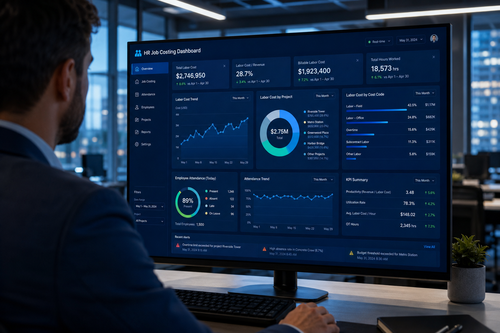
Job Costing System: Subcontractor Management System Malaysia – A Practical Buyer’s Guide
Managing subcontractors effectively is one of the biggest challenges facing Malaysian businesses in construction, manufacturing, and service industries. When multiple subcontractors are involved in a project, tracking costs, monitoring performance, and ensuring quality become complex tasks. A well-implemented job costing system designed for subcontractor management can transform the way you control expenses, improve profitability, and maintain stronger working relationships with your contractors.
This guide explores what a job costing system is, why it matters for subcontractor management, and how it can benefit your Malaysian business.
Understanding Job Costing Systems
A job costing system is an accounting method that tracks all costs associated with a specific project or job. Unlike general accounting systems that track expenses by category or department, job costing focuses on accumulating costs for individual projects from start to finish.
In the context of subcontractor management, a job costing system becomes even more valuable. It allows you to allocate subcontractor costs directly to the relevant projects, monitor spending in real-time, and identify cost overruns before they become serious problems.
Key Components of a Job Costing System
An effective job costing system typically includes:
- Labour cost tracking – recording wages, benefits, and other employee-related expenses
- Material cost allocation – assigning material purchases to specific jobs
- Subcontractor cost management – recording and monitoring payments to subcontractors
- Equipment and overhead allocation – distributing shared resources fairly across projects
- Real-time reporting – providing visibility into project profitability at any time
Why Subcontractor Management Matters
In Malaysia’s competitive business environment, managing subcontractors efficiently is critical. Whether you’re running a construction company, a manufacturing facility, or a service business, subcontractors often represent a significant portion of project costs.
Poor subcontractor management can lead to:
- Cost overruns that eat into project margins
- Delayed invoicing and payment disputes
- Difficulty tracking which subcontractors performed well on past projects
- Weak visibility into actual project profitability
- Compliance and documentation issues
- Inability to compare subcontractor rates fairly across similar work
A robust subcontractor management system integrated with job costing helps address these challenges systematically.
Benefits of a Job Costing System for Subcontractor Management
Better Cost Control
A job costing system gives you real-time visibility into how much you’re spending on subcontractors for each project. You can compare budgeted costs against actual expenditure, identify variances, and take corrective action before minor overruns become major problems.
Improved Profitability
By understanding exactly what each project costs, you can price future projects more accurately. This leads to better profit margins and more competitive bidding.
Easier Invoicing and Payment Processing
A structured job costing system simplifies the invoicing process with subcontractors. You have clear documentation of work completed, expenses incurred, and amounts owed, reducing disputes and improving cash flow management.
Performance Tracking
Over time, your job costing data builds a history of subcontractor performance. You’ll know which contractors consistently deliver quality work on time and within budget, making it easier to select the right subcontractors for future projects.
Better Project Planning
Historical job costing data helps you estimate future projects more accurately. You’ll have reliable benchmarks for subcontractor costs across different types of work.
Enhanced Compliance and Documentation
Proper job costing systems maintain detailed records of all costs and payments, which supports compliance with Malaysian tax and accounting regulations. This documentation is also valuable if disputes arise.
Key Features to Look for in a Job Costing System
When evaluating a job costing system for your Malaysian business, consider these important features:
- Subcontractor cost tracking: Dedicated tools for recording and categorising subcontractor expenses
- Project budgeting: Ability to set budgets for individual projects and track actual spending against budgets
- Real-time reporting: Dashboard and reporting tools that show current project status and profitability
- Invoice management: Integration with invoicing processes to simplify subcontractor payments
- Allocation flexibility: Tools to allocate overhead and shared costs fairly across multiple projects
- User-friendly interface: Simple navigation so team members can enter data accurately and quickly
- Integration capabilities: Ability to connect with your existing accounting software and other business systems
- Mobile access: Mobile-friendly features so site supervisors can record costs on location
- Customisation options: Flexibility to adapt the system to your specific business processes
Common Challenges in Subcontractor Management
Tracking Scattered Information
Without a centralised system, subcontractor information may be scattered across spreadsheets, emails, and paper documents. This creates confusion, increases the risk of errors, and makes it difficult to compare costs or performance.
Invoice Disputes
When costs aren’t tracked carefully as work progresses, disputes often arise when subcontractors submit invoices. A job costing system with real-time tracking prevents these disagreements.
Budget Overruns
Many projects exceed budgets because actual subcontractor costs aren’t monitored closely enough. A job costing system alerts you to cost variances as they occur.
Difficulty Forecasting
Without historical cost data, estimating new projects becomes guesswork. This leads to inaccurate quotes and unprofitable projects.
How Smart Touch Technology Can Help
Smart Touch Technology offers a job costing system specifically designed to address the needs of Malaysian businesses managing subcontractors. The system provides comprehensive tools for tracking subcontractor costs, monitoring project profitability, and generating detailed reports that help you make better business decisions.
Whether you’re managing a single large project or dozens of concurrent jobs, Smart Touch’s job costing system helps you maintain control over costs, ensure accurate invoicing, and build reliable historical data for future project planning. The system is built to integrate seamlessly with your existing workflows and accounting processes.
To learn more about how Smart Touch’s job costing system can streamline your subcontractor management, explore the product here: http://www.smartouch.com.my/job-costing/
Conclusion
Effective subcontractor management is essential for profitability and operational efficiency in Malaysian businesses. A job costing system provides the visibility and control you need to track costs accurately, prevent budget overruns, improve project profitability, and make better decisions for future projects.
By implementing a structured job costing system, you’ll benefit from better cost control, more accurate project pricing, easier invoicing, and valuable performance data on your subcontractors. The result is improved profitability, reduced disputes, and stronger project management overall.
If you’re ready to improve how you manage subcontractor costs and project profitability, it’s time to explore a dedicated job costing system that’s designed for the way Malaysian businesses operate.
Smart Touch Technology Pte Ltd
Singapore: www.smartouch.com.sg | +65-63964767 | sales@smartouch.com.sg
Malaysia: www.smartouch.com.my | +607-3889903 | sales@smartouch.com.my