Door Access System: Secure Office Door Access A Practical Buyer’s Guide
In today’s modern workplace, security is no longer an afterthought—it’s a fundamental requirement. Whether you manage a small office, a large corporate facility, or a multi-floor building, controlling who has access to which areas is critical for protecting your assets, confidential information, and most importantly, your employees. A well-designed door access system forms the backbone of any comprehensive security strategy.
If you’re considering upgrading your office security or installing an access control system for the first time, this guide will walk you through the essential factors to consider. We’ll explore what makes an effective door access system, the common challenges businesses face, and how to choose the right solution for your organisation’s specific needs.
Why Door Access Control Matters for Your Office
Traditional locks and keys are becoming obsolete in modern business environments. They’re difficult to manage, impossible to audit, and create significant security gaps when employees leave or access privileges need to change. A proper door access system addresses these challenges head-on.
Consider the common scenarios your office might face:
- An employee resigns, but you’re unsure if all their keys have been returned
- You need to grant temporary access to contractors or visitors without physical keys
- Multiple people require access to the same restricted area, but you can’t track who entered or when
- You need to revoke access instantly without waiting for locks to be changed
- Unauthorised personnel have gained entry to sensitive areas during after-hours
A modern door access system eliminates these problems by providing centralised control, detailed audit trails, and the flexibility to manage access permissions remotely.
Understanding Door Access System Technology
Before making a purchasing decision, it’s helpful to understand the basic technology options available in the market today.
Card-Based Access
Card-based systems remain popular in many Malaysian offices. Employees carry an access card that they present to a reader at controlled doors. These systems are reliable, user-friendly, and can easily integrate with existing security infrastructure. When an employee leaves, you simply deactivate their card without physical changes to locks.
Biometric Access
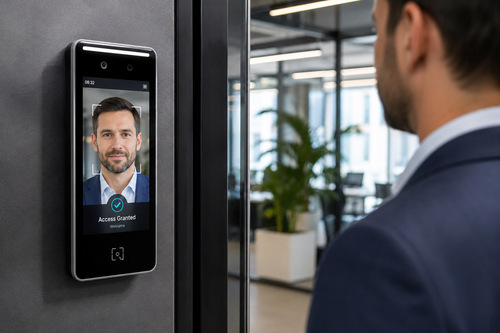
Biometric door access systems use fingerprints, facial recognition, or iris scanning to grant access. These systems offer the highest level of security since biometric data cannot be shared, lost, or stolen like physical cards. However, they typically require a higher initial investment and may have hygiene considerations in certain office environments.
Mobile-Based Access
Some modern solutions allow employees to unlock doors using their smartphones or mobile devices. This approach offers convenience and eliminates the need for physical cards or key fobs. It’s particularly appealing to younger workforces and tech-forward organisations.
Pin Code Entry
Numeric keypads provide a simple, cost-effective access method. However, pin codes can be shared and are difficult to change quickly if a breach occurs. They work best as a supplementary access method rather than a primary security measure.
Key Features to Look for in a Door Access System
Not all access control systems are created equal. When evaluating options, prioritise these essential features:
- Real-time access control: The ability to grant or revoke access instantly, even remotely
- Comprehensive audit trails: Detailed logs showing who accessed which doors and at what times
- Integration capabilities: Compatibility with your existing security systems, such as CCTV or alarm systems
- Scalability: The system should grow with your business, supporting additional doors and users without major overhauls
- Reliability: Backup power systems and offline functionality to ensure access during power outages
- User management: Easy-to-use software for managing employee access permissions
- Multi-factor authentication: Combination of access methods (card + pin, for example) for enhanced security
- Mobile app support: Remote management and monitoring capabilities
Common Challenges When Implementing Door Access Systems
Integration with Existing Infrastructure
Many organisations already have security systems in place. A new door access system should complement rather than replace these investments. Look for solutions that can integrate seamlessly with your current setup.
User Adoption
Employees need to understand how to use the new system. Choose a solution that’s intuitive and provide adequate training during the implementation phase. The easier your system is to use, the fewer security bypasses you’ll experience.
Maintenance and Support
Door access systems require ongoing maintenance, software updates, and technical support. Ensure your chosen provider offers reliable after-sales service and can respond quickly to issues. This is particularly important in Malaysia, where businesses need local support resources.
Compliance and Privacy
When implementing access control, you’re collecting data about when people enter and leave your building. Ensure your system and usage comply with relevant data protection guidelines and privacy regulations in Malaysia. It’s advisable to check with your legal department or relevant authorities regarding any specific compliance requirements for your industry.
Practical Implementation Considerations
Planning Your System Layout
Begin by mapping out which areas need access control. Not every door requires a system—focus on sensitive areas such as server rooms, finance departments, executive areas, and building entrances. This approach reduces costs while maintaining security where it matters most.
Choosing the Right Access Credentials
Consider your workforce and building environment. High-traffic areas might benefit from faster authentication methods like biometric or mobile access. Visitor-heavy facilities might require temporary card generation capabilities. A combination of access methods often provides the best balance between security and convenience.
Establishing Access Policies
Before implementation, clearly define your access policies. Who should have access to which areas? Should access be time-based (e.g., office hours only)? What’s your procedure for emergency overrides? Documenting these policies ensures consistent enforcement and smoother system management.
Training and Change Management
Dedicate time to training your IT department, security personnel, and end users. A well-informed team will use the system more effectively and catch security issues faster. Consider naming an access control administrator responsible for day-to-day management.
How Smart Touch Technology Can Help
Smart Touch Technology specialises in providing secure door access solutions designed for Malaysian businesses. Our door access system is built with the practical needs of modern offices in mind, offering reliable control, easy management, and robust security features.
Whether you’re securing a single building entrance or managing access across multiple floors and departments, our solutions can be tailored to your specific requirements. With a focus on user-friendly interfaces and reliable performance, Smart Touch Technology helps you implement access control that actually works for your organisation.
Want to know more about the product? Check it out here: https://www.smartouch.com.my/door-access-system/
Conclusion
Choosing the right door access system is an important investment in your organisation’s security and operational efficiency. The best system for your office depends on your specific needs, budget, and existing infrastructure. By understanding the available technology options, prioritising essential features, and planning your implementation carefully, you can deploy an access control solution that genuinely improves your security posture.
Remember that a door access system is not just about preventing unauthorised entry—it’s about creating an audit trail, enabling flexible access management, and providing peace of mind that your office, assets, and employees are properly protected. Take time to evaluate your options, involve key stakeholders in the decision-making process, and choose a provider committed to supporting your business long-term.
Smart Touch Technology Pte Ltd
Singapore: www.smartouch.com.sg | +65-63964767 | sales@smartouch.com.sg
Malaysia: www.smartouch.com.my | +607-3889903 | sales@smartouch.com.my