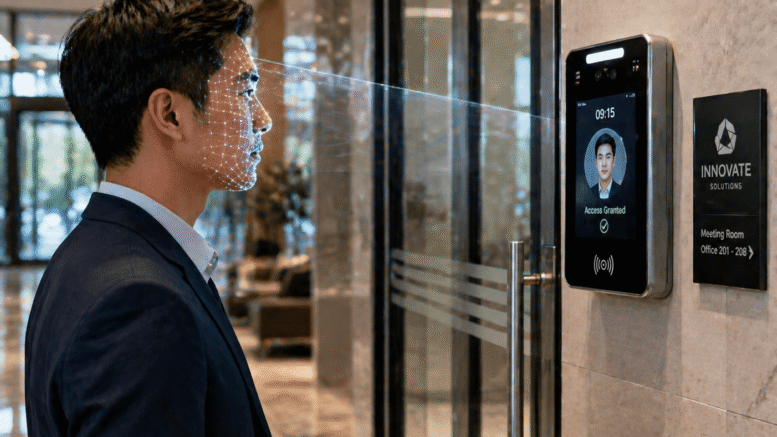
Security is no longer only about locking doors, issuing access cards, or placing guards at entrances. In today’s fast-moving business environment, organizations need smarter, faster, safer, and more convenient ways to manage people movement. Offices, factories, schools, hospitals, condominiums, commercial buildings, logistics hubs, government facilities, and industrial sites all face the same challenge: how can we verify identity accurately without slowing people down or increasing physical contact?
This is why face recognition is the best contactless security solution for modern organizations that want stronger access control, better attendance tracking, smoother visitor management, and a safer workplace experience.
Face recognition technology allows authorized users to enter premises, record attendance, verify identity, and access secured areas without touching any device, sharing cards, entering PIN numbers, or signing paper records. It is fast, hygienic, convenient, and highly practical for high-traffic environments. For businesses in Malaysia, where companies are continuously upgrading workplace security and digital automation, face recognition offers a powerful combination of safety, efficiency, and professional user experience.
What Is Face Recognition Security?
Face recognition security is a biometric technology that identifies or verifies a person based on facial features. Instead of relying on physical keys, RFID cards, passwords, PIN codes, or fingerprint scanning, the system uses a person’s face as the authentication method.
When a registered user approaches a face recognition terminal, the system captures the face image, compares it with stored authorized data, and grants or denies access within seconds. Depending on the setup, the system can connect with door access systems, turnstiles, lift control, visitor management platforms, attendance software, payroll systems, and security monitoring dashboards.
A face recognition solution can be used at office entrances, factory gates, staff access doors, school entry points, condominium lobbies, hospital restricted areas, server rooms, warehouses, laboratories, and high-security zones. It can also support employee time attendance, visitor verification, contractor access, and real-time security alerts.
For organizations that want a modern and contactless method to manage identity verification, face recognition provides a strong and efficient solution.
Why Contactless Security Matters Today
Contactless security has become increasingly important because modern workplaces need to balance safety, hygiene, speed, and convenience. Traditional security methods often require physical interaction. A fingerprint scanner requires touch. A PIN keypad requires users to press buttons. A paper logbook requires shared pens and surfaces. Even access cards may be passed between people, misplaced, or borrowed.
Face recognition removes many of these issues. Users simply look at the device, and the system verifies them automatically. This reduces physical contact at entry points and supports a cleaner security environment.
In busy Malaysian workplaces, contactless access is especially useful. During shift changes, lunch breaks, school arrival times, visitor peak hours, or factory gate entry, hundreds of people may need to move through access points quickly. A contactless face recognition system helps reduce queues while maintaining accurate identity verification.
It also improves user convenience. Employees do not need to carry cards, remember passwords, or touch shared devices. Visitors can be verified faster. Security teams can manage entry records more efficiently.
Why Face Recognition is Better Than Traditional Access Cards
Access cards are widely used, but they have several limitations. Cards can be lost, forgotten, damaged, duplicated, or shared with others. When an employee forgets a card, HR or security may need to issue a temporary pass. When a card is lost, the company must deactivate and replace it. If someone lends a card to another person, the access record may show the cardholder’s name even though the actual person entering is different.
Face recognition solves this problem because the credential is the person’s face. It is much harder to lend, forget, or misuse. The system verifies the actual individual, not just the card they carry.
For businesses that need stronger accountability, this is a major advantage. Factories can prevent workers from clocking in for one another. Offices can strengthen access control. Schools can improve student and staff verification. Condominiums can manage resident and visitor access more securely. High-security facilities can reduce unauthorized entry risks.
While access cards may still be useful in some environments, face recognition provides a higher level of identity assurance and a more seamless user experience.
Why Face Recognition is More Convenient Than Fingerprint Systems
Fingerprint systems have been popular for attendance and access control, but they require physical contact. In environments where many users touch the same scanner every day, hygiene can become a concern. Fingerprint recognition may also be affected by wet fingers, dirty hands, worn fingerprints, gloves, cuts, or heavy manual work.
This is especially relevant for factories, construction sites, workshops, food processing facilities, healthcare environments, and industrial operations where employees may have oily, dusty, wet, or rough hands.
Face recognition is more convenient because users do not need to touch the device. Verification can happen quickly as the person stands in front of the terminal. This improves hygiene, reduces wear and tear on devices, and creates a faster user experience.
For companies that want a cleaner and more modern biometric solution, face recognition is a practical upgrade from fingerprint systems.
Key Benefits of Face Recognition as a Contactless Security Solution
Face recognition offers many benefits for organizations that want secure, efficient, and user-friendly access control.
Contactless and Hygienic Access
One of the biggest advantages of face recognition is contactless operation. Users do not need to touch a scanner, keypad, card reader, or sign-in sheet. This helps reduce shared surface contact and supports better hygiene at access points.
For offices, hospitals, schools, factories, and public-facing facilities, this is a valuable benefit.
Fast Identity Verification
Face recognition systems can verify users quickly. This helps reduce queues during busy periods such as morning arrival, shift changes, lunch breaks, class start times, or event registration.
Fast verification improves the flow of people while maintaining proper access control.
Stronger Security and Accountability
Face recognition verifies the actual person, not a card, password, or PIN. This reduces the risk of card sharing, buddy punching, unauthorized access, and identity misuse.
Every successful or failed verification can be recorded in the system, giving management better accountability and audit visibility.
Better Attendance Accuracy
When face recognition is used for time attendance, employees cannot easily clock in for one another. This helps improve attendance accuracy and supports fair payroll processing.
For Malaysian companies with large workforces, shift workers, foreign workers, or multiple branches, this can significantly reduce attendance disputes and manual checking.
No Need to Carry Cards or Keys
Employees may forget access cards or lose keys, but they do not forget their face. Face recognition removes the need for physical credentials in many situations.
This reduces replacement costs, administrative work, and inconvenience.
Suitable for High-Traffic Areas
Face recognition is ideal for locations with frequent entry and exit. It works well at main entrances, factory gates, turnstiles, lobbies, staff doors, school gates, and restricted zones.
With proper setup, users can move through access points quickly and smoothly.
Supports Integration With Other Systems
A face recognition system can connect with access control, time attendance, payroll, visitor management, lift control, turnstiles, barrier gates, CCTV, and HR systems. This creates a complete security and workforce management ecosystem.
Integration helps organizations reduce duplicate work and improve data accuracy.
Professional and Modern Image
A face recognition terminal at the entrance creates a modern and professional impression. It shows that the organization values technology, security, efficiency, and user convenience.
This is especially useful for corporate offices, smart buildings, technology companies, premium condominiums, and modern facilities.
Face Recognition for Office Security
Offices need a secure yet convenient way to manage employee and visitor access. Face recognition can be used at the main entrance, office door, meeting area, server room, management floor, or restricted department.
Employees can enter without cards or keys. Visitors can be verified through an integrated visitor management system. Access records can be stored digitally for review. This improves security while creating a smooth experience for staff and guests.
For companies with hybrid work or flexible schedules, face recognition attendance can also help track actual office presence accurately.
Face Recognition for Factories and Industrial Facilities
Factories in Malaysia often have large numbers of employees entering during fixed shift times. Manual checking, card tapping, or fingerprint scanning may cause queues. Face recognition helps workers clock in and access the workplace faster.
It also helps prevent buddy punching and unauthorized entry. For factories with local employees, foreign workers, contractors, suppliers, and temporary workers, accurate identity verification is very important.
Face recognition can be integrated with turnstiles, gates, attendance software, payroll systems, and contractor management platforms. This gives factory management better control over workforce movement and attendance records.
Face Recognition for Schools and Education Centers
Student and staff safety is a top priority for education facilities. Face recognition can help schools, colleges, tuition centers, and training institutions manage authorized access more effectively.
The system can be used for staff attendance, student entry tracking, restricted area access, and visitor verification. It can help administrators know who has entered the campus and improve overall security control.
For education environments, contactless access also provides convenience during busy arrival and dismissal times.
Face Recognition for Condominiums and Residential Buildings
Residential properties need secure and convenient access for residents, tenants, staff, visitors, delivery personnel, contractors, and service providers. Face recognition can help residents access lobbies, lift areas, facilities, car parks, and common areas without carrying access cards.
For management offices and security teams, the system improves accountability. Lost access cards and card sharing can be reduced. Visitors can be managed together with a visitor management system for better control.
Premium condominiums and smart residences can also use face recognition to improve living convenience and property image.
Face Recognition for Hospitals and Healthcare Facilities
Hospitals and clinics need controlled access to sensitive areas such as staff zones, pharmacies, laboratories, operating areas, record rooms, and restricted departments. Face recognition provides contactless verification, which is useful in healthcare environments where hygiene and access control are both important.
Staff can access approved areas quickly without touching shared devices. Visitor and contractor access can also be controlled more effectively.
Face Recognition for Commercial Buildings and Smart Facilities
Commercial buildings often serve multiple tenants and receive many visitors daily. Face recognition can support tenant access, staff entry, visitor registration, lift control, and turnstile management.
When integrated with building management systems, it helps create a smarter and more secure facility. Building owners and facility managers can improve security while offering tenants a modern access experience.
How Face Recognition Improves Visitor Management
Face recognition can strengthen visitor management by verifying visitor identity during check-in and access. Visitors can be pre-registered, approved, and verified at the entrance. Once verified, they may receive limited access based on time, location, and host approval.
This helps prevent unauthorized visitors from moving freely inside the building. It also creates accurate digital records for security review.
For factories, offices, schools, hospitals, and commercial buildings, face recognition visitor verification provides an extra layer of security.
How Face Recognition Supports Time Attendance and Payroll
Time attendance is one of the most common uses of face recognition. Employees can clock in and out by looking at the terminal. The system records the date, time, location, and identity of the employee.
When integrated with attendance software and payroll, this helps calculate working hours, lateness, overtime, absence, and shift attendance more accurately. HR teams can reduce manual checking, and payroll teams can process salary information with greater confidence.
For Malaysian companies with large teams or multiple shifts, face recognition attendance can improve accuracy and reduce administrative workload.
Important Considerations When Choosing a Face Recognition System
When selecting a face recognition security solution, organizations should consider accuracy, speed, integration capability, user capacity, reporting features, data security, and local support.
The system should perform well in real operating environments. It should support the number of users required by the organization and process verification quickly during peak times. It should also integrate with existing access control, attendance, payroll, visitor management, turnstile, lift, or barrier gate systems if needed.
Data security is also important. Face recognition data should be managed responsibly with proper access control and secure storage. Organizations should work with a reliable provider that understands security requirements and system implementation.
Local support matters because security systems are operationally important. Malaysian businesses should choose a provider that can assist with installation, configuration, training, troubleshooting, and long-term maintenance.
Why Smart Touch Is a Trusted Choice for Face Recognition Security Solutions
Smart Touch provides practical and reliable smart security, workplace automation, access control, attendance, visitor management, and building management solutions. Our face recognition systems are designed to help Malaysian organizations improve security, reduce physical contact, speed up verification, and create a smarter access experience.
Our solution can support offices, factories, schools, hospitals, condominiums, commercial buildings, logistics centers, government facilities, and industrial sites. It can be integrated with door access, turnstiles, lift control, attendance software, payroll systems, visitor management platforms, and other workplace solutions.
With Smart Touch, organizations can move beyond traditional cards, keys, PIN codes, and fingerprint devices. We help businesses create a more secure, contactless, and efficient environment where identity verification is fast, accurate, and easy to manage.
The Future of Contactless Security in Malaysia
Contactless security will continue to grow as Malaysian organizations invest in smarter buildings, digital workplaces, and automated facilities. Face recognition will play an important role in this transformation because it combines convenience with stronger identity verification.
In the future, more organizations will connect face recognition with cloud dashboards, mobile approvals, visitor management, attendance analytics, lift control, barrier gates, and security monitoring systems. This will create a more complete and intelligent security ecosystem.
The entrance of a building will no longer be only a checkpoint. It will become a smart access point that verifies identity, records attendance, controls movement, and improves the overall user experience.
Conclusion: Why Face Recognition is the Best Contactless Security Solution
Face recognition is the best contactless security solution because it delivers speed, convenience, hygiene, accuracy, accountability, and modern access control in one powerful system. It removes the need for physical cards, keys, PINs, paper records, and shared fingerprint scanners. It helps organizations reduce unauthorized access, prevent buddy punching, improve attendance accuracy, strengthen visitor management, and create a professional entry experience.
For Malaysian offices, factories, schools, hospitals, condominiums, commercial buildings, and industrial facilities, face recognition offers a practical way to modernize security while improving daily operations. It is suitable for high-traffic areas, integrates well with other systems, and supports a safer, smarter, and more efficient workplace.
For organizations ready to upgrade to a reliable contactless security solution, Smart Touch offers practical face recognition systems designed to support modern access control, attendance management, visitor verification, and building security needs.
Interested in this product? Click here to learn more: https://www.smartouch.com.my/face-recognition-system-2/
Smart Touch technology pte ltd , www.smartouch.com.sg +65-63964767, sales@smartouch.com.sg , www.smartouch.com.my +607-3889903 sales@smartouch.com.my