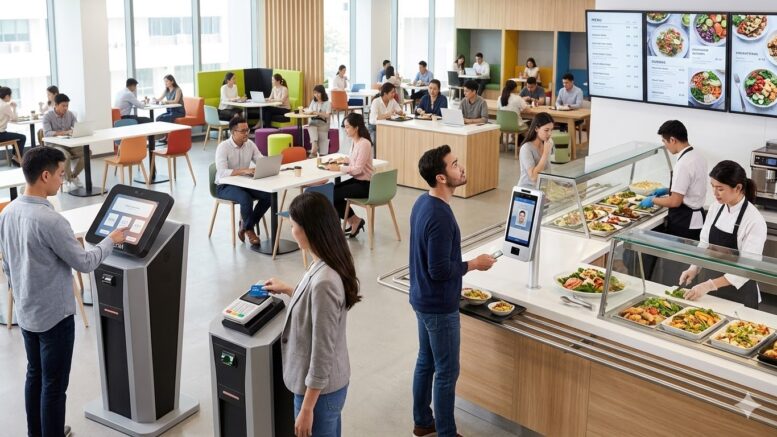
Managing a cafeteria is no longer only about serving meals. In Malaysia, cafeterias, staff canteens, school dining halls, factory meal centres, hostel food counters, hospital cafeterias, and corporate dining facilities must operate with speed, accuracy, hygiene awareness, cost control, and strong accountability. When hundreds or thousands of meals are served every day, manual processes can quickly become slow, confusing, and difficult to manage.
This is why cafeteria management software in Malaysia has become an important solution for organisations that want to improve food service operations, reduce manual paperwork, track meal consumption, manage payments, control costs, and provide a smoother dining experience for employees, students, residents, visitors, and customers.
A good cafeteria management system helps companies move away from paper coupons, manual registers, handwritten meal records, cash-only counters, and scattered spreadsheets. Instead, it creates a digital workflow where meal ordering, billing, entitlement control, attendance integration, staff meal tracking, subsidy management, and reporting can be handled more efficiently.
For Malaysian businesses that operate cafeterias or staff canteens, digitalisation is not only a modern upgrade. It is a practical way to save time, reduce losses, improve transparency, and manage daily food service more professionally.
What Is Cafeteria Management Software?
Cafeteria management software is a digital system designed to manage cafeteria operations from meal planning to payment tracking. Depending on the organisation’s needs, the system may support meal ordering, cashless payment, employee meal entitlement, visitor billing, vendor management, food coupon control, subsidy calculation, inventory tracking, menu planning, sales reporting, and integration with HR, payroll, attendance, access control, or student management systems.
In a company canteen, the software can help track employee meal consumption and calculate monthly meal deductions or subsidies. In a factory cafeteria, it can manage different meal sessions for day shift, night shift, overtime workers, and contract staff. In a school or college cafeteria, it can support student meal plans, prepaid balances, and parent-friendly reporting. In a hostel or dormitory environment, it can connect resident meal entitlements with accommodation records.
The main purpose is simple: to make cafeteria operations faster, more accurate, and easier to control.
Why Malaysian Cafeterias Need a Digital Management System
Malaysia has many organisations with high-volume meal operations. Manufacturing plants, construction companies, universities, international schools, hospitals, logistics centres, call centres, government facilities, and large office buildings often provide meals or cafeteria access to employees, students, workers, or residents.
When meal transactions are managed manually, several problems can occur. Staff may record meals incorrectly. Employees may misuse meal coupons. Vendors may submit claims that are difficult to verify. HR may struggle to calculate meal deductions. Finance may receive incomplete reports. Management may not know the true cost of cafeteria operations.
Manual cafeteria management can also slow down service during peak meal times. Long queues can form during breakfast, lunch, dinner, and shift-change periods. Cash handling may create delays. Paper coupons may be lost or duplicated. Attendance and meal records may not match.
Cafeteria management software helps solve these problems by bringing order, speed, and data accuracy into the daily dining process.
Faster Meal Transactions and Shorter Queues
One of the most immediate benefits of cafeteria management software is faster transaction processing. Instead of counting cash, checking paper coupons, or manually writing names in a book, the cafeteria can use employee ID cards, QR codes, RFID cards, biometric verification, mobile accounts, or digital meal entitlement records.
This makes the queue move faster. Employees or students can quickly confirm their meal, and the system records the transaction automatically. For large factories, schools, and corporate cafeterias, reducing queue time can significantly improve daily productivity.
A faster cafeteria process also improves the dining experience. People spend less time waiting and more time resting, eating, or returning to work on schedule.
Employee Meal Entitlement and Subsidy Control
Many Malaysian companies provide meal subsidies or free meals to employees. However, different groups may have different entitlements. Permanent staff may receive one free meal per day. Shift workers may receive meals based on shift schedule. Overtime employees may receive dinner entitlement. Foreign workers living in dormitories may receive full meal packages. Visitors or contractors may need to pay separately.
Without a digital system, controlling these entitlements can be difficult. Employees may claim more meals than allowed. Vendors may charge for meals that were not consumed. HR may need to manually check who is entitled to what.
Cafeteria management software allows companies to configure meal rules based on employee category, department, shift, location, working day, overtime status, or company policy. This ensures that meals are issued according to approved entitlement rules.
For businesses that spend a large amount on staff meals every month, this control can lead to better cost management.
Cashless Cafeteria Payments
Cashless payment is becoming more common in Malaysian workplaces and institutions. A cafeteria management system can support prepaid accounts, employee meal cards, QR payment records, payroll deduction, e-wallet-style balance tracking, or company-subsidised meal transactions.
Cashless cafeteria operations reduce the need for cash handling and manual reconciliation. This helps reduce errors, theft risk, and cashier workload. It also makes end-of-day closing easier because sales and meal consumption records are already captured in the system.
For employees and students, cashless payment is convenient. They do not need to carry exact cash every day. For management, cashless transactions create clearer records and better audit trails.
Integration with HR, Payroll, and Attendance Systems
One of the most valuable features of cafeteria management software in Malaysia is integration with HR, payroll, and attendance systems.
When cafeteria software is connected to employee records, the system can automatically identify staff details such as name, employee ID, department, company, branch, shift, or employment status. When connected to attendance, the system can verify whether an employee is working on that day or eligible for a meal based on shift attendance. When connected to payroll, meal deductions or allowances can be processed more accurately.
This integration is especially useful for companies with many workers, multiple shifts, overtime arrangements, and dormitory accommodation. Meal eligibility can be linked with real work schedules, reducing misuse and improving accuracy.
For HR and finance teams, integration reduces double entry and month-end manual checking.
Better Vendor Claim Verification
Many organisations outsource cafeteria operations to food vendors. The vendor may provide meals and later submit claims based on the number of meals served. If the company does not have accurate meal transaction records, verifying vendor claims can become difficult.
Manual meal counts can lead to disputes. Vendors may claim more meals than the company believes were consumed. Employees may forget to sign meal sheets. Paper records may be incomplete. Finance may need to spend time checking and negotiating.
Cafeteria management software provides digital transaction records that show how many meals were served, to whom, at what time, and under which meal category. This makes vendor claim verification faster and more transparent.
Clear records help maintain a better relationship between the company and the cafeteria vendor.
Meal Planning and Demand Forecasting
Food wastage is a major concern in cafeteria operations. If too many meals are prepared, food is wasted and cost increases. If too few meals are prepared, employees or students may be disappointed and service quality drops.
A cafeteria management system can provide historical meal consumption reports that help management forecast demand more accurately. For example, reports may show that Monday breakfast demand is higher, night shift dinner demand is lower, or certain menu items are more popular.
With better data, cafeteria operators can plan food quantities more efficiently. This helps reduce wastage, control cost, and improve service consistency.
Menu Management for Better Communication
Cafeteria management software can also support menu planning and communication. Administrators can update daily, weekly, or monthly menus so employees, students, or residents know what meals are available.
A clear digital menu helps users make better choices and reduces repeated enquiries. If the system supports pre-ordering, users may select meals in advance, allowing cafeteria operators to prepare more accurately.
Menu management is especially useful for organisations that provide vegetarian meals, halal meals, diet-specific meals, student meal packages, special event meals, or shift-based meal choices.
In Malaysia, where food preferences and dietary requirements can vary widely, structured menu management helps improve customer satisfaction.
Managing Multiple Cafeteria Locations
Large organisations may operate more than one cafeteria. A manufacturing group may have cafeterias at different plants. A university may have several dining halls. A hospital may operate staff cafeterias and visitor cafeterias. A company with multiple branches may need central reporting for all meal operations.
Cafeteria management software can support multiple locations under one system. Management can monitor sales, meal counts, subsidies, vendor claims, and consumption patterns across different sites.
This creates better control and standardisation. Instead of receiving different spreadsheet formats from each location, management can access consolidated reports from a central platform.
Visitor, Contractor, and Temporary Worker Meal Billing
Not every cafeteria user is a permanent employee or registered student. Many organisations also serve visitors, contractors, vendors, temporary workers, project workers, auditors, trainees, and guests.
A cafeteria management system can help manage these groups separately. Temporary meal passes, visitor billing, contractor meal accounts, or project-based meal charges can be recorded clearly.
This prevents confusion between employee meals and non-employee meals. It also helps finance departments recover costs from contractors, departments, projects, or external parties when required.
Reducing Meal Fraud and Misuse
Manual cafeteria systems can be vulnerable to misuse. Meal coupons may be shared, duplicated, lost, or used by unauthorised persons. Employees may claim meals outside entitlement. Manual signatures may be difficult to verify. Cash transactions may not always be recorded properly.
Cafeteria management software reduces misuse by linking meal transactions to verified user identities. This may be done through employee cards, QR codes, RFID, face recognition, fingerprint devices, or system login.
When each meal is digitally recorded, unauthorised usage becomes easier to detect. Management can generate exception reports, such as duplicate meals, meals outside working hours, meals claimed without attendance, or unusual consumption patterns.
This improves control and protects company resources.
Useful Reports for HR, Finance, and Management
A strong cafeteria management system should provide useful reports for different departments.
HR may need employee meal consumption reports, meal deduction summaries, and entitlement usage. Finance may need sales reports, subsidy reports, vendor claim reports, outstanding payment reports, and monthly reconciliation. Operations teams may need meal count reports, peak time reports, menu popularity reports, and wastage analysis. Management may need cost summaries, department meal cost reports, and branch comparison reports.
These reports turn cafeteria data into business insight. Instead of guessing how much the cafeteria costs, management can see actual numbers.
Cafeteria Management for Factories and Worker Accommodation
Factories and worker accommodation facilities in Malaysia often face complex meal management requirements. Workers may be divided into day shift, night shift, rotating shift, overtime shift, and rest day duty. Some may stay in company dormitories. Some may receive meal allowances. Some may have salary deductions. Some may receive employer-sponsored meals.
A cafeteria management system helps control these details accurately. Meal entitlement can be linked to shift schedules, dormitory records, attendance data, or payroll rules.
This is highly useful for manufacturing, electronics, logistics, food processing, packaging, cleaning, security, plantation, and construction industries where many workers depend on structured meal arrangements.
Cafeteria Management for Schools, Colleges, and Training Centres
Educational institutions also benefit from cafeteria management software. Schools, colleges, universities, and training centres may need to manage student meal plans, prepaid balances, staff meals, hostel meals, cashless payment, and parent reporting.
A digital cafeteria system can reduce cash handling among students, improve meal control, and provide clearer records. For boarding schools or hostels, meal consumption can be linked to student residence records.
Administrators can also monitor menu demand and food service quality more effectively.
Cafeteria Management for Corporate Offices
Corporate offices may use cafeteria management software to improve employee welfare and workplace productivity. Staff meals, pantry purchases, coffee bar spending, meal subsidies, visitor meals, meeting refreshments, and event catering can all be tracked more professionally.
Instead of handling staff meal claims manually, companies can use digital meal accounts or payroll-connected deductions. This creates a smoother experience for employees and better cost visibility for management.
Why Spreadsheets Are Not Enough for Cafeteria Operations
Many cafeterias start with spreadsheets because they are simple and familiar. However, spreadsheets become difficult to manage as meal volume increases.
They are not ideal for real-time transactions. They do not verify user identity. They can be edited accidentally. They may not connect with payroll or attendance. They often require manual consolidation. They may not prevent duplicate meal claims.
A cafeteria is a daily operational environment. It needs a system that can handle transactions quickly and accurately. Dedicated cafeteria management software provides better structure, stronger control, and more reliable reporting than manual spreadsheets.
Choosing the Right Cafeteria Management Software in Malaysia
When choosing cafeteria management software in Malaysia, companies should look for a solution that fits local business needs. The system should be easy for cafeteria staff to use during busy meal periods. It should support different meal rules, payment methods, user categories, subsidy arrangements, and reporting requirements.
It should also be flexible enough to integrate with HR, payroll, attendance, dormitory, or access control systems. For companies with multiple locations, centralised reporting is important. For large employee populations, fast transaction processing is essential.
The best cafeteria software is not only a cashier system. It is a complete management tool that helps the organisation control cost, improve service, and reduce administrative workload.
Smart Touch Cafeteria Management Software Malaysia
Smart Touch provides practical cafeteria management software solutions for Malaysian businesses, factories, schools, dormitories, corporate offices, and organisations that want better control over meal operations.
With Smart Touch cafeteria management software, companies can manage meal transactions, employee entitlements, cashless payments, vendor claims, meal deductions, cafeteria reports, and integration with HR or payroll systems. The solution helps reduce manual work, improve accuracy, and create a smoother dining process.
Smart Touch understands that cafeteria operations are different for every organisation. Some companies need staff meal tracking. Some need worker meal control. Some need dormitory meal integration. Some need school cafeteria billing. Some need vendor claim verification. A flexible system helps meet these different requirements more effectively.
Building a Smarter Cafeteria with Digital Automation
A well-managed cafeteria supports productivity, employee satisfaction, cost control, and operational efficiency. When meal transactions are fast, billing is accurate, and reports are clear, the entire organisation benefits.
Cafeteria management software helps Malaysian businesses move away from manual meal records and toward a more reliable digital process. It reduces queues, controls entitlement, improves payment tracking, supports vendor verification, helps forecast demand, and gives management better visibility.
For companies that want to modernise cafeteria operations, improve staff welfare, and manage food service costs more professionally, Smart Touch cafeteria management software is a strong and practical choice.
You can read more about our compliance features by https://www.smartouch.com.my/canteen-management-system-2/.
Smart Touch technology pte ltd , www.smartouch.com.sg +65-63964767, sales@smartouch.com.sg , www.smartouch.com.my +607-3889903 sales@smartouch.com.my