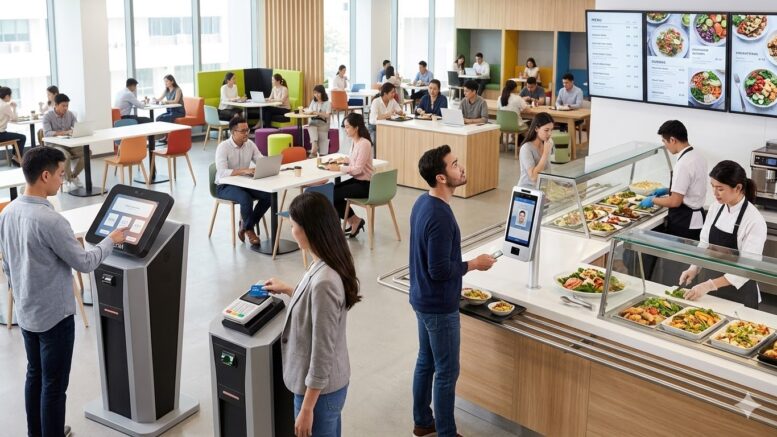
A modern canteen is no longer just a place where employees, students, workers, or visitors collect meals during lunch hours. It has become an important part of daily operations, workplace experience, cost control, hygiene management, and organizational efficiency. As businesses, factories, schools, hospitals, government facilities, and large commercial buildings continue to move toward digital transformation, the need for a reliable canteen management system has become increasingly important.
A canteen management system for smart food operations helps organizations manage meal ordering, food distribution, employee entitlement, cashless payment, subsidy control, inventory planning, reporting, and overall canteen performance in a more accurate and efficient way. Instead of relying on manual coupons, paper records, cash handling, and repeated administrative work, companies can use a smart canteen solution to create a faster, cleaner, and more transparent food service environment.
For organizations that serve hundreds or thousands of meals every day, a smart canteen management system is not only a convenience. It is a strategic operational tool that improves service speed, reduces wastage, controls cost, and strengthens accountability.
What Is a Canteen Management System?
A canteen management system is a digital solution designed to manage the daily activities of a canteen or food service area. It can include meal ordering, employee identification, payment processing, meal entitlement control, subsidy calculation, vendor management, menu planning, stock monitoring, and detailed reporting.
In a smart food operation, the system may be integrated with RFID cards, QR codes, facial recognition terminals, biometric devices, mobile applications, POS terminals, attendance systems, access control systems, and payroll platforms. This allows employees or users to identify themselves quickly, select meals conveniently, and complete transactions without unnecessary delays.
The main purpose of a canteen management system is to make food operations more organized, automated, and data-driven. Every transaction can be recorded, every meal can be tracked, and every subsidy can be calculated accurately. This gives management better control over cost, consumption, and user behavior.
Why Smart Food Operations Need Digital Canteen Management
Traditional canteen operations often depend on manual processes. Employees may use paper coupons, sign attendance sheets, pay by cash, or depend on staff to check meal eligibility manually. These methods may work for small groups, but they become difficult to manage when the number of users increases.
Manual canteen management can lead to long queues, calculation errors, missing records, duplicate claims, food wastage, cash handling risks, and limited reporting. Management may not know exactly how many meals were consumed, which department used the highest subsidy, how much stock was required, or whether the canteen vendor charged correctly.
A canteen management system solves these problems by turning canteen activity into structured digital data. Employees can complete meal transactions quickly. Administrators can review usage reports. Vendors can plan food preparation more accurately. Finance teams can calculate subsidies and deductions with better confidence.
This digital approach supports smart food operations where speed, accuracy, hygiene, transparency, and cost control are all equally important.
Cashless Payment for a Faster Canteen Experience
One of the most useful features of a canteen management system is cashless payment. Instead of using cash, employees can pay through staff cards, prepaid wallets, QR codes, mobile apps, or integrated company accounts.
Cashless payment helps reduce queue time because transactions are faster and easier to process. It also reduces the need for canteen operators to handle physical money, count cash, prepare change, and reconcile cash balances at the end of the day. This creates a cleaner, more secure, and more efficient environment.
For organizations, cashless canteen payment also provides better control. Every purchase is recorded in the system. Management can monitor daily sales, user transactions, department consumption, and vendor performance. This helps reduce disputes and improves financial transparency.
Employee Meal Subsidy Management
Many companies provide meal subsidies to employees as part of their welfare benefits. However, managing subsidies manually can be complicated. Different employees may have different entitlement levels. Some may receive full subsidy, partial subsidy, shift-based meals, overtime meal allowance, or department-specific benefits.
A smart canteen management system can automate these rules. When an employee makes a purchase, the system can instantly apply the correct subsidy based on their profile, department, shift, grade, employment type, or company policy. The employee pays only the remaining amount, while the employer subsidy is recorded automatically.
This is especially useful for factories, industrial parks, construction sites, plantations, hospitals, and large corporate offices where meal benefits are part of daily operations. The system helps ensure that subsidies are used correctly and only by eligible users.
Meal Entitlement and Access Control
In some organizations, meals are not open to everyone at all times. Certain meals may be provided only to night shift workers, production staff, hostel residents, students, patients, contractors, or approved visitors. Without a proper system, it can be difficult to verify who is entitled to which meal.
A canteen management system can manage meal entitlement based on user identity and rules. For example, an employee may be allowed one subsidized breakfast and one subsidized lunch per day. A night shift worker may be entitled to a midnight meal. A contractor may be allowed to purchase meals but not receive company subsidy. A visitor may be issued a temporary meal pass.
By linking identity verification with meal rules, the system prevents duplicate claims, unauthorized meals, and incorrect subsidy usage. This makes food distribution fairer and more controlled.
Pre-Ordering and Menu Planning
Food wastage is one of the biggest challenges in canteen operations. When vendors do not know how many people will eat, they may prepare too much food or too little food. Too much preparation leads to wastage. Too little preparation causes complaints and delays.
A canteen management system with pre-ordering features allows users to select meals in advance. Employees can choose breakfast, lunch, dinner, or special menu items through a kiosk, web portal, or mobile app. The vendor can then view estimated demand before preparing food.
This improves food planning, reduces wastage, and helps ensure that popular meals are prepared in the right quantity. It also allows canteen operators to introduce healthier menus, special diet options, vegetarian meals, halal meals, and department-specific meal arrangements more effectively.
Inventory and Stock Control
Smart food operations require better control over ingredients, stock usage, and purchasing. A canteen management system can support inventory monitoring by tracking items used, items sold, stock balance, and reorder requirements.
With better stock control, canteen operators can reduce over-purchasing, avoid shortages, and minimize expired or wasted ingredients. Management can also compare meal sales with ingredient consumption to detect inefficiencies or unusual usage patterns.
For large canteen operations, inventory visibility is extremely valuable. It helps the canteen team plan purchasing, manage supplier relationships, control food cost, and maintain consistent menu availability.
Vendor Management and Transparent Billing
Many organizations outsource canteen services to external vendors. While this can improve convenience, it also creates a need for clear monitoring and accurate billing. A canteen management system provides transaction records that show how many meals were served, what items were sold, which employees consumed meals, and how subsidies were applied.
This information helps both the organization and the vendor maintain transparency. Monthly billing can be generated based on actual system records rather than estimates or manual counts. Disputes can be reduced because both parties can refer to the same data.
For companies managing multiple canteen vendors, the system can compare performance, sales volume, menu popularity, service efficiency, and subsidy usage across vendors. This creates a more professional and accountable canteen environment.
Better Hygiene and Reduced Physical Contact
Health and hygiene are now major priorities in food service operations. A smart canteen management system can support cleaner operations by reducing cash handling, minimizing paper coupons, and speeding up transactions. Contactless payment methods such as RFID cards, QR codes, or facial recognition can help users complete transactions with minimal physical contact.
Digital records also reduce the need for shared logbooks or manual signatures. This creates a more hygienic process for employees, canteen staff, and administrators.
In high-volume environments, even small improvements in transaction speed and hygiene can make a major difference to the overall canteen experience.
Real-Time Reports for Better Decision Making
One of the strongest advantages of a canteen management system is reporting. Management can access accurate reports on daily meal consumption, sales value, subsidy amount, payment mode, peak hours, user transactions, vendor performance, and department usage.
These reports help organizations make better decisions. For example, if lunch queues are too long between 12:00 p.m. and 1:00 p.m., management can adjust serving counters or stagger meal times. If certain menu items are unpopular, the vendor can replace them. If subsidy cost is increasing, finance teams can study consumption trends and adjust policies carefully.
Without digital reports, many decisions are based on assumptions. With a smart canteen management system, decisions can be based on actual operational data.
Integration with HR, Payroll, and Attendance Systems
A complete canteen management system can be even more powerful when integrated with HR, payroll, and attendance systems. Employee information can be synchronized automatically, reducing manual data entry. When new employees join, their canteen access can be activated. When employees resign, their access can be removed.
For payroll-linked deductions, meal purchases can be transferred into payroll records for salary deduction. This is useful for organizations that allow employees to buy meals first and pay later through monthly salary deduction.
Attendance integration can also support meal entitlement. For example, only employees who attended a certain shift may be eligible for a shift meal. This prevents misuse and ensures that benefits are given according to actual working records.
Suitable Industries for Canteen Management Systems
A canteen management system is suitable for many types of organizations. Manufacturing factories can use it to manage large employee meal volumes across multiple shifts. Schools, colleges, and universities can use it to manage student meals, prepaid accounts, and cashless purchases. Hospitals can manage staff meals, patient meals, visitor dining, and department subsidies.
Corporate offices can use the system to provide employee meal benefits and improve workplace experience. Government buildings can use it to manage staff dining and contractor access. Worker hostels and industrial facilities can use it to distribute meals fairly and prevent duplicate claims.
Any organization that operates a canteen, cafeteria, food court, staff dining area, or meal distribution point can benefit from smart canteen management.
Improving Employee Satisfaction
A well-managed canteen contributes directly to employee satisfaction. Long queues, unclear pricing, repeated payment issues, lack of meal choices, and manual coupon problems can create frustration. When the canteen process becomes smooth, employees enjoy a better daily experience.
With a smart canteen management system, employees can make purchases faster, view meal prices clearly, use company subsidies easily, and enjoy a more organized dining process. When pre-ordering is available, they can reserve meals in advance and reduce waiting time.
A better canteen experience supports a better workplace environment. Employees feel that the company values their time, convenience, and welfare.
Cost Control and Operational Efficiency
For management, one of the biggest benefits of a canteen management system is cost control. Food service expenses can become significant, especially when companies provide subsidies to large workforces. Without proper monitoring, subsidy misuse, duplicate meals, incorrect billing, and food wastage can increase operating costs.
A smart system provides clear control over who can eat, what subsidy applies, how many meals are claimed, and how much the company pays. This helps reduce unnecessary expenses while still maintaining employee welfare.
Operational efficiency also improves because administrators spend less time checking paper records, calculating claims, handling disputes, and preparing reports manually. The system automates routine processes and allows the team to focus on service improvement.
Why Choose Smart Touch for Canteen Management System Solutions
At Smart Touch, our canteen management system solutions are designed to support practical, reliable, and scalable food operations. We understand that every organization has different needs. Some companies require cashless payment. Some need employee subsidy control. Some need integration with access control, attendance, payroll, or HR systems. Others need detailed reporting for management and finance review.
Our solutions help organizations create a smarter canteen environment with better control, faster transactions, transparent records, and improved user experience. From factories and offices to schools and large facilities, Smart Touch provides technology that supports efficient daily operations.
A successful canteen system should be easy for employees to use, simple for administrators to manage, and powerful enough for management to monitor. With the right implementation, organizations can transform their canteen from a manual service point into a smart operational hub.
Conclusion: Build Smarter Food Operations with a Canteen Management System
A canteen management system for smart food operations is an essential solution for organizations that want better efficiency, stronger cost control, faster service, and improved employee satisfaction. It replaces outdated manual processes with digital automation, real-time records, cashless transactions, subsidy management, entitlement control, and accurate reporting.
As workplaces become smarter and more connected, food operations must also evolve. A modern canteen should be fast, clean, transparent, and easy to manage. With the right canteen management system, organizations can reduce waste, prevent misuse, improve vendor accountability, and deliver a better dining experience every day.
For businesses that want to improve workplace welfare while maintaining strong operational control, a smart canteen management system is a practical and valuable investment.
You can read more about our compliance features by https://www.smartouch.com.my/canteen-management-system-2/.
Smart Touch technology pte ltd , www.smartouch.com.sg +65-63964767, sales@smartouch.com.sg , www.smartouch.com.my +607-3889903 sales@smartouch.com.my