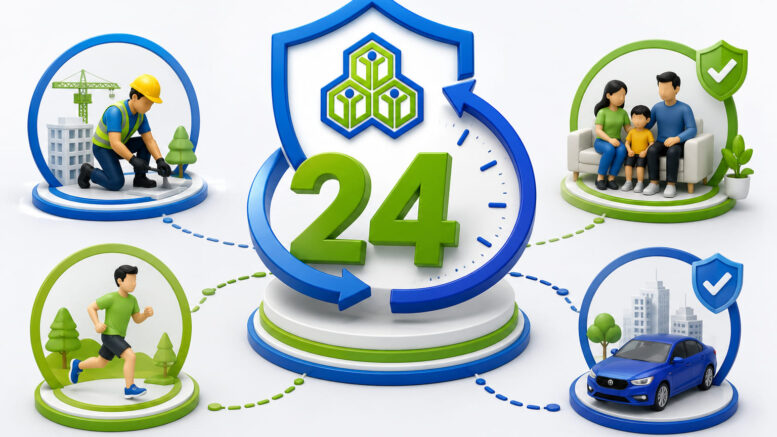
If you’re an HR manager or payroll professional in Malaysia, staying on top of SOCSO (Social Security Organisation) contribution requirements is a non-negotiable part of your role. With the new year approaching, many HR teams are already asking the same burning question: has the SOCSO wage ceiling changed for 2026? Understanding these updates is crucial not only for legal compliance but also for accurate payroll processing, employee benefits planning, and overall workforce management. In this comprehensive guide, we’ll break down everything you need to know about SOCSO contribution changes, what they mean for your organisation, and how smart HR technology can help you stay ahead of the curve.
What Is the SOCSO Wage Ceiling and Why Does It Matter?
The SOCSO wage ceiling refers to the maximum monthly wage amount used to calculate an employee’s SOCSO contributions. In simple terms, even if an employee earns above this ceiling, contributions are only calculated based on the capped amount. This ceiling directly affects both employer and employee contribution amounts and has a significant impact on payroll calculations across all industries. For HR managers, understanding the wage ceiling is essential because miscalculating SOCSO contributions — whether by using outdated figures or incorrect wage categories — can result in penalties, compliance issues, and unnecessary administrative headaches.
Historically, Malaysia’s SOCSO wage ceiling was set at RM4,000 per month, meaning contributions for employees earning above this threshold were calculated based solely on RM4,000. However, the government has made revisions over the years to better reflect modern wage structures and to extend protection to higher-earning employees. Any change to this ceiling requires immediate updates in your payroll system, employee records, and HR policies. This is why proactive HR teams monitor announcements from PERKESO (the Malay acronym for SOCSO) and the Ministry of Human Resources closely throughout the year.
SOCSO Wage Ceiling Update: What’s New for 2026?
As of the latest available announcements and regulatory guidance, Malaysia’s SOCSO wage ceiling has been revised upward to RM5,000 per month, a significant change that came into effect following government discussions on broadening social protection for mid-to-high income workers. This means that employees earning up to RM5,000 will now have their contributions calculated on their actual wages, while those earning above RM5,000 will have contributions capped at the RM5,000 level. For many organisations, this represents a meaningful shift in monthly payroll expenditure and requires immediate attention from HR and finance teams alike.
The rationale behind raising the wage ceiling is clear: Malaysia’s workforce has evolved, and a growing number of workers now earn above the previous RM4,000 threshold. By raising the ceiling, SOCSO is able to provide more comprehensive protection to a wider group of employees, ensuring that injury benefits, invalidity pensions, and other SOCSO-related payouts are more proportionate to actual earnings. For HR managers, this means re-evaluating your current contribution tables, reviewing payroll software settings, and communicating these changes to both employees and management in a timely manner. Early preparation is always better than last-minute scrambling.
How Does This Affect Employer and Employee Contributions?
Under Malaysia’s SOCSO framework, contributions are shared between the employer and the employee, and both amounts are determined by the employee’s monthly wage using the official SOCSO contribution rate table. The employer contributes to both the Employment Injury Scheme and the Invalidity Scheme, while the employee only contributes to the Invalidity Scheme. With the revised wage ceiling, employers of workers earning between RM4,000 and RM5,000 will now contribute slightly higher amounts than before, as the calculation will now be based on the employee’s actual wage rather than the previously capped RM4,000 figure.
For example, an employee earning RM4,500 per month would previously have had their SOCSO contributions calculated at the RM4,000 wage category. Under the new ceiling, contributions would be calculated at the RM4,500 bracket, resulting in a marginally higher contribution from both parties. While the increase per employee may seem small in isolation, it can add up considerably for organisations with large workforces. HR managers should conduct a payroll impact assessment to understand the total additional cost to the business and ensure that budgets are adjusted accordingly for 2026. Transparency with employees about these changes is equally important to avoid confusion on payslips.
PERKESO’s Employment Insurance System (EIS): Related Updates to Watch
Closely linked to SOCSO is the Employment Insurance System (EIS), which is also administered by PERKESO. EIS provides financial assistance and job search support to employees who lose their jobs through retrenchment or other qualifying circumstances. Like SOCSO, EIS contributions are also subject to a wage ceiling, and it’s important for HR managers to check whether EIS ceilings have been similarly revised for 2026. As of recent updates, the EIS wage ceiling has historically mirrored SOCSO’s ceiling, so changes to one often signal corresponding changes to the other.
HR professionals should access the latest contribution rate tables from the official PERKESO website (www.perkeso.gov.my) to confirm the most current figures. It’s also worth consulting with your payroll software provider or HR technology partner to ensure that your system is automatically updated with the new rates and ceilings. Failing to update EIS contributions alongside SOCSO can result in under-deduction or over-deduction from employee salaries — both of which create compliance risks and employee dissatisfaction. Being thorough now will save significant time and trouble down the road.
Practical Steps HR Managers Should Take Right Now
When regulatory changes like SOCSO wage ceiling revisions occur, the most effective HR teams act quickly and systematically. The first step is to review and update your payroll software to reflect the new wage ceiling and contribution tables. Most modern HR and payroll systems will allow you to update contribution parameters, but it’s essential to verify these changes are applied correctly for each employee category. Don’t assume your software updates automatically — always cross-check with a manual sample calculation to ensure accuracy.
Second, HR managers should brief the finance and accounting teams about the change in employer contribution costs, as this affects the company’s overall staff cost projections. Updating budget forecasts, especially for the new financial year, ensures that management is not caught off guard by the increased payroll expense. Third, it’s good practice to issue a clear internal memo or announcement to employees, explaining the changes in simple language, how it affects their take-home pay, and what additional protection they now receive. Transparency builds trust, and employees who understand their benefits are more engaged and appreciative of these statutory protections.
- Update SOCSO and EIS contribution tables in your payroll system
- Conduct a payroll impact assessment for affected employees
- Brief finance and management on revised employer contribution costs
- Communicate changes clearly to all employees
- Verify changes with a sample manual calculation
- Consult PERKESO’s official resources for the latest guidance
Common Mistakes HR Teams Make During Regulatory Changes
One of the most frequent errors HR teams make when regulatory updates are announced is delayed implementation. Whether due to slow communication between departments or outdated payroll systems, missing the effective date of a new wage ceiling means your organisation is immediately out of compliance. This can trigger audits, fines, and reputational issues — none of which are desirable for any business. HR managers should set clear internal deadlines well ahead of the official effective date to ensure all systems and processes are updated in time.
Another common mistake is applying changes only to salaried employees while forgetting part-time workers, contract staff, or recently hired employees who may fall under different payroll cycles. SOCSO contributions apply to all eligible employees regardless of employment type, so a thorough audit of your entire workforce is essential. Additionally, some HR teams forget to update their HR documentation and employee handbooks to reflect the new contribution rates, which can cause confusion during onboarding or disputes. Keeping all documentation current is just as important as updating the system itself.
The Role of Technology in Streamlining SOCSO Compliance
In today’s fast-moving regulatory environment, relying on manual spreadsheets and outdated software to manage SOCSO compliance is not just inefficient — it’s risky. Modern HR management systems (HRMS) and payroll platforms are designed to handle regulatory updates seamlessly, automatically recalculating contributions based on the latest wage ceilings and rate tables. With the right technology in place, HR managers can significantly reduce the time spent on manual calculations and focus on more strategic aspects of workforce management.
Advanced HR technology solutions also provide audit trails, automated reports, and compliance dashboards that make it easy to demonstrate accurate SOCSO contribution submissions to regulators. Features such as real-time alerts for upcoming regulatory changes, automated statutory deduction updates, and integrated PERKESO submission capabilities are game-changers for HR teams of all sizes. Investing in robust HR technology is not just about convenience — it’s about protecting your business from costly compliance errors and ensuring your employees receive the benefits they are entitled to.
Beyond payroll, integrated HR technology platforms often include modules for time attendance, leave management, performance tracking, and employee self-service portals — giving your entire HR operation a cohesive and efficient backbone. When all your HR data lives in one place and is automatically synced with the latest statutory requirements, your team spends less time firefighting and more time on people-focused initiatives. Digital transformation in HR is no longer optional — it’s a competitive necessity for companies that want to attract, retain, and manage their talent effectively.
Ready to Future-Proof Your HR Operations? Contact Smart Touch Technology
Navigating SOCSO changes, payroll compliance, and HR regulatory updates doesn’t have to be overwhelming — especially when you have the right technology partner by your side. Smart Touch Technology is a trusted provider of cutting-edge HR and payroll management solutions designed specifically for organisations in Malaysia and Singapore. Whether you’re looking to automate your payroll calculations, ensure compliance with the latest SOCSO and EIS requirements, or completely overhaul your HR systems, Smart Touch Technology has the expertise and tools to help you succeed.
With years of experience supporting HR teams across a wide range of industries, Smart Touch Technology understands the unique challenges that come with managing statutory compliance in Southeast Asia’s dynamic regulatory landscape. Their solutions are regularly updated to reflect the latest legislative changes — including SOCSO wage ceiling revisions — so you can rest assured your payroll is always accurate and compliant. Don’t wait until a compliance issue arises — get in touch with Smart Touch Technology today and discover how their HR technology solutions can save you time, reduce risk, and empower your HR team to perform at its best. Reach out now for a consultation or product demonstration tailored to your organisation’s needs.
Conclusion: Stay Ahead of SOCSO Changes and Protect Your Business
The 2026 SOCSO wage ceiling revision is a timely reminder that HR compliance is an ongoing responsibility, not a one-time task. By staying informed about changes to SOCSO, EIS, and other statutory requirements, HR managers can ensure their organisations remain compliant, their payroll remains accurate, and their employees receive the full extent of the social protection they are entitled to. From updating payroll systems and briefing finance teams to leveraging the power of modern HR technology, there are clear, actionable steps every HR professional can take to navigate these changes with confidence. As the regulatory landscape continues to evolve, those who invest in the right tools, knowledge, and partnerships will be best positioned to lead their organisations through whatever changes come next.
Smart Touch Technology Pte Ltd
Website: www.smartouch.com.sg | Tel: +65-63964767 | Email: sales@smartouch.com.sg
Website: www.smartouch.com.my | Tel: +607-3889903 | Email: sales@smartouch.com.my