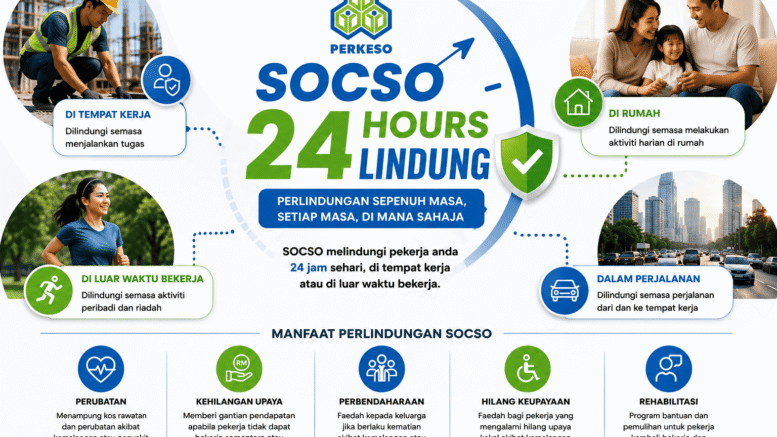
SOCSO (Social Security Organisation) compliance is a legal obligation for employers in Malaysia, but it is also one of the areas where HR teams most frequently make errors. Incorrect classification of employees under SOCSO categories can result in underpayment of contributions, over-contribution, employee coverage gaps, and potential penalties during SOCSO audits.
This article identifies the most common SOCSO classification mistakes and provides clear guidance on how to avoid them — helping HR teams stay compliant and protect both their organisation and their employees.
Understanding SOCSO Employee Categories
Before examining common mistakes, it is important to understand the two primary SOCSO scheme categories:
First Category — Employment Injury Scheme and Invalidity Scheme
This applies to employees below 60 years of age. Both the employer and employee contribute to both the Employment Injury Scheme and the Invalidity Scheme. This is the most common category for the majority of the workforce.
Second Category — Employment Injury Scheme Only
This applies to employees aged 60 and above, or those who have reached the SOCSO pensionable age. Only the Employment Injury Scheme applies — the Invalidity Scheme is no longer relevant. Contribution rates are lower as a result.
Common Mistake #1: Using the Wrong Category for Employees Aged 60 and Above
One of the most frequent errors is continuing to enrol employees aged 60 and above under First Category contributions instead of switching them to Second Category. This results in both the employer and employee overpaying contributions for the Invalidity Scheme — a scheme the employee is no longer covered under.
How to avoid it: Set up automated age triggers in your payroll or HR system to flag employees approaching 60 and schedule a category review on their birthday month.
Common Mistake #2: Not Registering Employees Immediately Upon Hire
SOCSO requires employers to register new employees and begin contributions from the first month of employment. Some HR teams delay registration until after the probation period, creating a coverage gap during which the employee is unprotected.
How to avoid it: Register all new employees with SOCSO as part of the standard onboarding process, regardless of their probation status. Coverage begins from the first day of work.
Common Mistake #3: Incorrect Treatment of Foreign Workers
Foreign workers in Malaysia are covered only under the Employment Injury Scheme (Second Category contributions from employer only). Many HR teams either enrol foreign workers under First Category (overpaying) or fail to enrol them at all (non-compliance).
How to avoid it: Clearly distinguish between Malaysian/PR employees and foreign workers in your HR system, and apply the correct SOCSO scheme automatically based on nationality.
Common Mistake #4: Applying the Wrong Wage for SOCSO Calculation
SOCSO contributions must be calculated based on the employee’s total wages, not just basic salary. Wages include:
- Basic salary
- Overtime payments
- Commission
- Allowances that are part of the employment contract
Allowances that are excluded from the SOCSO wage calculation include:
- Annual bonuses or ex gratia payments
- Travel allowances (for work-related travel)
- Gratuities
How to avoid it: Review each wage component in your payroll system to confirm it is correctly classified as SOCSO-applicable or excluded, and ensure the system calculates the correct wage base for each employee.
Common Mistake #5: Missing the RM5,000 Wage Ceiling
SOCSO contributions are capped at a monthly wage of RM5,000. Employees earning above RM5,000 still contribute, but at the rate applicable to the RM5,000 bracket. Some payroll systems incorrectly continue calculating contributions on the full actual wage above RM5,000.
How to avoid it: Verify that your payroll system applies the RM5,000 wage ceiling correctly for high-earning employees.
Common Mistake #6: Not Updating Employee Status After a Change
When an employee changes from part-time to full-time, is promoted to a management role, or transitions from contract to permanent employment, their SOCSO classification may need to be reviewed. Failing to update their status can result in incorrect contribution rates being applied.
How to avoid it: Include a SOCSO classification review as part of every employment status change workflow in your HR system.
Common Mistake #7: Incorrectly Excluding Domestic Workers
Domestic workers (maids, gardeners, drivers employed in private households) are exempt from SOCSO contributions for household employers. However, if a domestic worker is employed by a business entity, they may be subject to different treatment.
How to avoid it: Confirm the employment context and applicable regulations when dealing with workers in domestic-type roles employed by companies.
Quick Reference: SOCSO Classification Summary
| Employee Type | Scheme | Who Contributes |
|---|---|---|
| Malaysian/PR, below 60 | Employment Injury + Invalidity | Employer and Employee |
| Malaysian/PR, 60 and above | Employment Injury only | Employer only |
| Foreign worker | Employment Injury only | Employer only |
| Domestic worker (private household) | Not covered | Not applicable |
| Self-employed (voluntary scheme) | Invalidity scheme (voluntary) | Individual only |
Consequences of SOCSO Misclassification
- Underpayment penalties — SOCSO can assess back contributions with interest for underpayment
- Coverage gaps — Employees who are not correctly enrolled may not receive benefits if they make a claim
- Audit liability — Systematic errors identified during a SOCSO audit can result in significant back-payment obligations
- Prosecution — Persistent non-compliance can result in criminal prosecution under the Employees’ Social Security Act 1969
Frequently Asked Questions
What should we do if we discover a past classification error?
Contact SOCSO immediately to report the error and arrange for corrective back-contributions. Voluntary correction is treated more favourably than errors discovered during an audit.
How often should HR teams review SOCSO classification accuracy?
At minimum, conduct a full review annually and trigger reviews for individual employees whenever their employment status, age, nationality, or wage bracket changes significantly.
Does HR software help prevent these mistakes?
Yes. Modern HR and payroll software with built-in SOCSO compliance rules automates category assignment, wage ceiling enforcement, and age-triggered category changes — significantly reducing the risk of manual errors.
Conclusion
SOCSO misclassification is more common than most organisations realise, and the consequences can be financially and legally significant. By understanding the correct classification rules, investing in payroll software that automates compliance, and conducting regular audits of your SOCSO records, HR teams can protect their organisation from costly errors and ensure that every employee receives the social security coverage they are legally entitled to.
Smart Touch technology pte ltd , www.smartouch.com.sg +65-63964767, sales@smartouch.com.sg , www.smartouch.com.my +607-3889903 sales@smartouch.com.my