Introduction
In any organisation where large numbers of people move through entrances each day — factories, hospitals, schools, shopping complexes, government buildings, or corporate campuses — managing attendance and access at the entry point is one of the most operationally critical functions an HR or facilities team faces. The challenge is not simply recording who arrived and when. It is doing so accurately, quickly, and without creating bottlenecks that slow down the flow of people during peak hours.
Traditional attendance systems — punch cards, PIN terminals, standalone fingerprint readers — were designed for simpler times and lower volumes. As organisations grow and compliance requirements become more demanding, these legacy solutions create more problems than they solve. All-in-one attendance display systems represent the modern answer: integrated hardware that combines biometric identification, real-time data capture, visual feedback, and connectivity in a single device purpose-built for high-traffic entrances.
This article examines what all-in-one attendance displays offer, why they outperform legacy systems in demanding environments, and what organisations should look for when selecting a solution for their high-traffic entry points.
What Is an All-in-One Attendance Display?
An all-in-one attendance display is a unified device that integrates multiple functions previously handled by separate pieces of equipment. At its core, it combines a biometric reader — typically fingerprint, face recognition, or palm vein — with a display screen that provides immediate visual feedback to the user, and network connectivity that transmits attendance data in real time to a central HR or payroll system.
In a high-traffic entrance context, the display is not merely cosmetic. It serves a functional purpose: it shows the employee their name, photograph, and clock-in confirmation, reducing disputes about whether the scan was registered. In environments where hundreds of workers arrive within a short window, the speed and clarity of this feedback directly affects throughput at the entrance.
Modern all-in-one units also incorporate additional capabilities. Many include RFID card readers as an alternative or backup identification method. Some feature built-in cameras for liveness detection to prevent spoofing. Temperature screening has become a common add-on since 2020. Access control integration allows the device to trigger a door lock release or turnstile actuation upon successful identification, making it a combined attendance and access point.
The High-Traffic Challenge
High-traffic entrances present a specific set of demands that distinguish them from typical office lobby scenarios. When three hundred workers arrive for a shift change over a fifteen-minute window, an attendance device that takes two to three seconds per scan creates a queue. If the device has a slow recognition algorithm, requires multiple attempts, or fails to read fingerprints for workers with worn or callused hands, the problem compounds quickly.
The consequences of entrance bottlenecks are real and measurable. Workers who cannot clock in before their shift starts may be recorded as late even when they arrived on time. Queue congestion creates safety hazards in emergency situations. Supervisors must intervene manually to manage the flow, diverting their attention from operational duties. And in organisations where shift timing directly affects payroll calculations — overtime thresholds, shift differentials, night allowances — even small inaccuracies in clock-in timestamps have financial implications.
All-in-one attendance displays designed for high-traffic environments address this challenge through hardware optimisation. Face recognition systems that operate at one second or less per identification, with the ability to process recognition while the person is still approaching the device, dramatically increase throughput compared to contact-based fingerprint readers that require the person to stop and press a sensor. Large, bright display screens that are visible in outdoor or semi-outdoor entrance conditions eliminate the need to confirm a successful scan by leaning in to read a small indicator light.
Integration with HR and Payroll Systems
An attendance display that operates as a standalone island — capturing data locally without real-time integration — forces HR teams to manually export and import data, reconcile discrepancies, and deal with the consequences of data loss if the local device fails or is reset. For organisations with multiple high-traffic entrances across a large site, this manual process scales poorly and introduces errors at every step.
All-in-one attendance displays designed for enterprise deployment connect directly to a central attendance management platform via the organisation’s network. Attendance events are transmitted in real time, allowing supervisors to see who has arrived for a shift before the shift even begins. Alerts can be triggered automatically when expected staff have not clocked in by a specified time. Reports are generated directly from live data without any manual data handling.
Integration with payroll is the downstream benefit that justifies the investment for most organisations. When attendance data flows automatically and accurately from the device to the payroll system, the hours worked, overtime, and shift allowances are calculated on real data — not data that has been manually transcribed, reformatted, or consolidated from multiple sources. This reduces payroll errors, accelerates payroll processing, and reduces the administrative overhead on HR staff who would otherwise spend significant time reconciling attendance records before each payroll run.
Biometric Options for Diverse Workforces
High-traffic environments frequently involve workforces with diverse physical characteristics that affect biometric reliability. In manufacturing, construction, food processing, and agricultural settings, workers may have fingerprints that are worn, scarred, wet, or covered in fine dust or oil residue. Fingerprint readers that struggle with these conditions create the failed-scan bottleneck that defeats the purpose of deploying a biometric system in the first place.
Face recognition systems largely eliminate the physical-contact problem. Workers walk past or up to the device and are recognised without touching anything. This also addresses hygiene concerns in food processing or healthcare environments where shared contact surfaces raise contamination risks. Modern face recognition platforms maintain high accuracy across a wide range of skin tones, lighting conditions, and for workers wearing safety gear such as hard hats, safety glasses, or face shields — provided the recognition algorithm has been trained on sufficiently diverse datasets.
Palm vein recognition is an increasingly deployed alternative that combines the touchless benefits of face recognition with the privacy advantages of a non-photographic biometric. The vascular pattern beneath the skin is captured using near-infrared light, making it difficult to spoof and unaffected by surface conditions of the hand. For organisations that face employee concerns about face recognition technology, palm vein offers a strong alternative.
The best all-in-one attendance displays support multiple biometric modalities and card-based identification in a single device, allowing the organisation to configure the most appropriate identification method for its specific workforce — or to offer multiple options so that employees who cannot be reliably read by one method can use another.
Durability and Environmental Considerations
High-traffic entrances are rarely climate-controlled office lobbies. Factory gates, construction site entrances, warehouse loading docks, and outdoor campus entrances expose attendance hardware to conditions that consumer-grade or office-grade devices cannot tolerate. Temperature extremes, humidity, rain, dust, and the physical impacts of a busy working environment will degrade or destroy equipment not rated for these conditions.
All-in-one attendance displays intended for high-traffic industrial and outdoor use carry IP ratings — typically IP65 or higher — certifying their resistance to dust ingress and water jets from any direction. Operating temperature ranges extend to cover equatorial heat as well as cooler highland environments. Vandalism-resistant enclosures protect screens and sensors from accidental impact. Devices rated for industrial environments also have longer mean times between failures than consumer devices, reducing the maintenance overhead and the risk of an entrance being inoperable during a critical shift change.
Selecting the Right Solution
When evaluating all-in-one attendance displays for a high-traffic entrance, organisations should assess several factors beyond the core biometric technology. The recognition speed and throughput per minute should be specified by the vendor and verified against the organisation’s actual peak arrival volume. Integration compatibility with the organisation’s existing HR and payroll platform should be confirmed before purchase — proprietary data formats and closed APIs can make integration expensive or impossible.
The total cost of ownership extends beyond the hardware purchase price to include installation, network infrastructure, software licensing, ongoing maintenance, and the cost of managing the device fleet over its operational life. Vendors who offer cloud-based attendance management platforms with the hardware reduce the software infrastructure burden but introduce a recurring subscription cost that should be included in the financial evaluation.
Support and service response times are particularly important for high-traffic entrance devices. A faulty attendance device at a factory gate that affects three hundred workers’ clock-in records creates an immediate operational problem. Vendors who can offer next-business-day on-site service or remote diagnostics with same-day resolution are substantially more valuable than those offering standard warranty terms with depot repair timescales measured in weeks.
Conclusion
All-in-one attendance displays represent a significant operational upgrade for organisations managing high-traffic entrances. By combining fast, reliable biometric identification with real-time data transmission, clear visual feedback, and integration with HR and payroll systems, these devices eliminate the queuing, data accuracy, and administrative overhead problems that plague legacy attendance solutions.
For Malaysian organisations managing shift-based workforces in manufacturing, logistics, healthcare, education, or any other sector with high-volume entrance requirements, the investment in purpose-built attendance display hardware pays back quickly through reduced payroll errors, lower administrative overhead, and the operational confidence that comes from knowing exactly who arrived, when, and through which entrance.
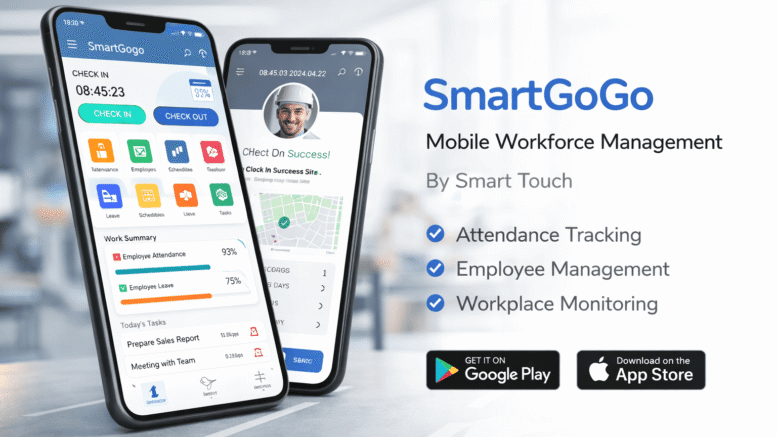
To learn more about SmartGogo all-in-one attendance displays for high-traffic entrances, visit https://www.smartouch.com.my/smartgogo/
Smart Touch technology pte ltd , www.smartouch.com.sg +65-63964767, sales@smartouch.com.sg , www.smartouch.com.my +607-3889903 sales@smartouch.com.my