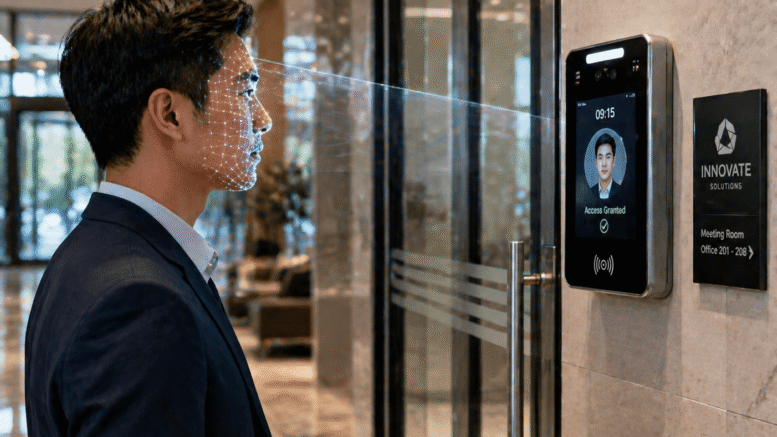
Fingerprint scanners and card-based clocking systems have long been the standard for tracking employee attendance, but they come with hygiene concerns, buddy punching risks, and wear-and-tear issues. A face recognition attendance system offers a faster, contactless, and more accurate alternative, backed by real-time data that HR teams can trust.
This article explains how face recognition attendance technology works, why real-time data matters, and what to consider before adopting one for your workplace.
What Is a Face Recognition Attendance System?
A face recognition attendance system uses camera-based biometric scanning to identify employees and log their clock-in and clock-out times automatically. Unlike fingerprint or card systems, it requires no physical contact, reducing hygiene concerns and preventing credential sharing.
Why Real-Time Data Matters for Attendance Tracking
1. Instant Visibility Into Workforce Presence
HR and management can see exactly who is present, late, or absent at any given moment, rather than waiting for end-of-day reports.
2. Faster Payroll Processing
Real-time attendance data flows directly into payroll systems, reducing delays and manual reconciliation at the end of each pay cycle.
3. Immediate Detection of Irregularities
Unusual clock-in patterns or missed check-outs can be flagged immediately rather than discovered weeks later.
Key Advantages Over Traditional Attendance Methods
| Feature | Benefit |
|---|---|
| Contactless Verification | Improves hygiene and reduces wear on hardware |
| Eliminates Buddy Punching | Prevents employees from clocking in for absent coworkers |
| Real-Time Data Sync | Attendance records update instantly across systems |
| Fast Recognition Speed | Reduces queues during shift changes |
| Detailed Reporting | Provides accurate data for payroll and compliance |
Comparison: Card, Fingerprint, and Face Recognition Attendance
| Method | Hygiene | Fraud Risk | Speed |
|---|---|---|---|
| Card-Based | Good | High, cards can be shared | Fast |
| Fingerprint | Moderate, physical contact required | Low | Moderate |
| Face Recognition | Excellent, contactless | Very Low | Fast |
Best Practices for Implementation
- Ensure adequate lighting at clocking points for accurate recognition
- Register clear facial data for all employees during onboarding
- Integrate the system with existing payroll and HR software
- Communicate data privacy practices clearly to employees
- Test the system thoroughly before full rollout across all locations
Addressing Common Concerns About Facial Recognition Technology
Employees sometimes raise concerns about privacy when a face recognition attendance system is first introduced. Addressing these concerns openly, by explaining how facial data is encrypted, stored securely, and used solely for attendance verification, helps build trust during rollout. Transparency about data handling policies is just as important as the technology itself when it comes to successful adoption.
How Accurate Is Face Recognition Technology Today?
Modern face recognition systems have improved significantly in recent years, with many platforms achieving very high accuracy rates even with masks, glasses, or changes in facial hair. Infrared sensors and 3D depth mapping have also reduced the chances of the system being fooled by photographs, adding an extra layer of security beyond simple 2D image matching.
Combining Face Recognition With Other Attendance Data
Many businesses choose to combine face recognition attendance with GPS data for field employees or with scheduling software to automatically flag late arrivals and early departures. This integrated approach gives HR teams a more complete picture of workforce attendance patterns across both office-based and remote or field staff.
Deployment Considerations for Multi-Location Businesses
Companies with several branches often need centralized visibility into attendance across all locations. A cloud-connected face recognition attendance system allows HR managers to view real-time attendance data from every site through a single dashboard, rather than compiling separate reports manually from each branch. This is especially valuable for retail chains, factories with multiple facilities, or organizations with distributed teams.
Handling Employee Onboarding and Offboarding
A well-designed face recognition attendance system should make it simple to register new employees and immediately remove access for those who have left the company. Delays in either process can create security gaps or attendance tracking errors, so businesses should confirm how quickly their chosen platform allows administrators to add or remove facial profiles as staffing changes occur.
Getting onboarding and offboarding right is a small operational detail that has an outsized impact on both security and attendance accuracy over time.
Businesses that plan for this from the outset avoid the common pitfall of stale employee records lingering in the system long after staff have moved on.
A clean, well-maintained employee database also makes periodic security audits far easier to complete.
These operational details, though small individually, add up to a system that stays accurate, secure, and easy to manage as the workforce changes over time.
For businesses evaluating vendors, asking specifically about onboarding speed and data retention policy is a worthwhile part of the selection process.
These details often reveal more about a vendor’s operational maturity than the marketing materials alone.
A small amount of due diligence upfront pays off considerably over the life of the system.
Key Takeaways
- Face recognition attendance eliminates buddy punching and hygiene concerns
- Real-time data gives HR instant visibility into workforce presence
- Faster payroll processing results from automated, accurate attendance records
- Contactless verification improves both speed and employee experience
Frequently Asked Questions
Is face recognition attendance accurate in low light conditions?
Most modern systems use infrared or enhanced sensors to maintain accuracy even in varying lighting conditions.
How does this system prevent buddy punching?
Since each clock-in requires a live facial scan matched to registered data, one employee cannot clock in on behalf of another.
Can face recognition attendance data integrate with payroll systems?
Yes, most systems are designed to sync attendance data directly with payroll and HR platforms in real time.
Is employee data securely stored?
Reputable systems encrypt biometric data and follow data protection best practices to safeguard employee privacy.
Conclusion
A face recognition attendance system with real-time data gives businesses a faster, more hygienic, and more accurate way to track workforce presence. By eliminating buddy punching and manual reconciliation, companies can streamline payroll while gaining instant visibility into attendance patterns. As workplaces continue to prioritize efficiency and hygiene, face recognition technology is becoming an increasingly practical choice.
To see what makes this product unique, click here : https://www.smartouch.com.my/category/time-clock/biometric-facial/
Smart Touch technology pte ltd , www.smartouch.com.sg +65-63964767, sales@smartouch.com.sg , www.smartouch.com.my +607-3889903 sales@smartouch.com.my