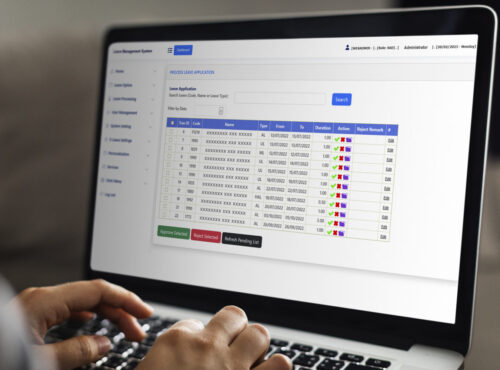
In today’s fast-paced digital workplace, organizations are continuously seeking smarter ways to manage their human resources efficiently. As businesses grow, manual processes become increasingly complex, time-consuming, and prone to errors. This is where a modern HR Management System, especially an e-leave system, becomes an essential tool for streamlining operations and enhancing employee satisfaction.
Our goal is to provide a comprehensive beginner’s guide to understanding HR Management Systems, with a particular focus on e-leave solutions, and how they can revolutionize workforce management for organizations of all sizes.
What is an HR Management System?
An HR Management System (HRMS) is an integrated software platform designed to automate and manage various human resource functions, including employee records, payroll, attendance, performance tracking, and leave management.
At its core, an HRMS centralizes all employee-related data into a single system, enabling HR teams to operate more efficiently and make data-driven decisions. Among its many modules, the e-leave system stands out as one of the most impactful components for both employees and management.
Understanding the e-Leave System
An e-leave system is a digital solution that allows employees to apply for leave online while enabling HR departments to track, approve, and manage leave requests seamlessly.
Instead of relying on paper forms, emails, or manual spreadsheets, the e-leave system automates the entire leave lifecycle—from application to approval and reporting.
Key Functions of an e-Leave System
- Online leave application and approval workflows
- Real-time leave balance tracking
- Automated leave accrual calculations
- Customizable leave policies
- Integration with payroll and attendance systems
- Reporting and analytics for HR insights
Why Businesses Need an e-Leave System
1. Eliminating Manual Errors
Manual leave tracking often leads to inconsistencies, miscalculations, and disputes. With an automated system, calculations are accurate and consistent, minimizing human error.
2. Enhancing Employee Experience
Employees can apply for leave anytime, anywhere, using a user-friendly interface. This convenience significantly improves employee satisfaction and engagement.
3. Increasing HR Productivity
HR teams no longer need to spend hours managing spreadsheets or processing forms. Automation frees up time for more strategic initiatives.
4. Ensuring Policy Compliance
An e-leave system ensures that company policies are consistently applied. It automatically enforces rules such as leave entitlements, carry-forward limits, and approval hierarchies.
Core Features of a Modern e-Leave System
1. User-Friendly Dashboard
A well-designed dashboard provides employees with instant visibility of their leave balances, upcoming holidays, and request status.
2. Customizable Leave Types
Organizations can configure different leave categories such as:
- Annual Leave
- Sick Leave
- Maternity/Paternity Leave
- Emergency Leave
- Unpaid Leave
3. Multi-Level Approval Workflow
The system supports hierarchical approvals, ensuring that leave requests are reviewed by the appropriate managers.
4. Mobile Accessibility
With mobile compatibility, employees and managers can handle leave requests on the go, improving responsiveness and efficiency.
5. Real-Time Notifications
Automated alerts notify users about application status, approvals, or rejections, reducing communication delays.
6. Reporting and Analytics
HR teams can generate detailed reports on leave trends, absenteeism, and workforce availability to support better planning.
How an e-Leave System Improves Organizational Efficiency
Implementing an e-leave system creates a ripple effect across the organization. It not only simplifies leave management but also enhances overall operational efficiency.
Streamlined Communication
The system eliminates back-and-forth emails and unclear communication by centralizing all requests and approvals in one platform.
Better Workforce Planning
Managers gain visibility into team availability, enabling them to plan workloads effectively and avoid disruptions.
Improved Data Accuracy
All data is stored digitally, ensuring accuracy, consistency, and easy retrieval for audits or analysis.
Integration with Other HR Functions
A powerful HR Management System integrates the e-leave module with other HR functions, creating a unified ecosystem.
Payroll Integration
Leave data directly impacts payroll calculations. Integration ensures accurate salary deductions and overtime calculations.
Attendance Tracking
The system synchronizes leave records with attendance data, providing a complete picture of employee availability.
Performance Management
Leave patterns can be analyzed alongside performance metrics to gain deeper insights into employee behavior and productivity.
Steps to Implement an e-Leave System
Step 1: Assess Organizational Needs
Identify current challenges and define the requirements of your HR system.
Step 2: Choose the Right Solution
Select a system that is scalable, user-friendly, and customizable to your business needs.
Step 3: Configure Leave Policies
Set up leave types, entitlements, approval workflows, and company policies within the system.
Step 4: Train Employees and Managers
Ensure all users understand how to use the system effectively to maximize adoption.
Step 5: Monitor and Optimize
Continuously evaluate system performance and make improvements as needed.
Common Challenges and How to Overcome Them
Resistance to Change
Employees may be hesitant to adopt new technology. Proper training and clear communication can ease the transition.
Data Migration Issues
Transferring existing records into the new system requires careful planning to ensure accuracy.
Customization Complexity
Choosing a flexible system that allows easy customization can prevent future limitations.
Future Trends in HR Management Systems
The evolution of HR technology continues to shape how organizations operate. Future advancements in e-leave systems include:
- AI-driven leave forecasting
- Predictive analytics for workforce planning
- Enhanced mobile experiences
- Cloud-based scalability
- Integration with employee wellness platforms
These innovations will further enhance efficiency and provide deeper insights into workforce dynamics.
Why Our e-Leave System Stands Out
Our solution is designed with both simplicity and power in mind. We focus on delivering a seamless user experience while providing robust features that meet the needs of modern organizations.
Key advantages include:
- Intuitive interface for easy adoption
- Flexible configuration to match business policies
- Secure cloud-based infrastructure
- Comprehensive reporting capabilities
- Reliable customer support
By choosing our e-leave system, organizations can achieve greater efficiency, transparency, and employee satisfaction.
Conclusion
A Beginner Guide to HR Management System would be incomplete without emphasizing the transformative power of an e-leave system. As organizations strive to stay competitive in a digital world, adopting automated HR solutions is no longer optional—it is essential.
By implementing a modern e-leave system, businesses can streamline operations, reduce administrative burdens, and create a more engaging employee experience. The result is a smarter, more efficient organization ready to meet the challenges of the future.
Investing in the right HR Management System today is a strategic decision that will deliver long-term benefits for both employees and management.
More details about the system can be found in this product solution. Click here: https://www.smartouch.com.my/e-leave-system/
Smart Touch technology pte ltd , www.smartouch.com.sg +65-63964767, sales@smartouch.com.sg , www.smartouch.com.my +607-3889903 sales@smartouch.com.my