Job Costing System: Construction ERP Software Malaysia A Practical Buyer’s Guide
In Malaysia’s fast-paced construction industry, managing project costs efficiently is critical to profitability and business sustainability. Whether you’re overseeing a small renovation project or managing multiple large-scale developments, understanding how to implement an effective job costing system can make the difference between a successful project and one that runs over budget.
A job costing system is a fundamental tool that helps construction companies track, allocate, and monitor costs associated with individual projects or jobs. For Malaysian construction businesses, implementing a dedicated job costing system within an Enterprise Resource Planning (ERP) software solution can streamline operations, improve financial accuracy, and provide real-time visibility into project profitability.
This practical buyer’s guide will help you understand what to look for when selecting a construction ERP software with robust job costing capabilities, and how it can address the unique challenges faced by Malaysian construction enterprises.
What Is a Job Costing System?
A job costing system is an accounting method used to track and assign costs to specific projects or jobs. Unlike process costing, which averages costs across continuous production, job costing captures the actual expenses incurred for each individual project.
In construction, this typically includes:
- Direct materials (cement, steel, timber, etc.)
- Direct labour costs (wages for site workers and specialists)
- Equipment and machinery expenses
- Subcontractor fees
- Indirect overhead costs allocated to the project
By tracking these costs at the job level, construction companies can accurately determine project profitability, identify cost overruns early, and make informed decisions about resource allocation and pricing for future tenders.
Why Malaysian Construction Companies Need a Job Costing System
The construction industry in Malaysia operates in a competitive environment with tight margins and strict project timelines. Several factors make an effective job costing system essential for Malaysian construction businesses:
Competitive Tender Requirements
Accurate historical cost data from previous projects enables Malaysian construction firms to submit competitive and realistic quotes for new tenders. Without a reliable job costing system, companies often rely on guesswork, leading to either unrealistic pricing or lost opportunities.
Regulatory Compliance
Malaysian construction companies must maintain accurate financial records for compliance with the Inland Revenue Board (IRB) and other regulatory bodies. A structured job costing system ensures that financial data is documented, auditable, and compliant with Malaysian accounting standards.
Cash Flow Management
Construction projects often involve significant upfront expenditures before payments are received from clients. A job costing system helps track cash flow by showing which projects are consuming cash and which are generating returns, allowing better working capital management.
Project Performance Visibility
Real-time cost tracking enables project managers to identify budget variances quickly. Early warning systems help prevent small cost overruns from escalating into major project losses.
Key Features to Look for in a Job Costing System
Real-Time Cost Tracking
A quality job costing system should allow you to track costs as they occur, not after the fact. Real-time visibility helps you understand project status at any moment and make timely adjustments if costs are trending above budget.
Multi-Level Cost Breakdown
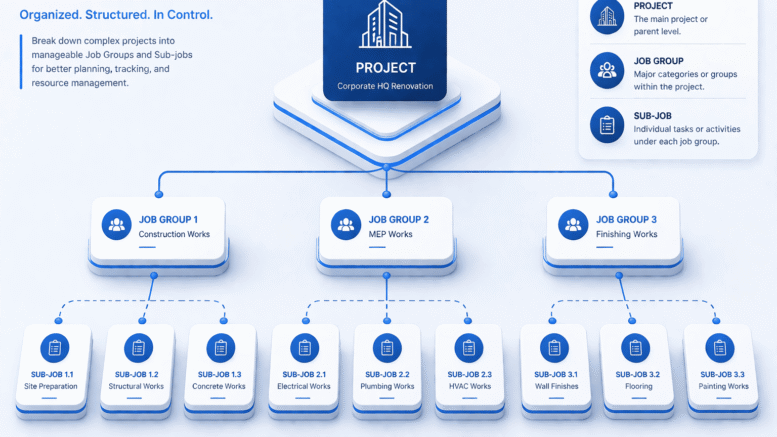
Look for systems that allow you to break down costs by phases, activities, cost codes, or work packages. This level of granularity helps identify exactly where money is being spent and which areas might require intervention.
Integration with Procurement and Payroll
The job costing system should seamlessly integrate with your procurement and payroll modules so that material purchases and labour costs flow automatically into job cost reports. This reduces manual data entry, minimises errors, and ensures consistency across your financial records.
Budget vs. Actual Reporting
Comprehensive reporting that compares budgeted costs against actual costs is essential. These reports should be easy to generate and customise for different stakeholder requirements.
Subcontractor Cost Management
Construction projects rely heavily on subcontractors. The system should track subcontractor invoices, purchase orders, and contract terms to ensure that subcontractor costs are properly allocated to specific jobs.
Equipment and Asset Tracking
If your company owns or leases equipment, the system should track equipment costs, utilisation rates, and depreciation associated with each project.
Common Challenges in Construction Cost Management
Before selecting a job costing system, it’s helpful to understand the common challenges that Malaysian construction companies face:
- Manual Data Entry Errors: Spreadsheet-based systems are prone to manual errors, especially when multiple team members are entering data across different locations.
- Delayed Cost Information: Without real-time systems, cost information often arrives too late to make corrective decisions during the project.
- Inconsistent Cost Categorisation: Without standardised cost codes and categories, it’s difficult to compare costs across different projects or time periods.
- Difficulty Allocating Overhead: Determining fair and accurate allocation of indirect costs across multiple simultaneous projects is challenging without systematic support.
- Lack of Integration: Systems that don’t communicate with each other force staff to enter the same data multiple times, creating inefficiencies and discrepancies.
- Limited Visibility for Decision-Making: Project managers and finance teams need access to timely, accurate data to make informed decisions, but fragmented systems don’t provide this visibility.
How Construction ERP Software Addresses These Issues
A comprehensive ERP software solution designed for construction brings all aspects of your business into a single integrated platform. Rather than managing separate systems for accounting, procurement, payroll, and project management, an integrated ERP centralises all data and processes.
This integration ensures that:
- Cost data flows automatically from source systems (invoices, timesheets, purchase orders) into job cost calculations
- All users access the same current information, eliminating inconsistencies caused by multiple spreadsheets
- Real-time dashboards and reports give decision-makers immediate visibility into project costs and profitability
- Standardised processes and cost codes ensure consistent data capture across all projects
- Automated workflows reduce manual effort and the associated risk of errors
Implementing a Job Costing System: Practical Considerations
Define Your Chart of Accounts
Work with your finance and operations teams to establish a clear chart of accounts and cost coding structure. This should reflect how your company naturally divides costs and should be consistent across all projects. For construction, this typically includes categories for materials, labour, equipment, subcontracting, and overhead.
Establish Clear Processes
Define processes for how costs will be captured, approved, and recorded in the system. Who approves purchase orders? How are timesheets submitted and reviewed? What approvals are needed before costs are allocated to jobs? Clear processes ensure consistent data quality.
Train Your Team
A system is only as good as the people using it. Invest time in training your accounts staff, project managers, site supervisors, and other relevant personnel on how to use the job costing system effectively.
Start with Clean Data
If you’re migrating from a legacy system or spreadsheet-based approach, ensure that historical data is accurately captured and validated. Inaccurate historical data can skew comparisons and lead to poor future decisions.
Monitor and Refine
After implementation, regularly review your job costing reports and processes. Are cost codes being used consistently? Are budget variances being identified and addressed? Use this feedback to refine your processes and system configuration over time.
How Smart Touch Technology Can Help
Smart Touch Technology offers construction ERP software with integrated job costing capabilities specifically designed for businesses operating in Malaysia. The job costing system within Smart Touch’s ERP solution enables Malaysian construction companies to streamline their cost management processes, integrate financial and operational data, and gain real-time visibility into project profitability.
By implementing a dedicated job costing system through Smart Touch Technology, your construction business can automate cost tracking, reduce manual entry errors, generate comprehensive budget vs. actual reports, and make faster, more informed decisions about your projects.
To learn more about how Smart Touch Technology’s construction ERP software can support your Malaysian business, explore the product here: http://www.smartouch.com.my/job-costing/
Conclusion
A well-implemented job costing system is fundamental to the success of any construction business in Malaysia. It provides the financial visibility needed to manage costs effectively, bid competitively, and maintain profitability across multiple projects.
When selecting a construction ERP software with job costing capabilities, focus on systems that offer real-time cost tracking, seamless integration with your other business processes, comprehensive reporting, and the flexibility to match your specific operational needs.
By investing in a robust job costing system now, you’ll be better positioned to manage your Malaysian construction projects more efficiently, improve your bottom line, and build a stronger foundation for sustainable business growth.
Smart Touch Technology Pte Ltd
Singapore: www.smartouch.com.sg | +65-63964767 | sales@smartouch.com.sg
Malaysia: www.smartouch.com.my | +607-3889903 | sales@smartouch.com.my