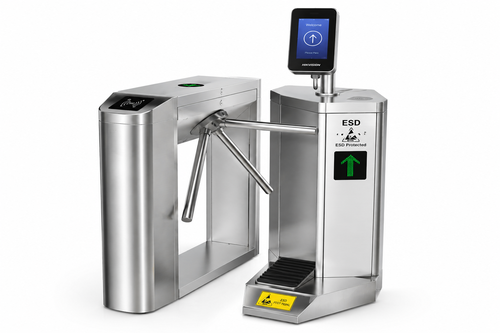
In sensitive manufacturing environments — particularly in electronics and semiconductor production — controlling both human access and electrostatic discharge is paramount. An ESD tripod combines a standard turnstile access control solution with integrated electrostatic discharge testing, ensuring that only authorised personnel who pass ESD compliance checks are permitted entry into protected areas. This article explores what ESD tripods are, why they matter, and how to choose the right solution for your facility.
What Is an ESD Tripod?
An ESD tripod — also known as an ESD turnstile — is a physical access control device that integrates electrostatic discharge (ESD) testing into the entry process. The system requires each person entering a controlled area to complete an ESD compliance check (typically by gripping metal contact plates or placing their feet on ground test pads) before the turnstile arms unlock to allow passage. Personnel who fail the ESD test are denied entry until they resolve the compliance issue.
How an ESD Tripod Works
When an employee approaches the ESD tripod, they first present their access credential (RFID card or fingerprint). If access is authorised, they then perform the ESD test by gripping the hand contact plates and/or stepping on the foot plate. The integrated tester measures the person’s body voltage and resistance. If within the acceptable ESD threshold, the tripod arms release and the person may enter. If the test fails, the turnstile remains locked and an alert is triggered.
Why ESD Control at Entry Points Matters
Electrostatic discharge is one of the leading causes of damage to electronic components and assemblies. A single uncontrolled ESD event can damage or destroy sensitive components worth thousands of ringgit, cause latent defects that only appear later in the product lifecycle, invalidate warranties, and result in product returns and quality failures. By enforcing ESD compliance at the point of entry, organisations eliminate the risk of ESD-non-compliant personnel entering the production area entirely.
Industries That Require ESD Access Control
ESD tripods are essential in electronics manufacturing and assembly, semiconductor fabrication facilities, medical device production, aerospace component manufacturing, and any environment with ESD-sensitive components or assemblies. In Malaysia, the electronics manufacturing sector is one of the largest industries and ESD control is a fundamental requirement at most production facilities.
Key Features of an ESD Tripod System
Integrated ESD Tester
The built-in ESD tester checks wrist strap continuity, body voltage, and footwear/flooring resistance simultaneously. Testing takes under three seconds, ensuring minimal delay at the entry point even during shift changes with high personnel throughput.
Access Control Integration
ESD tripods integrate with RFID card readers, biometric fingerprint scanners, or facial recognition terminals. Access is only granted when both the identity check and ESD compliance test are passed, creating a two-factor entry requirement that is both secure and ESD-safe.
Configurable Thresholds and Alarms
ESD threshold values can be configured according to the facility’s specific requirements and applicable ESD standards (such as ANSI/ESD S20.20 or IEC 61340-5-1). Visual and audible alarms notify supervisors of ESD test failures, and the system logs all test results with employee identification for audit purposes.
Data Logging and Reporting
All entry events, ESD test results, and access denials are logged in the system database. Reports can be generated to show which employees failed ESD tests, the frequency of failures, and trends over time — supporting continuous improvement of ESD compliance programmes.
ESD Tripod vs Standard Turnstile: Key Differences
| Feature | ESD Tripod | Standard Turnstile |
|---|---|---|
| ESD Testing | Built-in, mandatory at entry | Not available |
| Target Environment | ESD-sensitive production areas | General access control |
| Entry Requirement | Identity + ESD compliance | Identity only |
| Data Logging | Access + ESD test results | Access events only |
| Standards Support | ANSI/ESD, IEC standards | N/A |
Conclusion
An ESD tripod for industrial access control is an indispensable investment for any facility where electrostatic discharge poses a risk to product quality and safety. By enforcing ESD compliance at the point of entry, organisations protect their production environment, maintain quality standards, and create a complete audit trail of ESD compliance for every employee entering sensitive areas.
Discover everything this product has to offer by clicking here: https://www.smartouch.com.my/category/time-clock/barrier/
Frequently Asked Questions (FAQ)
What is the difference between an ESD tripod and a standard turnstile?
An ESD tripod includes a built-in electrostatic discharge tester that must be passed before entry is granted. A standard turnstile only verifies identity and does not test for ESD compliance.
How long does an ESD test at a tripod take?
A standard ESD test at the turnstile takes under three seconds. This ensures minimal delays at entry points even during high-throughput shift changes.
What happens if an employee fails the ESD test?
The turnstile remains locked and an alarm is triggered. The employee must resolve the ESD issue — such as replacing a defective wrist strap or changing footwear — before attempting entry again.
Can ESD tripod data be used for compliance audits?
Yes. All ESD test results are logged with employee identification, timestamp, and test outcome. This data can be exported as reports for ESD compliance audits and quality management system reviews.
Smart Touch technology pte ltd , www.smartouch.com.sg +65-63964767, sales@smartouch.com.sg , www.smartouch.com.my +607-3889903 sales@smartouch.com.my