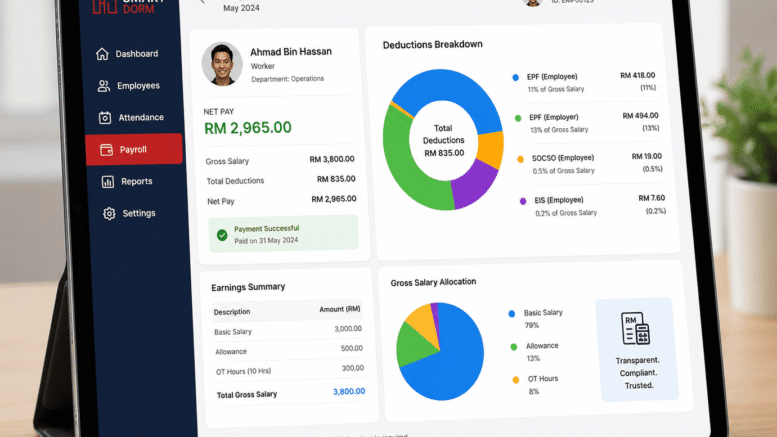
Payroll errors happen even in well-run organisations, but few mistakes cause as much stress as a wrong statutory deduction. Whether it involves EPF, SOCSO, EIS, or PCB (income tax), an incorrect deduction can lead to compliance issues, unhappy employees, and additional administrative work. This guide walks Malaysian payroll administrators through the causes of statutory deduction errors and the correct steps to fix them.
Understanding Statutory Deductions in Malaysia
Every employer in Malaysia is legally required to make several statutory deductions from employee salaries each month. These include contributions to the Employees Provident Fund (EPF), Social Security Organisation (SOCSO), Employment Insurance System (EIS), and Potongan Cukai Bulanan (PCB) for income tax.
Why Errors Occur
- Incorrect salary or allowance classification during data entry
- Outdated contribution rate tables in payroll software
- Manual calculation mistakes for new or resigned employees
- Failure to update employee categories, such as age or citizenship status
- System integration errors between HR and payroll platforms
Step-by-Step Guide to Fixing a Wrong Statutory Deduction
Step 1: Identify the Error
Compare the payslip against the official EPF, SOCSO, EIS, and PCB contribution tables for the relevant month to confirm exactly which deduction was calculated incorrectly.
Step 2: Determine the Root Cause
Check whether the mistake came from incorrect salary input, an outdated rate table, or a system configuration issue. Identifying the root cause prevents the same error from repeating in future payroll cycles.
Step 3: Recalculate the Correct Amount
Use the correct statutory rate tables to recalculate the exact contribution amount owed by both employer and employee for the affected month.
Step 4: Make the Correction in Payroll Records
Adjust the payroll system to reflect the correct deduction. Most statutory bodies allow employers to submit correction forms or adjustment reports for the affected contribution period.
Step 5: Notify the Relevant Statutory Body
Depending on the type of deduction, you may need to inform EPF, SOCSO, or the Inland Revenue Board (LHDN) about the correction and submit any required adjustment documentation.
Step 6: Update the Employee’s Payslip and Records
Ensure the employee receives a corrected payslip and that internal payroll records match the amended statutory submission.
Comparison of Malaysian Statutory Deductions
| Deduction | Managed By | Purpose |
|---|---|---|
| EPF | Employees Provident Fund | Retirement savings |
| SOCSO | PERKESO | Injury and invalidity protection |
| EIS | PERKESO | Unemployment insurance support |
| PCB | LHDN | Monthly income tax deduction |
Best Practices to Prevent Future Errors
- Update your payroll software whenever new statutory rate tables are released
- Conduct a monthly reconciliation between payroll reports and statutory submissions
- Automate deduction calculations using a reliable payroll system instead of manual spreadsheets
- Train payroll staff regularly on the latest compliance requirements
- Keep clear audit trails for every payroll adjustment made
Key Takeaways
- Wrong statutory deductions often stem from outdated rate tables or manual data entry errors
- Fixing the issue requires identifying the root cause before recalculating the correct amount
- Employers may need to notify EPF, SOCSO, or LHDN depending on the type of deduction
- Automated payroll software significantly reduces the risk of recurring statutory errors
Frequently Asked Questions
1. What should I do if I discover a wrong EPF deduction from months ago?
You should recalculate the correct contribution, update your records, and submit a correction through EPF’s official adjustment process as soon as possible.
2. Can employees request a review if they suspect a wrong deduction?
Yes, employees can raise concerns with HR, who should verify the payslip against the applicable statutory rate table.
3. Are there penalties for incorrect statutory deductions?
Employers may face penalties for non-compliance, which is why timely correction and proper documentation are essential.
4. How can payroll software help prevent these errors?
Modern payroll systems automatically apply the latest statutory rates, significantly reducing the risk of manual calculation mistakes.
5. How often should payroll rate tables be reviewed?
Rate tables should be reviewed whenever statutory bodies announce updates, and payroll administrators should verify them at the start of each year.
Conclusion
Correcting a wrong statutory deduction requires careful attention to detail, from identifying the root cause to updating records and notifying the relevant statutory body. By following a structured process and investing in reliable payroll software, Malaysian payroll administrators can minimise errors and stay fully compliant with EPF, SOCSO, EIS, and PCB requirements.
Smart Touch technology pte ltd , www.smartouch.com.sg +65-63964767, sales@smartouch.com.sg , www.smartouch.com.my +607-3889903 sales@smartouch.com.my