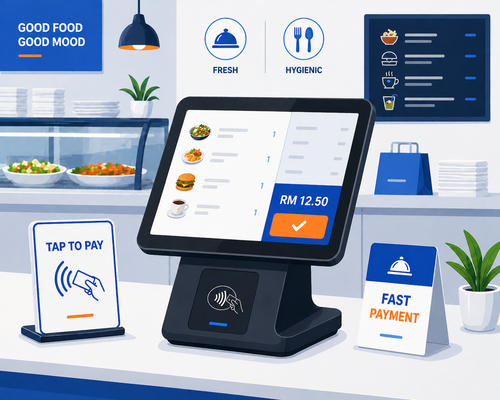
Factories running multiple shifts often struggle to manage staff meals fairly and efficiently. Long queues, meal fraud, and manual headcounts waste both time and money. A dedicated factory staff meal tracking system solves these challenges by automating meal entitlement checks, attendance-linked meal counts, and canteen reporting.
This article explains how a factory meal tracking system works, the problems it solves, and what features to prioritize when choosing one for your operations.
What Is a Factory Staff Meal Tracking System?
A meal tracking system uses employee ID cards, biometric verification, or mobile check-in to record every meal taken by staff in the canteen. Each transaction is linked to the employee’s shift and entitlement rules, preventing duplicate claims and unauthorized meal collection.
Common Problems in Factory Canteens Without a Tracking System
1. Meal Fraud and Duplicate Claims
Without verification, employees can claim meals multiple times or collect meals on behalf of absent coworkers.
2. Long Queues During Shift Changes
Manual meal coupons or paper lists slow down service, especially during peak shift-change hours.
3. Inaccurate Cost Tracking
Without digital records, it is difficult to reconcile actual meal consumption against canteen costs and vendor billing.
4. No Visibility Into Consumption Patterns
HR and operations teams lack data on meal usage trends across shifts, departments, or time periods.
Key Features of a Smart Meal Tracking System
| Feature | Benefit |
|---|---|
| Card or Biometric Verification | Prevents meal fraud and duplicate claims |
| Shift-Based Meal Entitlement | Automatically applies correct meal rules per shift |
| Real-Time Reporting | Tracks meal consumption and canteen costs accurately |
| Vendor Billing Integration | Simplifies reconciliation with catering vendors |
| Mobile or Kiosk Check-In | Speeds up queues during busy shift changes |
Best Practices for Implementation
- Map out shift patterns and meal entitlement rules before deployment
- Choose hardware suited to factory environments, such as dust and moisture-resistant terminals
- Integrate the system with existing time attendance records for accuracy
- Train canteen staff and workers on the new check-in process
- Review consumption reports monthly to identify cost-saving opportunities
Return on Investment for Factory Canteens
Factories that switch from manual coupons to a digital meal tracking system often see measurable savings within the first few months. Eliminating duplicate claims alone can reduce food costs significantly, especially in large facilities running multiple shifts around the clock. When these savings are combined with reduced queue times and fewer disputes between workers and canteen staff, the return on investment becomes clear quickly.
Beyond direct cost savings, management gains access to detailed consumption reports that were previously impossible to generate manually. These reports can reveal patterns such as which shifts consume the most meals, helping operations teams plan catering orders more accurately and reduce food waste.
Choosing the Right Hardware for Factory Environments
Factory canteens present unique challenges compared to office environments, including dust, humidity, and high-volume usage during short shift-change windows. When selecting a factory staff meal tracking system, prioritize hardware that is built to withstand these conditions, with durable card readers or biometric scanners designed for industrial use.
It is also worth considering mobile or handheld options for facilities with multiple canteen locations or outdoor dining areas, ensuring consistent tracking regardless of where meals are served.
Employee Adoption and Communication
Successful implementation depends heavily on how the change is communicated to workers. Clearly explaining the reasons behind the new system, such as fairness and faster service, helps reduce resistance. Providing a short training session and clear signage at canteen entry points ensures a smooth transition on launch day.
Long-Term Value for Multi-Shift Operations
Factories operating around the clock face unique challenges in keeping canteen service fair and consistent across day, evening, and night shifts. A digital meal tracking system ensures the same rules apply regardless of when an employee eats, removing the inconsistencies that often arise when different supervisors manage meal coupons manually for each shift. Over time, this consistency builds trust among workers and reduces the number of complaints directed at HR and canteen management.
Facilities managers should also consider linking meal tracking data with occupational health records, since consistent, on-time meals contribute to worker safety and concentration on the factory floor. This connection is often overlooked but can support broader workplace wellness initiatives alongside cost control.
Ultimately, the goal of any factory staff meal tracking system is to make canteen operations fair, fast, and fully accountable, freeing up management time that would otherwise be spent resolving disputes or manually reconciling meal counts against vendor invoices at the end of each month.
With the right platform in place, factory management teams gain a dependable, transparent, and cost-efficient way to serve every shift equally.
Key Benefits at a Glance
- Eliminates meal fraud through verified check-ins
- Reduces canteen queue times during shift changes
- Provides accurate data for vendor billing and cost control
- Improves overall canteen operational efficiency
- Gives management visibility into meal consumption trends
Comparison: Manual Coupons vs Digital Meal Tracking
| Criteria | Manual Coupons | Digital Tracking System |
|---|---|---|
| Fraud Risk | High | Low, verified per employee |
| Queue Speed | Slow | Fast, automated |
| Cost Reporting | Manual reconciliation | Automated, real-time |
| Shift Rule Enforcement | Manual oversight | Automatic |
Frequently Asked Questions
How does a factory staff meal tracking system prevent fraud?
It verifies each employee through their ID card or biometric data before releasing a meal, preventing duplicate or unauthorized claims.
Can the system handle multiple shifts?
Yes, meal entitlement rules can be configured separately for each shift pattern.
Does it integrate with time attendance systems?
Most systems can integrate with existing time attendance platforms for consistent employee data.
Is this system suitable for large factories with thousands of workers?
Yes, these systems are built to scale and handle high transaction volumes during peak shift-change periods.
Conclusion
A factory staff meal tracking system brings accountability, speed, and accurate reporting to canteen operations. By eliminating manual coupons and unverified meal claims, factories can reduce costs, cut queue times, and gain full visibility into meal consumption across every shift. As factories look for ways to control operational costs, a smart meal tracking solution is a practical and measurable investment.
You can read more about our compliance features by https://www.smartouch.com.my/canteen-management-system-2/.
Smart Touch technology pte ltd , www.smartouch.com.sg +65-63964767, sales@smartouch.com.sg , www.smartouch.com.my +607-3889903 sales@smartouch.com.my