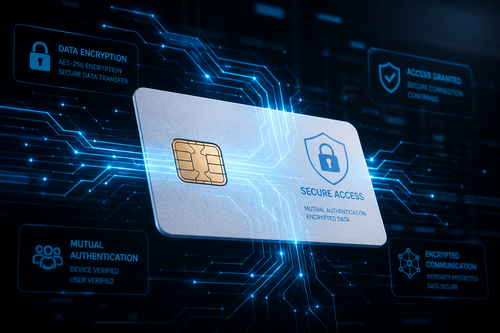
As businesses grow, controlling who can enter which areas of a building becomes increasingly important. Shared keys and unmonitored entry points create unnecessary security risks. An access card system for businesses offers a practical, scalable way to manage entry permissions while keeping detailed records of every access event.
This article explains how access card systems work, why businesses of all sizes rely on them, and what features to prioritize when choosing one.
What Is an Access Card System?
An access card system uses proximity cards, smart cards, or key fobs to verify identity before granting entry to a building or restricted area. Each card can be programmed with specific access permissions, and lost or stolen cards can be deactivated instantly.
Why Businesses Rely on Access Card Systems
1. Centralized Access Management
Administrators can manage permissions for every employee from a single system, rather than tracking physical keys manually.
2. Detailed Entry Records
Every card tap is logged, giving security teams a clear record of who accessed which area and when.
3. Instant Deactivation for Lost Cards
Unlike physical keys, a lost or stolen access card can be deactivated immediately without needing to rekey doors.
4. Scalable Across Multiple Locations
An access card system for businesses with multiple branches can be managed centrally, ensuring consistent security policies everywhere.
Key Features of an Access Card System
| Feature | Benefit |
|---|---|
| Role-Based Access Permissions | Restrict sensitive areas to authorized staff only |
| Real-Time Access Logs | Provides visibility into entry activity across locations |
| Instant Card Deactivation | Reduces risk from lost or stolen cards |
| Multi-Site Management | Centralized control across multiple business locations |
| Integration With Other Systems | Works alongside visitor management and CCTV systems |
Best Practices for Access Card Management
- Assign access permissions based on job role and business need
- Deactivate cards immediately upon employee resignation or loss report
- Review access logs periodically to identify unusual entry patterns
- Integrate the access card system with other security infrastructure
- Conduct regular audits of who holds active access cards
Types of Access Cards Available Today
Businesses can choose from several access card technologies, including magnetic stripe cards, proximity cards, and smart cards with encrypted chips. Proximity and smart cards are generally recommended for businesses prioritizing security, since they are significantly harder to clone compared to older magnetic stripe formats. Understanding the differences helps businesses select a solution that matches their security requirements and budget.
Preventing Card Duplication and Fraud
One growing concern for businesses is unauthorized card duplication, where an employee copies their access card to share with someone else or creates a spare without authorization. Working with a reputable access control provider that uses encrypted card technology and offers duplication detection significantly reduces this risk compared to using generic, easily copied card formats.
Combining Access Cards With Multi-Factor Verification
For areas requiring an extra layer of security, businesses can combine access cards with a PIN code or biometric verification, creating a multi-factor authentication process. This approach is particularly useful for server rooms, finance departments, or other sensitive areas where a lost or duplicated card alone should not be enough to gain entry.
Managing Access Cards Across a Growing Workforce
As businesses hire, promote, and offboard employees, access permissions need to be updated continuously to stay accurate. A centralized access card management system makes it easy to adjust permissions in bulk, such as when a department relocates to a new floor, without needing to manually reprogram each card individually. This scalability is especially valuable for businesses experiencing rapid growth or frequent internal reorganization.
Auditing Access Card Usage Regularly
Periodic audits of who holds active access cards and what permissions they carry help catch issues before they become security problems, such as former contractors retaining active credentials long after their engagement ended. Building a simple quarterly review into standard security procedures ensures the access card system continues to reflect an accurate, up-to-date picture of who should be entering the building.
A consistent audit habit is often what separates businesses that catch security gaps early from those that only discover them after an incident has already occurred.
Pairing regular audits with clear offboarding procedures ensures that access permissions never lag behind actual staffing changes.
This kind of discipline is a relatively small operational cost compared to the potential fallout from an unauthorized entry incident.
Ultimately, an access card system is only as strong as the management processes built around it.
Investing in both good technology and consistent processes gives businesses the most complete protection against unauthorized access.
This combined approach is what today’s most security-conscious organizations rely on.
Getting the fundamentals right early on makes every future security decision easier.
A secure, well-managed entry point is one of the simplest ways to protect a company’s people and assets.
Key Benefits at a Glance
- Reduces reliance on physical keys and manual tracking
- Provides detailed, searchable access records for security reviews
- Enables instant response to lost or stolen credentials
- Scales easily across single offices or multi-branch operations
Frequently Asked Questions
What happens if an access card is lost?
The card can be deactivated instantly through the system, preventing any unauthorized use.
Can access permissions differ between employees?
Yes, role-based permissions allow different employees to have access to different areas based on their responsibilities.
Is an access card system suitable for small businesses?
Yes, these systems are scalable and can be implemented in businesses of any size, from single offices to multi-branch operations.
Can access card systems integrate with other security tools?
Most systems can integrate with visitor management, CCTV, and door access control platforms for a unified security approach.
Conclusion
An access card system for businesses provides a secure, scalable, and easily managed way to control building access. With features like instant deactivation, detailed access logs, and role-based permissions, businesses can significantly reduce security risks compared to traditional keys. As organizations continue to prioritize workplace security, an access card system is a practical investment for long-term protection.
Curious about the product? Click here for the details : https://www.smartouch.com.my/access-card-duplication/
Smart Touch technology pte ltd , www.smartouch.com.sg +65-63964767, sales@smartouch.com.sg , www.smartouch.com.my +607-3889903 sales@smartouch.com.my